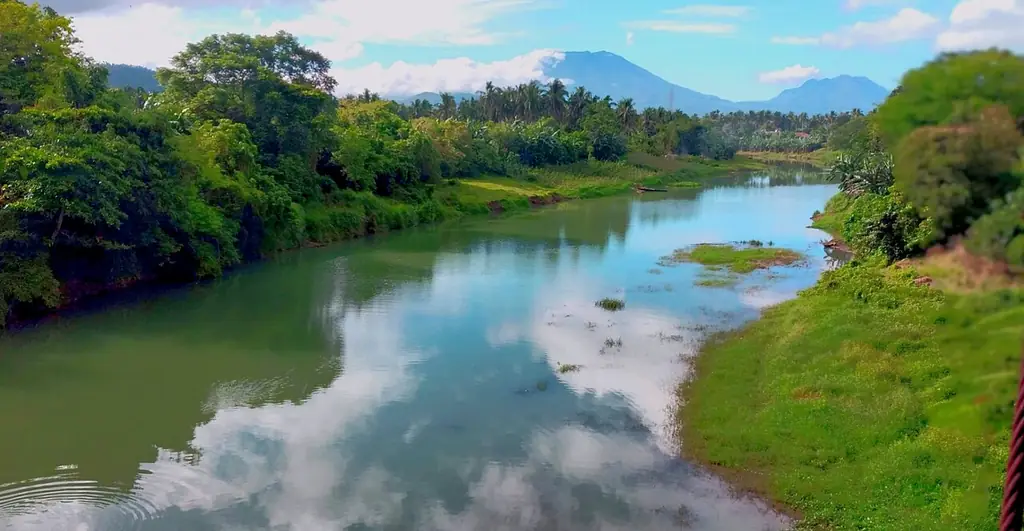
The Pagsanjan River winding between green banks
Photo: Sheila mae Pelausa · CC BY-SA 4.0 · Wikimedia Commons
Map

Laguna

CALABARZON
Luzon
Capital Santa Cruz
Population (2024) 3,687,345
Area 1,918 km²
Municipalities 24
Cities 6
Island Group Luzon
Languages Tagalog, Filipino

Population: 2024 census (PSA). Area: land area.

Kapitbahay — Neighboring Provinces

Laguna wraps around the southern and eastern shores of Laguna de Bay — the largest lake in the Philippines — and extends south into the foothills of Mount Banahaw. It is a province that has produced a disproportionate share of Philippine history: José Rizal was born here, the first Tagalog dictionary was printed here, at Pila in 1613, and the oldest document ever found in the Philippines, the Laguna Copperplate Inscription of 900 CE, was discovered here in 1987, near the mouth of the Lumbang River in Lumban.

Santa CruzCapital
1,918 km²Area
24 + 6 citiesMunicipalities
LuzonIsland Group

Santa Cruz serves as the provincial capital, but the province's character is defined less by its administrative center than by the cluster of towns surrounding the lake — Los Baños, Calamba, Pagsanjan, Alaminos — each with its own distinct identity and claim to significance.

★
Laguna de Bay

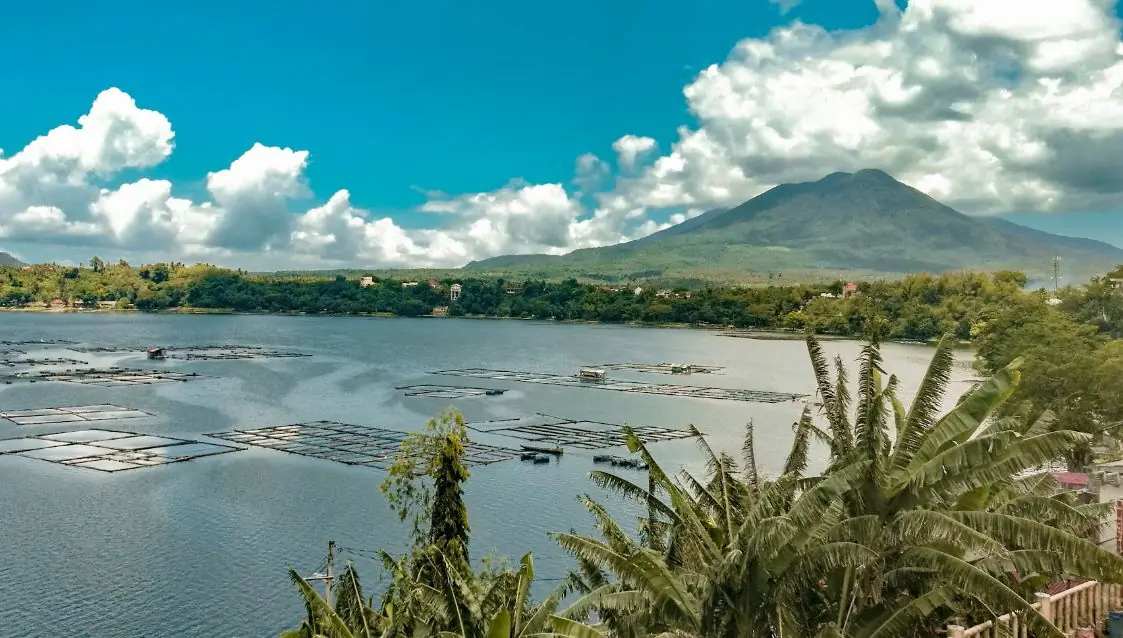
Laguna de Bay — 'Lake of Bay' — is the largest lake in the Philippines, with a surface area of 911 to 949 square kilometers. Despite its size, it averages only 2.8 meters in depth, making it one of the shallowest large lakes in the world. It provides water, fish, and livelihood to the communities along its shores and is a major source of freshwater fish for Metro Manila.

Laguna is also known for its hot springs — Los Baños and Pansol are among the most popular hot spring resort areas accessible from Manila — for its buko (coconut) pie, which has become a national culinary institution, and for the scenic Pagsanjan Falls, which actually lie in Cavinti, in the mountain interior.

The 2024 census counted 3,687,345 people in Laguna's 24 municipalities and six cities, Biñan, Cabuyao, Calamba, San Pablo, San Pedro and Santa Rosa, on 1,917.85 square kilometers. The province was once called La Laguna, or La Provincia de la Laguna de Bay, after the lake that forms its northern boundary, and in the Spanish era it also took in parts of what are now Rizal and Quezon. Bay was the provincial seat until 1688, then Pagsanjan, and Santa Cruz has been the capital since 1858.

Laguna's documented history begins earlier than most Philippine provinces. The Laguna Copperplate Inscription, dated 900 CE and written mainly in Old Malay in the Kawi script, with Sanskrit technical terms and Old Javanese or Old Tagalog honorifics, proves that the communities around Laguna de Bay were literate, commercially active, and connected to the broader Austronesian maritime world a full six centuries before Spanish contact.

21 April 900

Laguna Copperplate Inscription

The oldest known written document from the Philippines is dated to the Shaka year 822, which corresponds to Monday, 21 April 900. Written mainly in Old Malay in the Kawi script, it records the pardon of a debt owed by the children of a man named Namwaran. A laborer found the plate in 1987 near the mouth of the Lumbang River in Wawa, Lumban.

1571–1578

Salcedo and the Franciscans

Captain Juan de Salcedo and about a hundred Spanish and Mexican soldiers took the lakeshore for Spain in 1571. In 1578 the Franciscans, led by Juan de Plasencia and Diego de Oropesa, began their missions in Laguna.

1611–1613

The Press at Pila

The Franciscans set up the second printing press in the Philippines at Pila in 1611. In 1613 it printed Fray Pedro de San Buenaventura's Vocabulario de la lengua tagala, the first Tagalog dictionary, printed by Tomás Pinpin, the "Prince of Filipino printers".

19 June 1861

Rizal Born in Calamba

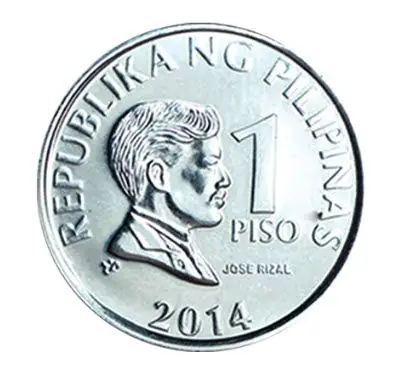
José Protasio Rizal Mercado y Alonso Realonda was born in Calamba. His older brother Paciano, born there in 1851, would become a general of the Revolution. The family house, destroyed in the Second World War, was rebuilt on the same site and opened as the Rizal Shrine on 19 June 1950.

1896–1898

Revolution in Laguna

Thousands in Bay, Los Baños, Nagcarlan, Magdalena, Santa Cruz and Pagsanjan joined the Katipunan, and Laguna was one of the eight provinces that first rose against Spain. In May 1898 Pío del Pilar and Paciano Rizal won the Battle of Calamba, and the last Spanish garrison in Laguna surrendered at Santa Cruz on 31 August 1898.

1909

College of Agriculture at Los Baños

The University of the Philippines College of Agriculture was established on 6 March 1909, and classes began that June with five professors and 12 students. It grew into the University of the Philippines Los Baños.

23 February 1945

Raid on Los Baños

A combined U.S. airborne and Filipino guerrilla force freed 2,147 Allied civilian and military internees from the Japanese internment camp at Los Baños, less than a month after the raid at Cabanatuan.

1960

IRRI Founded

The International Rice Research Institute was established at Los Baños with the support of the Ford and Rockefeller foundations and the Philippine government. Its semi-dwarf rice varieties drove the Green Revolution in Asia in the late 1960s and 1970s.

Laguna's cultural identity is shaped by its proximity to Metro Manila, its revolutionary history, and a provincial pride rooted in being the birthplace of the national hero. Tagalog is the language here, which means Laguna's folk culture feeds directly into what became the national culture.

Jose Rizal's Laguna

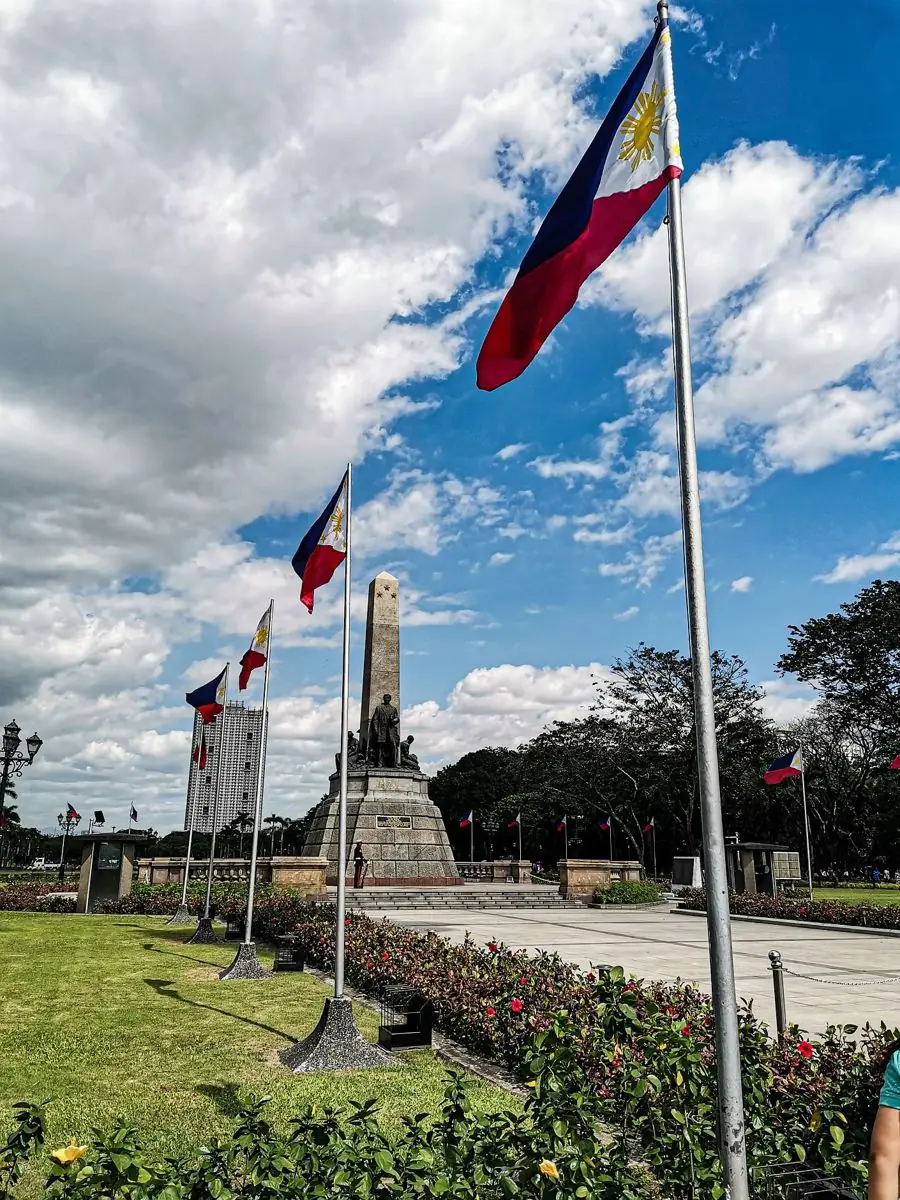
Calamba is not a literary pilgrimage town in the way that Stratford-upon-Avon is, but it contains real anchors to Rizal's life — the family house, the church where he was baptized, the town plaza where the Rizal statue stands alongside the church. The Laguna landscape — the lake, the volcanic hills, the rice fields — is the landscape of his childhood and appears in his writing.

JR

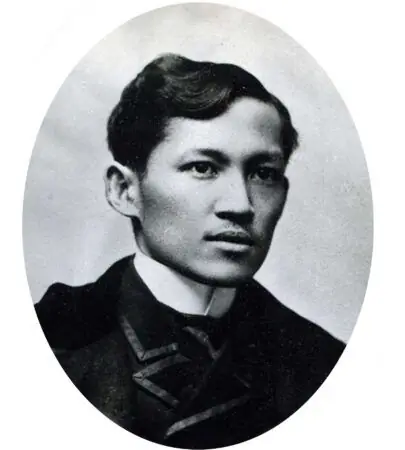
Jose Rizal

National Hero, Novelist, Physician1861–1896

Born in Calamba on June 19, 1861, Rizal studied medicine in Manila, then in Spain, Germany, and France. He wrote Noli Me Tangere (1887) and El Filibusterismo (1891) — novels that exposed the abuses of Spanish colonial rule and became the literary foundation of Philippine nationalism. He was executed by firing squad in Manila on December 30, 1896, at the age of 35. His execution turned him into a martyr and accelerated the revolution.

★
IRRI in Los Baños

The International Rice Research Institute (IRRI), established in Los Baños in 1960 with the support of the Ford Foundation, the Rockefeller Foundation and the Philippine government, developed the high-yield semi-dwarf rice varieties, starting with IR8, the 'miracle rice', that drove the Green Revolution in Asia in the late 1960s and 1970s and helped head off famine in the region. It sits beside the University of the Philippines Los Baños, which began as the UP College of Agriculture in 1909.

See the great festivals in Pista ng Pilipinas →

Laguna's food culture is built on the lake's freshwater fish, the province's coconut production, and a baking tradition centered on buko pie. The province sits at the edge of Metro Manila's food supply chain and has both the rural agricultural food of its interior and the more developed commercial food culture of its lakeside towns.

A sliced buko (young coconut) pie
Photo: Obsidian Soul · CC0 · Wikimedia Commons

Buko Pie

The defining pastry of Laguna — a double-crust pie filled with young coconut (buko) meat in a slightly sweetened coconut cream filling. The Los Baños version is the benchmark: large, simple, freshly baked. It was created by the Pahud sisters of Los Baños, who adapted an American apple pie using young coconut, since apples do not grow in the Philippines; their bakeshop became the Orient Buko Pie Bakeshop. Dozens of bakeshops along the highway from Manila sell buko pie, and the competition for the best version is an ongoing provincial argument.

Sinantolan

A Southern Luzon specialty, cooked in Laguna, Quezon and Bicol, of grated santol rind simmered with shrimp paste (bagoong alamang), siling haba, onion, garlic and coconut cream. The santol is sour and aromatic; the coconut cream and bagoong balance it. Its name means "done with santol", and it is also called ginataang santol.

Buko Pie

Laguna (Los Baños)
30 minutesPrep
40 minutesCook
8Serves
Ingredients
  • 2½ cupsall-purpose flour
  • 120gcold butter, cubed
  • 6–8 tbspcold water
  • 1 tspsalt
  • 3 cupsyoung coconut meat (buko), shredded
  • 1 cupcoconut milk
  • ½ cupsugar
  • 4 tbspcornstarch
  • 1egg yolk, beaten (for wash)
Method
  1. Make pastry: mix flour and salt. Cut in cold butter until mixture resembles coarse crumbs. Add cold water tablespoon by tablespoon until dough comes together. Divide into two portions, wrap, and refrigerate for 30 minutes.
  2. Make filling: combine coconut milk, sugar, and cornstarch in a saucepan. Cook over medium heat, stirring constantly, until thick. Remove from heat and stir in buko meat. Cool completely.
  3. Preheat oven to 190°C.
  4. Roll out one dough portion and line a 9-inch pie dish.
  5. Pour cooled filling into the pastry shell.
  6. Roll out second dough portion and place over filling. Crimp edges to seal.
  7. Brush top with egg yolk wash. Cut several vents.
  8. Bake 35–40 minutes until golden.
  9. Cool before slicing — the filling sets as it cools.
Cook's note

The filling must be completely cool before assembling — a warm filling makes the pastry bottom soggy. Use fresh buko from a market vendor rather than canned coconut; the texture is entirely different. The best buko pie in Laguna uses buko harvested on the day of baking.

Laguna is a Tagalog-speaking province. The Tagalog spoken here is essentially the same as Manila Tagalog, and because Laguna sits in the Tagalog heartland, it is a province where Filipino — the national language based on Tagalog — feels entirely at home rather than imposed.

TagalogPrimary Language
National language baseSpeakers
Austronesian / PhilippineLanguage Family
CALABARZON (Region IV-A)Region

Rizal wrote primarily in Spanish, secondarily in Tagalog and French and German. The language question of his era — what language should the Philippine nation use — was not yet resolved, and Rizal navigated multiple languages simultaneously. The Tagalog translations of his novels, made after his death, gave them a wider Philippine readership but the original Spanish versions are the literary objects.

★
Tagalog and Filipino

Filipino, the national language, is based on Tagalog — specifically the Manila-area Tagalog that became the medium of national broadcasting, literature, and education in the twentieth century. Laguna Tagalog, slightly different from Manila Tagalog in vocabulary and some grammatical forms, feeds into this standard. Being in Laguna is being at the source of the national language.

Laguna is the closest province to Metro Manila, connected by multiple highways. The SLEX expressway reaches Calamba in about an hour from Makati in light traffic — though traffic on this route can be severe on weekends. The province is one of the most heavily visited in the Philippines, partly because of its accessibility.

~50 km to CalambaDistance from Manila
1–2 hours (SLEX, varies with traffic)Travel Time
Multiple Manila–Sta. Cruz–Lucena routesBus Routes
NAIA, ManilaNearest Airport
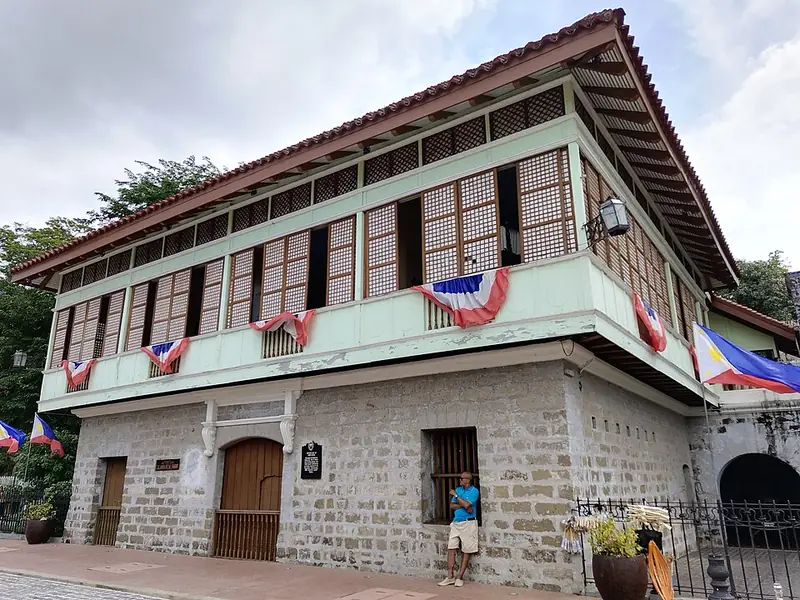
The Rizal Shrine in Calamba, a reconstruction of Jose Rizal's family house
Photo: Tagaaplaya · CC BY-SA 4.0 · Wikimedia Commons

Rizal Shrine, Calamba

The reconstructed family home of José Rizal in Calamba, rebuilt on the original site with materials of the period and inaugurated on 19 June 1950, now a museum. The house contains period furniture, personal effects, and documentation of Rizal's life. The shrine is set in a garden with a statue of Rizal. It is modest in scale — the original house was destroyed — but the site is historically significant and well-maintained.

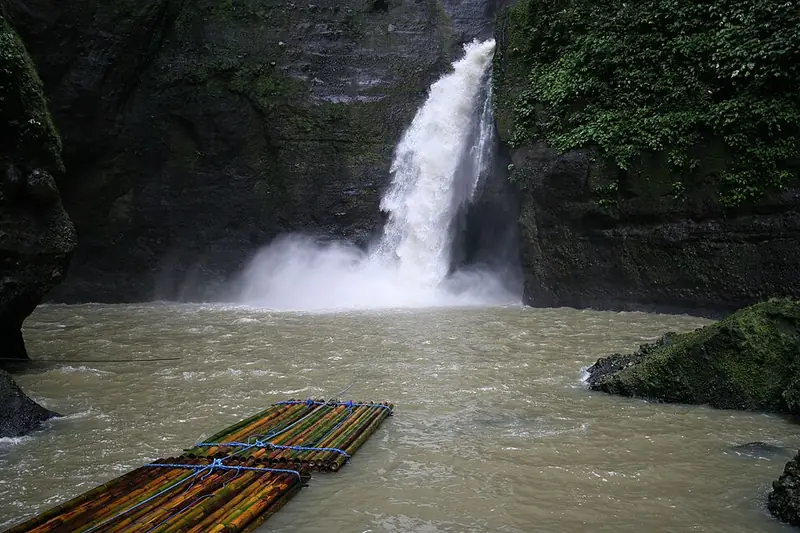
Pagsanjan Falls pouring into a pool, with bamboo rafts in front
Photo: Andrew Martin · CC BY 3.0 · Wikimedia Commons

Pagsanjan Falls

A waterfall, locally called Magdapio Falls and now officially Cavinti Falls, in the interior of Laguna. It lies in Cavinti, about 3.2 kilometers from the Pagsanjan boundary, but the popular trip is by banca (dugout canoe) upstream through the gorge from Pagsanjan; it can also be reached from above by a short hike from Cavinti. The falls drop into a pool surrounded by high rock walls. The gorge is dramatic; the experience of riding the rapids back downstream is standard tourist fare but genuinely exciting. The Pagsanjan River gorge was used as a filming location for Apocalypse Now (1979).

Los Baños Hot Springs

The municipality of Los Baños (literally 'the baths') has numerous hot spring resorts fed by geothermal activity associated with the dormant Makiling volcano. The resort development ranges from basic to upscale. The UP Los Baños campus, adjacent to the town, has forest trails into the Makiling Forest Reserve, which the university administers.

✦
Buko Pie Route

The highway through Calamba and Los Baños is lined with bakeshops selling buko pie. The quality varies. The Orient Buko Pie Bakeshop in Los Baños, founded by the Pahud sisters who created the pie, has the longest-established reputation. Buying directly from producers in early morning when pies are fresh from the oven is the best approach. Avoid pies that have been sitting in glass cases for hours.

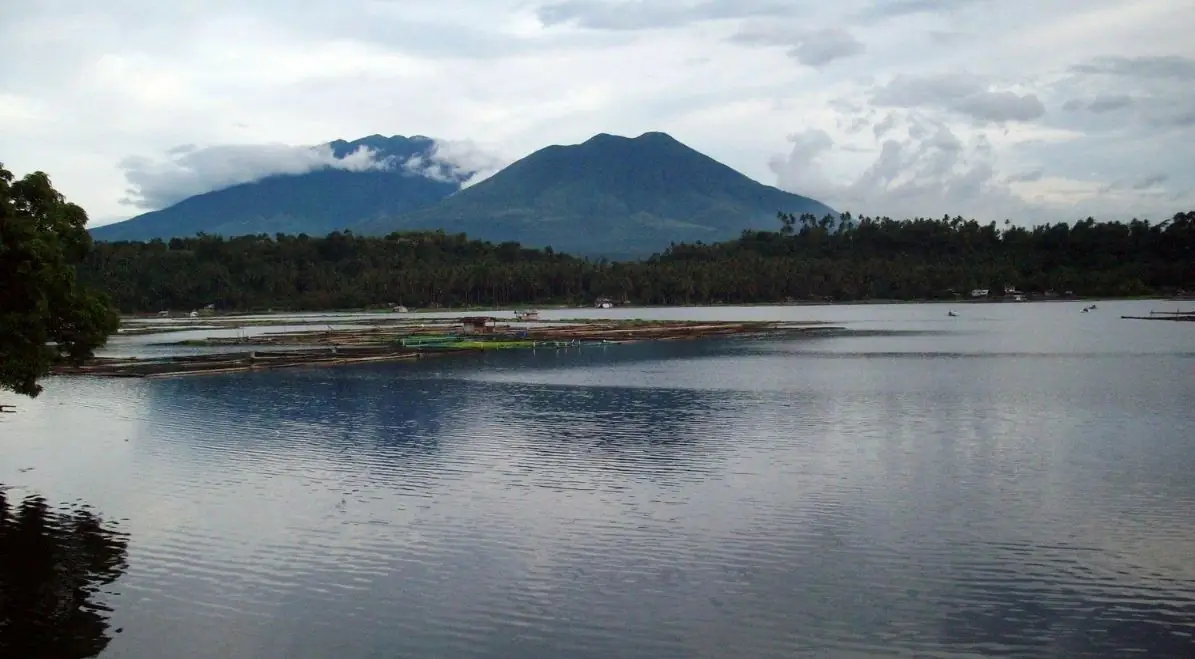
Laguna is defined by its lake and its two mountains. Laguna de Bay, with a surface area of 911 to 949 square kilometers but an average depth of only about 2.8 meters, is one of the country's main sources of freshwater fish and feeds Laguna's duck industry; at least 18 fish species are known from it, three of them endemic to the Philippines, but water pollution, fish kills and invasive species such as janitor fish, clown knifefish and blackchin tilapia threaten the native fish. Mount Makiling, 1,090 meters high, is a forest reserve set aside in 1910 and administered since 1990 by UP Los Baños as a living laboratory; it was declared an ASEAN Heritage Park in 2013. To the southeast, around San Pablo, lie the seven crater lakes of the San Pablo Volcanic Field, between Makiling and Mount Banahaw.

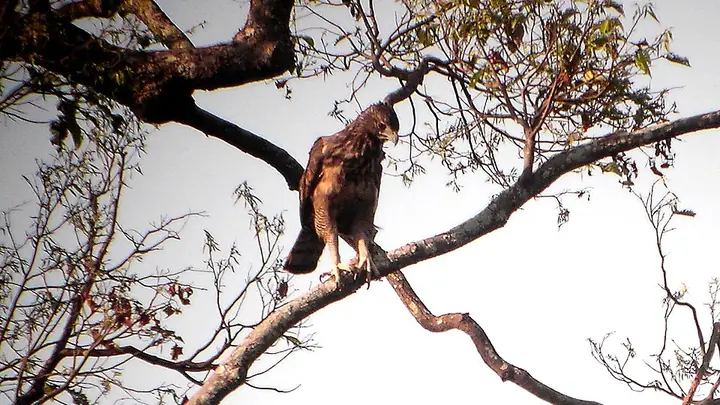
A Philippine hawk-eagle perched in a tree
Photo: markaharper1 · CC BY-SA 2.0 · Wikimedia Commons
Philippine Hawk-Eagle
Nisaetus philippensis
Endangered
A crested forest eagle found only in the Philippines; Mount Makiling is one of the few protected areas where it still occurs. The IUCN estimated 1,000 to 2,000 mature birds in 2024, and numbers are still falling as forest is cleared and birds are trapped for food and the pet trade.
Field note: Never buy wild raptors. Report trapped or captive eagles to the DENR.
Ayungin (Silver Perch)
Leiopotherapon plumbeus
Endemic to the Philippines
A small silvery grunter found only in the Philippines and one of the lake's three native fish endemic to the country. It was the most abundant fish in Laguna de Bay in 1991 and the third most abundant by 2002, and it is still a common food fish.
Field note: Choose native lake fish, and help keep litter and waste out of the lake.
Meet all 65 Philippine animals in Hayop ng Pilipinas →
← All stories
Lugar · San Pablo

The Seven Lakes of San Pablo

In the province of Laguna, around the city of San Pablo, lie seven crater lakes, a quiet wonder set among green hills and mountains.

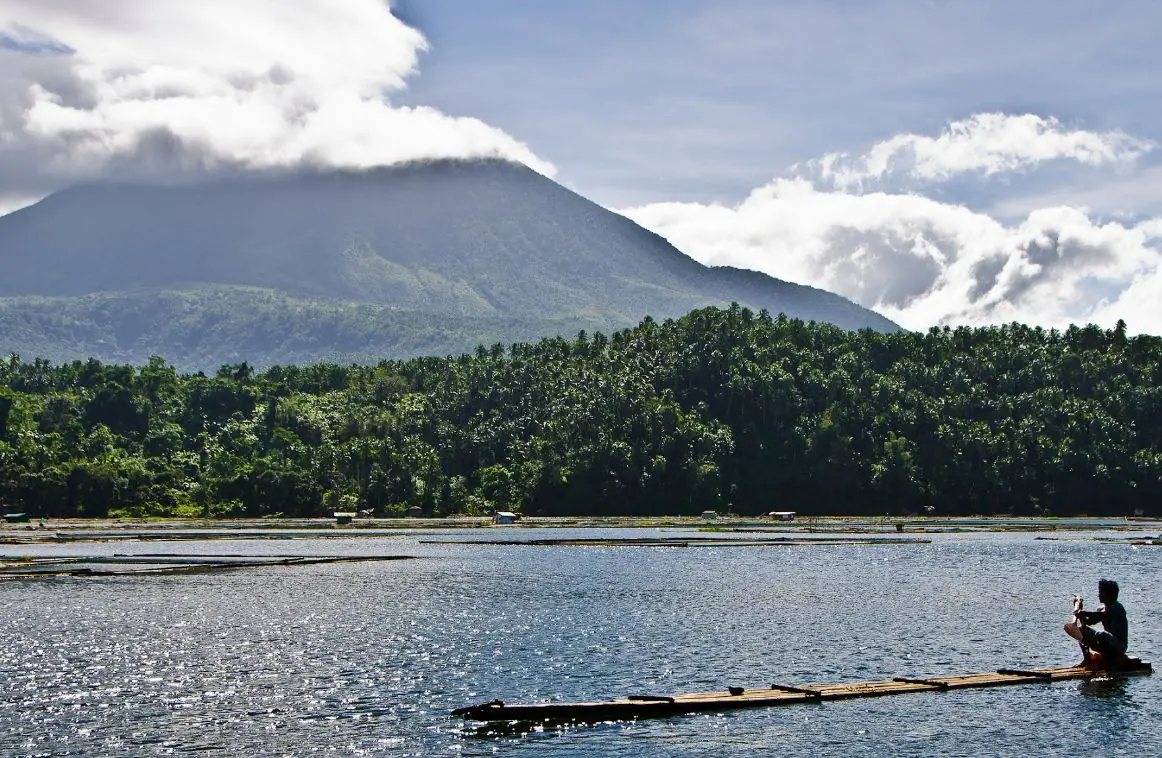
The lakes are maars, formed where hot magma met groundwater in violent eruptions long ago. They belong to the San Pablo Volcanic Field, in the rift between Mount Makiling and Mount Banahaw. Each has its own character: Sampaloc, the largest and deepest, ringed by a walking and cycling path; the twin lakes of Pandin and Yambo, crossed by bamboo raft, with a floating restaurant on Pandin; Bunot and Kalibato; Palakpakin, a favorite for picnics; and Muhikap, tucked away and loved by birdwatchers.

The lakes have suffered from over-fishing and crowding on their shores, but conservation work, including clearing structures and teaching care for the water, is helping them recover. They remain one of Laguna's most peaceful escapes.

Mga Larawan

← All stories
Kasaysayan · Calamba

Jose Rizal of Calamba

Jose Protasio Rizal was born on 19 June 1861 in Calamba, Laguna, and is honored as the national hero of the Philippines. He was a doctor, a writer, and a reformist.

He studied at the Ateneo Municipal de Manila, then medicine and letters in Europe, at Madrid and Paris, where liberal ideas shaped his thinking. His novels, Noli Me Tangere in 1887 and El Filibusterismo in 1891, laid bare the injustices of Spanish rule and awakened a national consciousness.

Rizal argued for reform and education rather than armed revolt, yet his writing made him a threat. On his return he was arrested and exiled to Dapitan in Mindanao, where he taught, healed the sick, and continued his studies.

On 30 December 1896 he was executed by firing squad at Bagumbayan, now Rizal Park in Manila. His death lit the fire of the revolution. His birthplace in Calamba, and his final poem Mi Ultimo Adios, keep his memory close.

Mga Larawan

← All stories
Kasaysayan · Pila

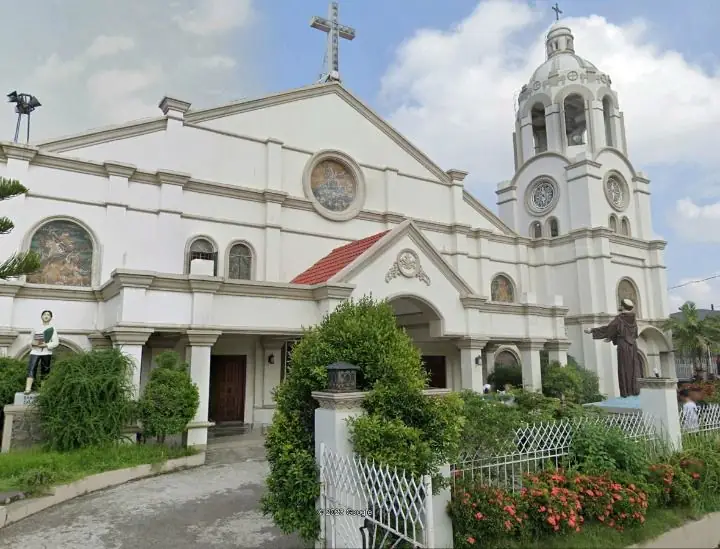
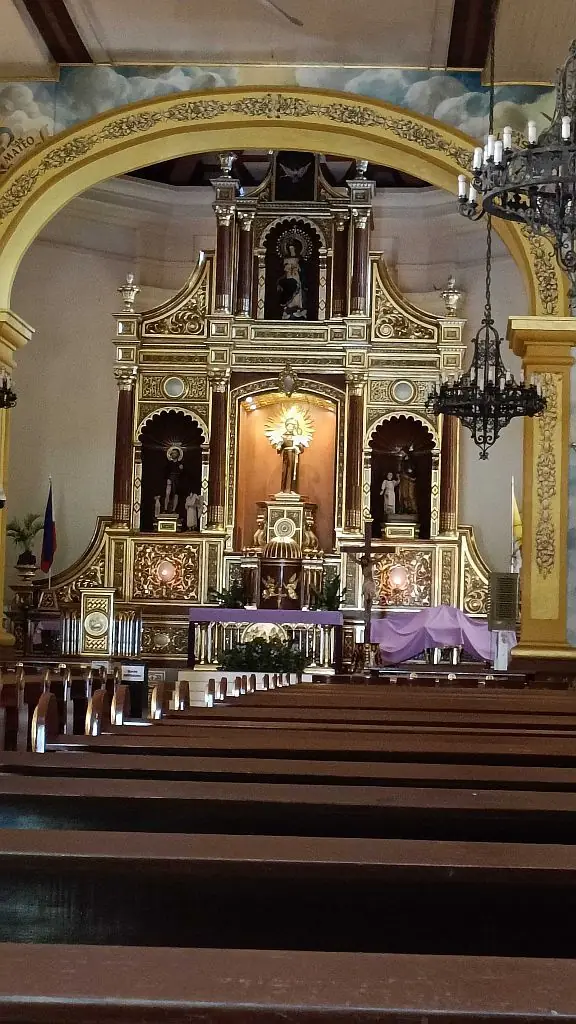
The Church of Pila

The San Antonio de Padua Parish Church stands at the heart of Pila, Laguna, one of the country's best-preserved heritage towns.

The mission was founded in 1578 by Franciscan friars, and Pila became a parish in 1581. It is held to be the earliest parish dedicated to Saint Anthony of Padua in the Philippines. The claim that it was the first in Asia is a local tradition rather than settled history.

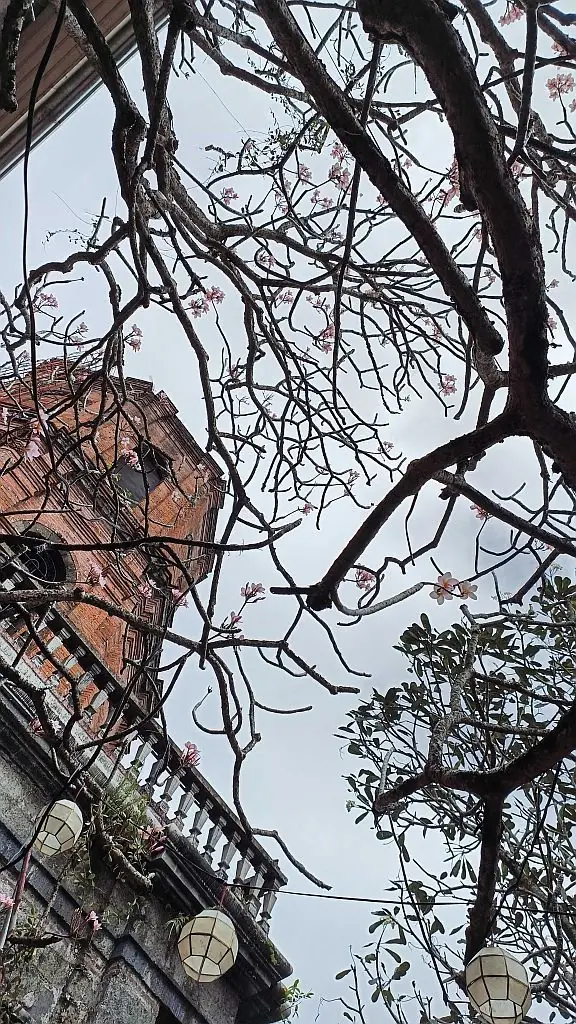
The church shows Spanish-colonial architecture, with a Baroque facade and a richly worked interior, and has been rebuilt more than once after disasters. Around it, the old plaza and ancestral houses form the Pila Historic Town, declared a National Historical Landmark. It remains the town's spiritual and cultural center.

Mga Larawan

Sources · updated 4 October 2026
Photo credits (5)

Photos from Wikimedia Commons, used under the licences shown; some were resized. All photo credits