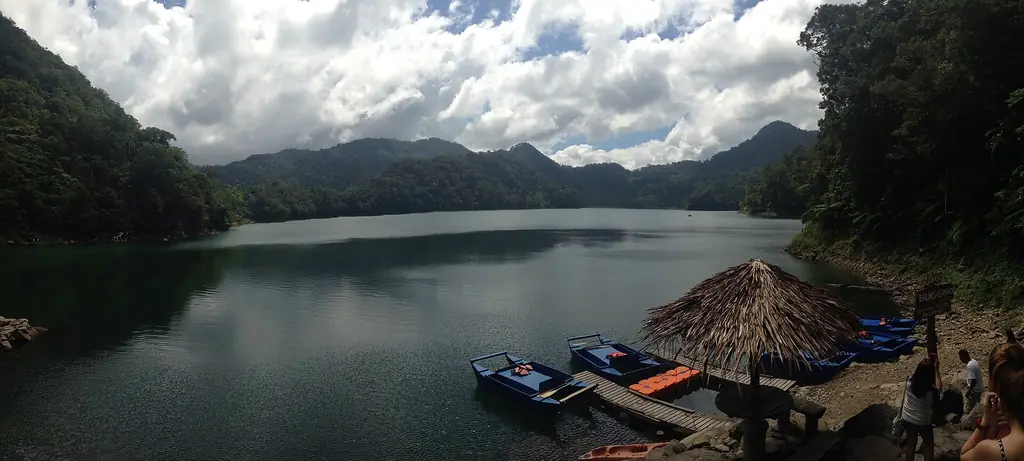
Lake Balinsasayao in the forested Twin Lakes Natural Park
Photo: rocker_jkb · CC BY 2.0 · Wikimedia Commons
Map

Negros Oriental

Negros Island Region
Visayas
Capital Dumaguete City
Population (2024) 1,492,038
Area 5,386 km²
Municipalities 19
Cities 6
Island Group Visayas
Languages Cebuano, Hiligaynon

Population: 2024 census (PSA). Area: land area.

Kapitbahay — Neighboring Provinces

Negros Oriental occupies the eastern half of Negros Island, facing the Bohol Sea across the narrow channel that separates it from Bohol and Cebu. Its capital, Dumaguete City, carries a reputation unusual for a Philippine city: earned, not manufactured. It is called the City of Gentle People, and those who have spent time there tend to agree.

Dumaguete CityCapital
5,386 km²Area
19 + 6 citiesMunicipalities
VisayasIsland Group

The province runs from the flat coastal municipalities of the north to the rugged mountain terrain of the south, where the forests of twin lakes Balinsasayao and Danao have been a protected natural park since 2000. The Cuernos de Negros — the mountain peaks visible from Dumaguete — provide a constant backdrop to city life.

★
A University Town

Silliman University, established in 1901 by American Presbyterian missionaries, was the first Protestant institution of higher education in the Philippines and in Asia. Its forested campus in central Dumaguete sets the character of the city — bookish, open, slightly unhurried — in a way that few institutions shape a Philippine city.

The 2024 census counted 1,492,038 people in Negros Oriental, which has 19 towns and six cities: Dumaguete, Bais, Bayawan, Canlaon, Guihulngan and Tanjay. Dumaguete is the capital and the most populous city. In 2024 Republic Act No. 12000 moved the province from Central Visayas into the new Negros Island Region, together with Negros Occidental and Siquijor.
Before the Spanish

The Visayan communities of eastern Negros traded with Cebu and Bohol long before Spanish arrival. The coastal settlements were part of the broader Visayan world — connected by sea, sharing language and custom, without centralised political authority of the kind the Spanish would later impose.

1565

Legazpi's Men Name the Island

Members of the Legazpi expedition reached Negros in April 1565. Carried by the strong currents of the Tañon Strait, they landed on the western side of the island and named it "Negros". Augustinian friars began the Christianization of the island in the early 1570s.

1890

Negros Is Divided in Two

Moro raids on the southeastern coast and the distance to the island capital at Bacolod led Recollect priests to petition for a division in 1876. A royal decree carried out on 1 January 1890 split the island into Negros Oriental and Negros Occidental, with Dumaguete as the eastern capital.

1898

Revolution in Dumaguete

Revolutionary troops led by Don Diego de la Viña overthrew the Spanish government in Dumaguete on 24 November 1898. Eastern and western Negros then joined in the short-lived Cantonal Republic of Negros.

1901

Silliman University Founded

American Presbyterian missionaries David and Laura Hibbard established Silliman Institute in Dumaguete — the first American school in the Philippines outside Manila. It grew into a full university, shaping Dumaguete's identity as an educational center that drew students from across the Visayas and Mindanao.

1971

Siquijor Becomes Its Own Province

Siquijor, which had been a sub-province of Negros Oriental under the Americans, became a separate province on 17 September 1971 under Republic Act No. 6396.

2000

Twin Lakes Natural Park

Proclamation No. 414 of 21 November 2000 made the forests around Lakes Balinsasayao and Danao, in Valencia, Sibulan and San Jose, a protected natural park of about 8,016 hectares. It was named an ASEAN Heritage Park in 2025.

DH

David Sutherland Hibbard

Founder, Silliman University1868 — 1966

Hibbard arrived in Dumaguete in 1901 and spent the rest of his life building an institution that would outlast the colonial period that created it. Silliman University today enrolls more than 10,000 students from the Philippines and dozens of other countries.

Dumaguete's character is shaped by its universities — Silliman, Negros Oriental State University, and several others create a population that is unusually youthful, literate, and transient. The city has produced an exceptional number of Filipino writers, poets, and academics relative to its size.

The Sillimanians

The alumni network of Silliman University stretches across every profession in the Philippines. To be a Sillimanian is to carry a particular identity — shaped by the campus's American Protestant heritage, its emphasis on liberal arts, and its tradition of student activism and environmental advocacy.

Buglasan Festival

Held every October, the Buglasan Festival is the province-wide celebration of Negros Oriental — a week of street dancing, cultural presentations, and competitions that bring all municipalities together. The name comes from a local plant. The event is Dumaguete's largest annual gathering.

★
The Writers of Dumaguete

The Silliman National Writers Workshop — held annually since 1962 — is one of the oldest creative writing workshops in the Philippines. It has produced many of the country's most significant writers in English and Filipino.

See the great festivals in Pista ng Pilipinas →

Negros Oriental's cuisine shares the Cebuano and Visayan tradition but carries local inflections — the coastal municipalities provide abundant seafood, the interior produces vegetables and root crops, and Dumaguete's student population has generated a cafe and restaurant culture unusual for a city of its size.

Budbud Kabog

A traditional Negros Oriental rice cake made from millet (kabog) wrapped in banana leaves and steamed. Served with hot chocolate, it is the standard breakfast of the highland municipalities and a distinctly local preparation — kabog millet is grown in the interior barangays and rarely found elsewhere.

Sans Rival

Dumaguete's most famous pastry: layers of dacquoise meringue, buttercream, and cashews. The name is French — 'without rival.' Several bakeries in the city have been making it for generations, and the debate over whose version is best is an active local controversy. Sylvia's and Sans Rival Cakes and Pastries are the two main contenders.

✦
Oslob Whale Sharks

Whale shark watching at Oslob — on the southern tip of Cebu, easily reached from Dumaguete by ferry — begins before dawn. The interaction has been controversial among marine biologists. Visit the research station to understand the ongoing debate before deciding whether to swim.

Piaya and Barquillos

Flatbread filled with muscovado sugar (piaya) and thin rolled wafer cookies (barquillos) are the standard pasalubong from Negros Oriental and the broader Negros island. Both are made with the muscovado sugar produced from the sugarcane fields of the island's western side.

Cebuano is the primary language of Negros Oriental, shared with most of the central and eastern Visayas. It is the language of the market, the school, the church, and everyday life across all municipalities. Dumaguete's university population adds a strong English presence to the city's linguistic mix.

Cebuano (72%)Main language
Hiligaynon (28%)Also spoken
Filipino, EnglishSecond languages
Austronesian, BisayanFamily

Cebuano in Negros Oriental

The Cebuano spoken in Negros Oriental is close to the Cebuano of Cebu across the Tañon Strait, with some local words and intonation. About 72% of residents speak Cebuano as their first language; most of the rest speak Hiligaynon.

★
Hiligaynon in the West

While Negros Oriental is predominantly Cebuano-speaking, communities near the border with Negros Occidental use Hiligaynon (Ilonggo) as their daily language. The division of Negros Island into two provinces roughly follows the language boundary — Cebuano to the east, Hiligaynon to the west.

Dumaguete is one of the more pleasant Philippine cities to arrive in — small enough to walk, large enough to have excellent food and accommodation, and well-connected by fast ferry to Cebu and Bohol. It functions as the gateway to the entire southern Visayas.

1.5 hrs (air) or overnight ferryFrom Manila
4 hrs (fast ferry)From Cebu City
Sibulan AirportAirport
Nov–MayBest season
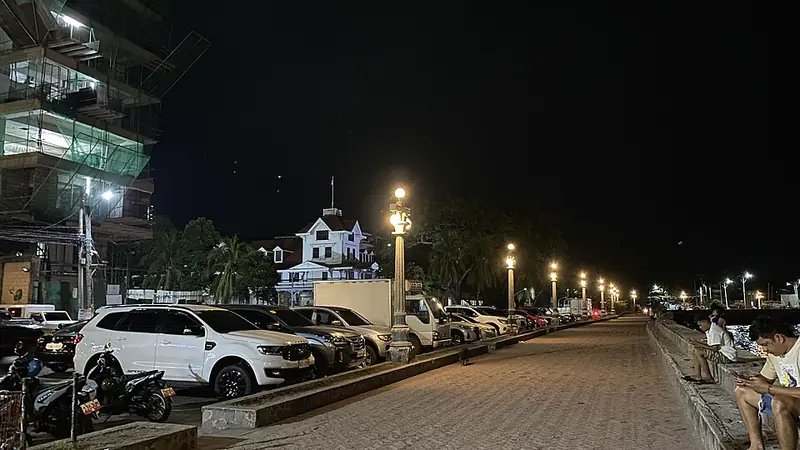
Rizal Boulevard, Dumaguete's seafront promenade, at night
Photo: IndayLiburan · CC BY-SA 4.0 · Wikimedia Commons

Rizal Boulevard, Dumaguete

The seafront boulevard running along Dumaguete's coast is the social center of the city — a wide promenade of benches, food stalls, and university students at most hours of the day. In the late afternoon, when the sun sets over the Bohol Sea and the mountains of Cebu rise in silhouette, it is one of the more beautiful urban waterfronts in the Visayas.

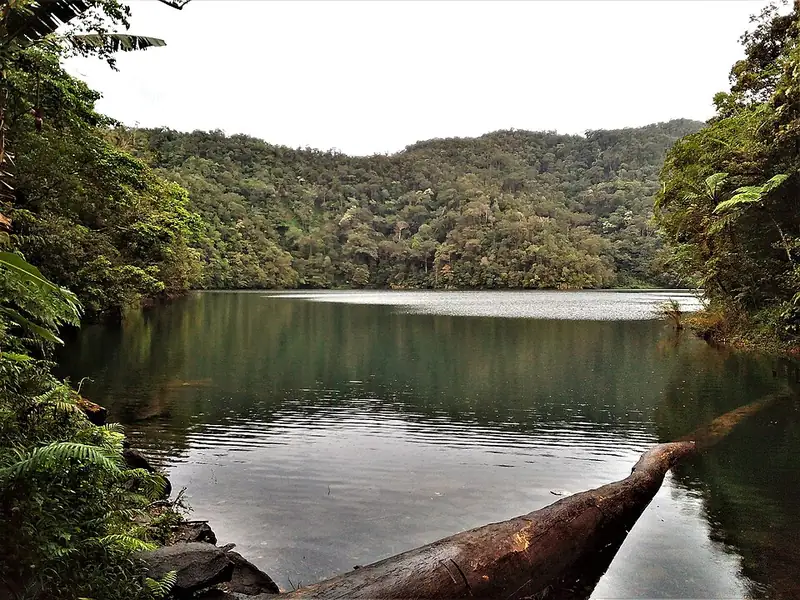
Lake Danao, the smaller of the Twin Lakes, among forested hills
Photo: Glenn.manalo · CC BY-SA 4.0 · Wikimedia Commons

Twin Lakes — Balinsasayao and Danao

Two crater lakes in the mountains above Dumaguete, reachable in about 45 minutes by habal-habal. The protected watershed forest around them is among the best-preserved in Negros Oriental. Boat hire on Balinsasayao, a short trek to Danao, and the silence of a mountain forest that has not been logged — it is worth the ascent.

Apo Island

A small island 30 minutes by boat from Malatapay, Apo Island has one of the most successful community-managed marine reserves in the Philippines. The reef has recovered dramatically since the 1980s — sea turtles feed in the shallows, and the visibility in the water is exceptional. The island community manages its own tourism and limits daily visitor numbers.

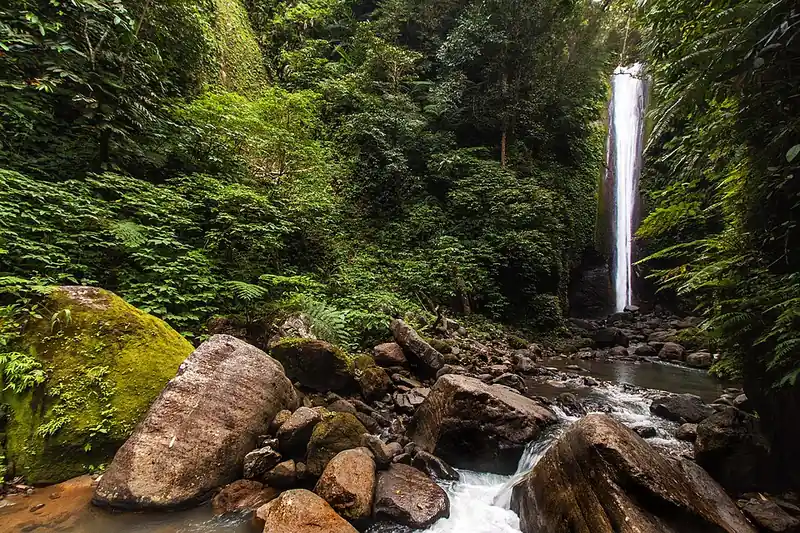
Casaroro Falls dropping into a boulder-strewn gorge, Valencia
Photo: Alexey Prokhorov · CC BY 3.0 · Wikimedia Commons

Casaroro Falls

A tall, narrow waterfall in the Valencia mountains above Dumaguete — 30 minutes from the city by road, then a descent of 340 steps to the base. The falls drop into a canyon of dark stone. Cold, clear pool at the bottom. The approach is wet and slippery in places. Arrive early.

✦
Silliman University Campus

The Silliman campus is open to visitors. Walk through the American-era buildings, the anthropology museum, and the forest park at the heart of the campus. The Silliman University Anthropological Museum holds the most significant collection of Visayan ethnographic material in the region.

The best-protected forest in Negros Oriental surrounds the twin crater lakes of Balinsasayao and Danao, on the slopes of the Cuernos de Negros (Mount Talinis) west of Dumaguete. The natural park is an important bird area with at least 114 bird species and 27 mammal species recorded, several of them found only on Negros and Panay.

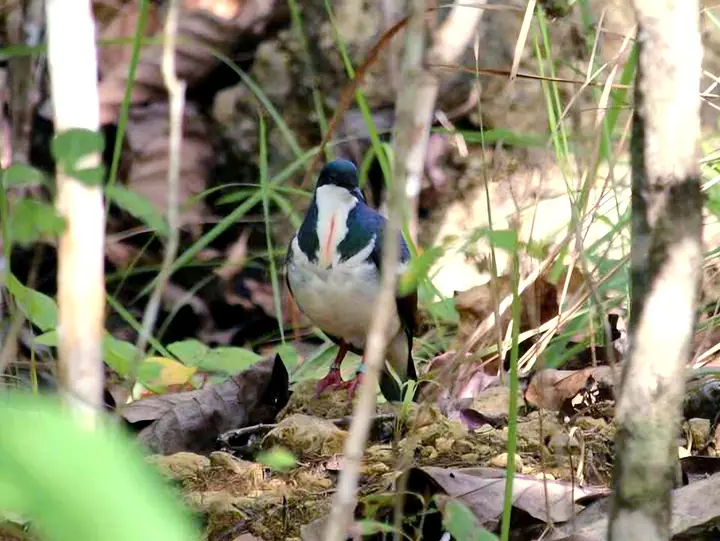
A released Negros bleeding-heart dove in Bayawan Nature Reserve, Negros Oriental
Photo: Dylan Mckenzie · CC BY-SA 4.0 · Wikimedia Commons
Negros Bleeding-heart
Gallicolumba keayi
Critically Endangered
A ground-dwelling forest dove with a bright red-orange patch on its white breast, as if wounded. It lives only on Negros and Panay and is recorded in the Twin Lakes forest.
Field note: Report sightings to the park office or the DENR. Never buy wild-caught birds.
Visayan Spotted Deer
Rusa alfredi
Endangered
A small, dark brown deer with cream spots, found only in the western Visayas. It is among the mammals documented in the Balinsasayao Twin Lakes forest.
Field note: Hunting it is illegal. Report snares or deer meat for sale to the DENR.
Meet all 65 Philippine animals in Hayop ng Pilipinas →
← All stories
Kasaysayan · Dumaguete

St. Paul University Dumaguete

St. Paul University Dumaguete began in 1904 as St. Paul's Academy, founded by seven Sisters of St. Paul of Chartres, with classes opening early the next year.

From a small academy it grew into a full university, one of many schools the Sisters run across the Philippines. Today it offers programs from mass communication and psychology to nursing, education, and business.

Its guiding values remain faith, learning, community, and charity. For more than a century it has shaped generations of Dumaguetenos, a quiet, steady presence in the city's life.

Mga Larawan

← All stories
Kasaysayan · Dumaguete

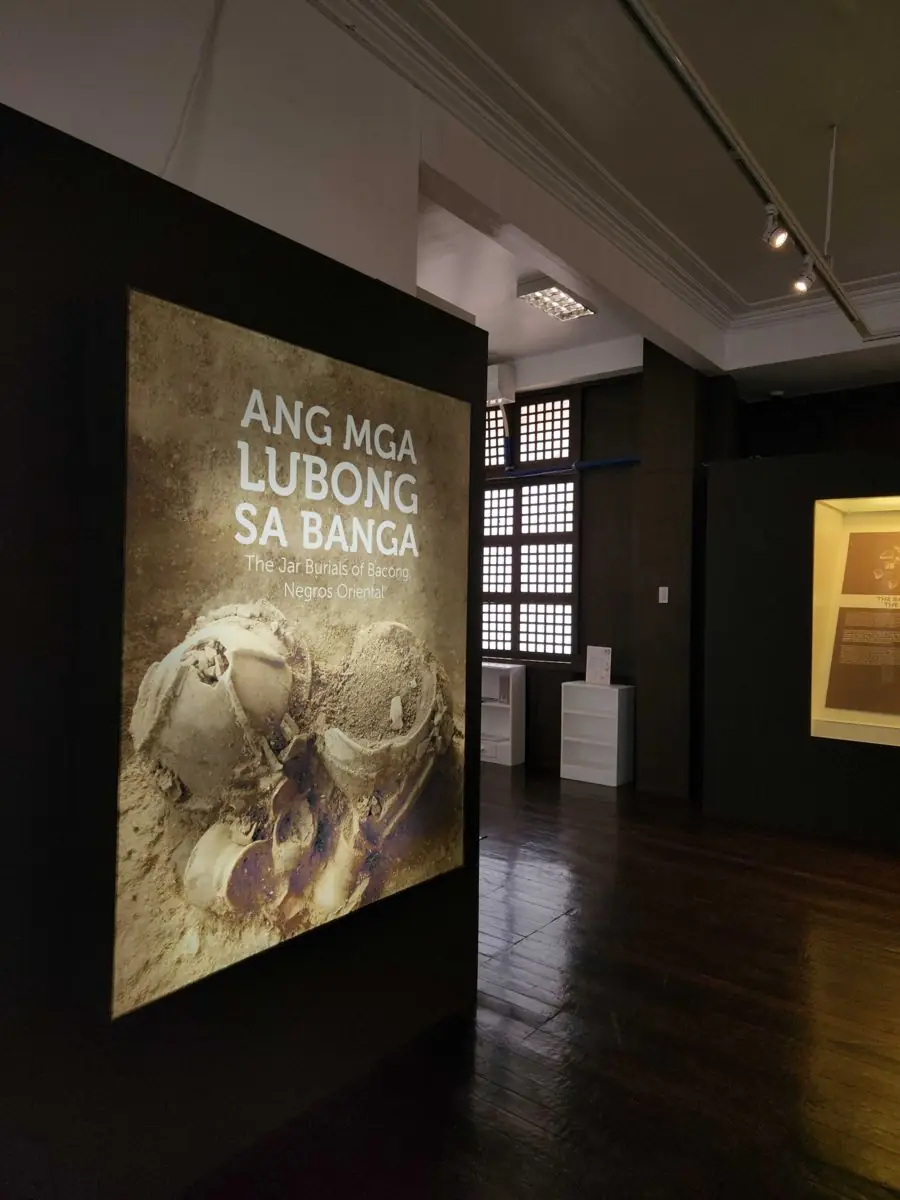
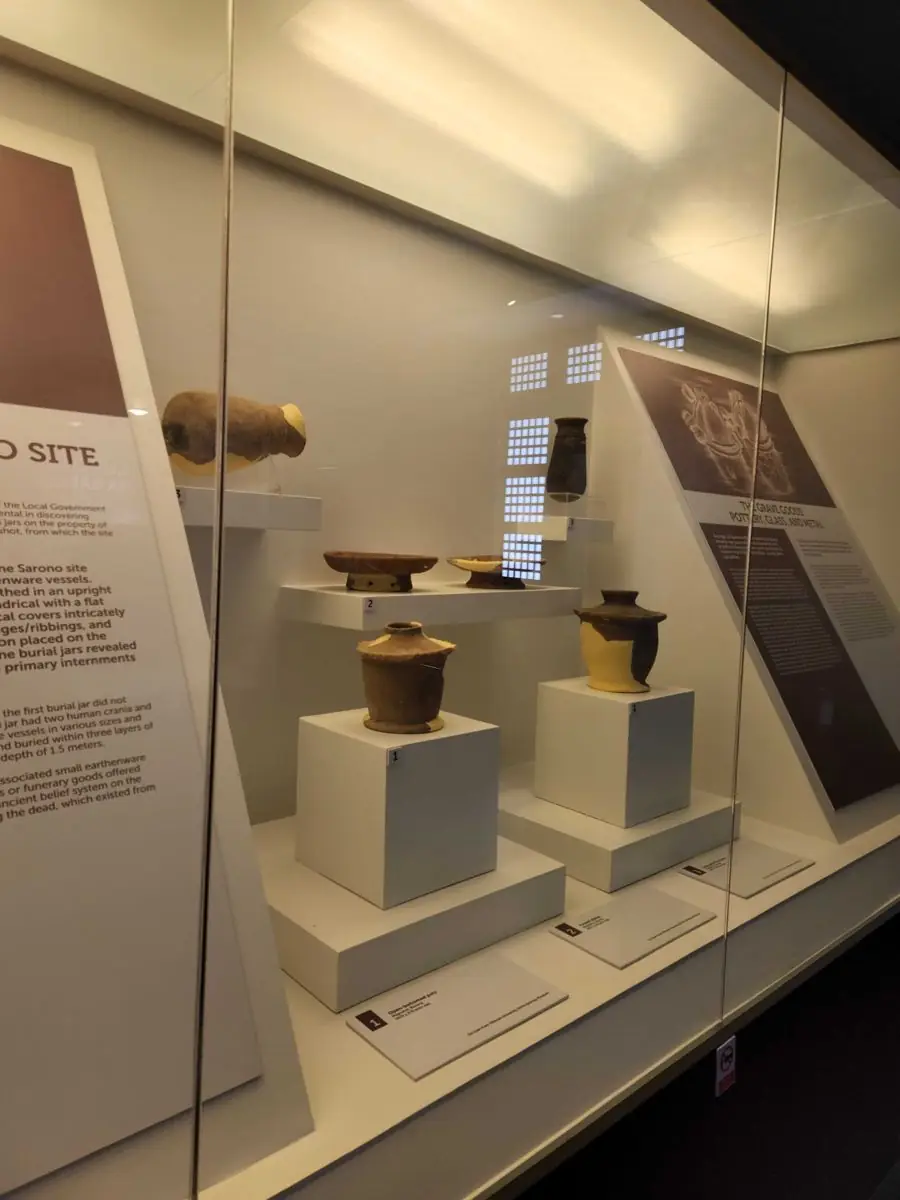
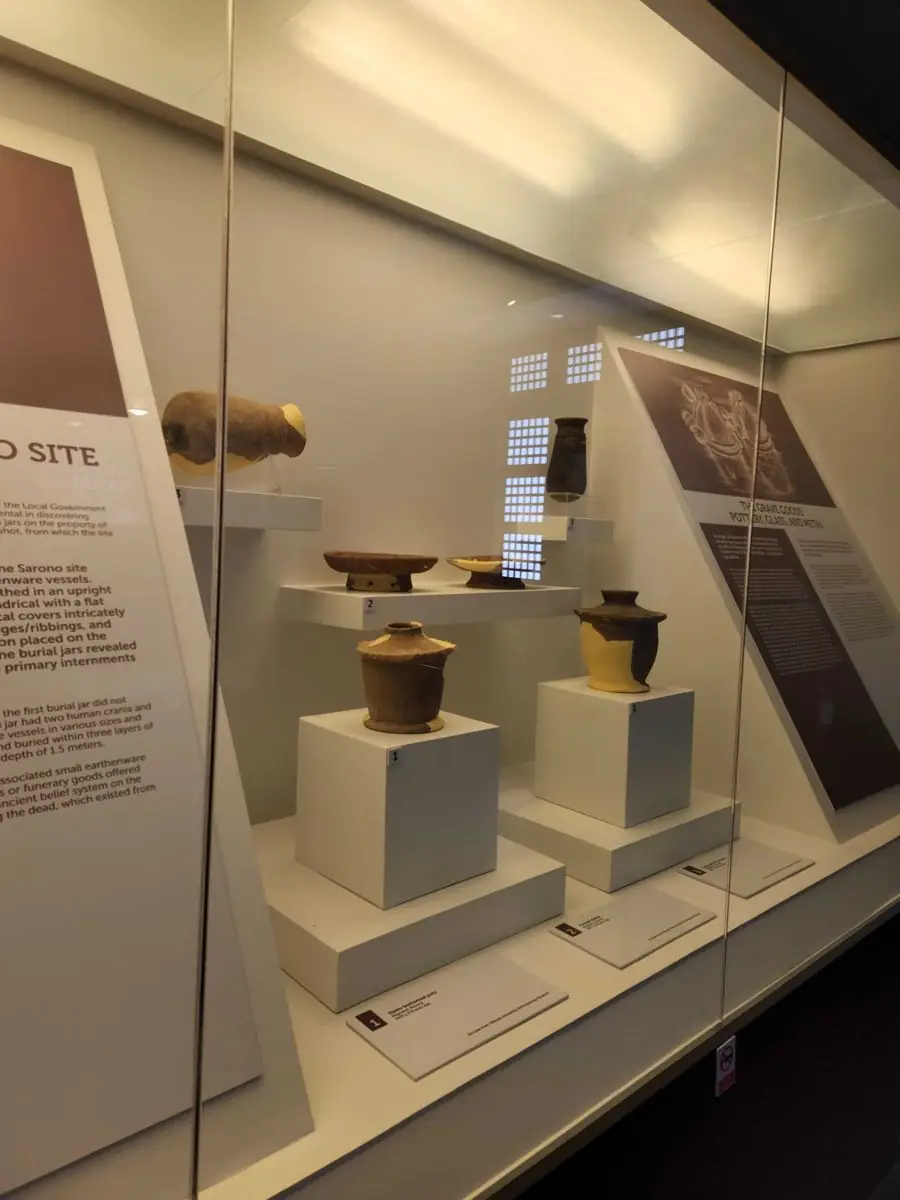
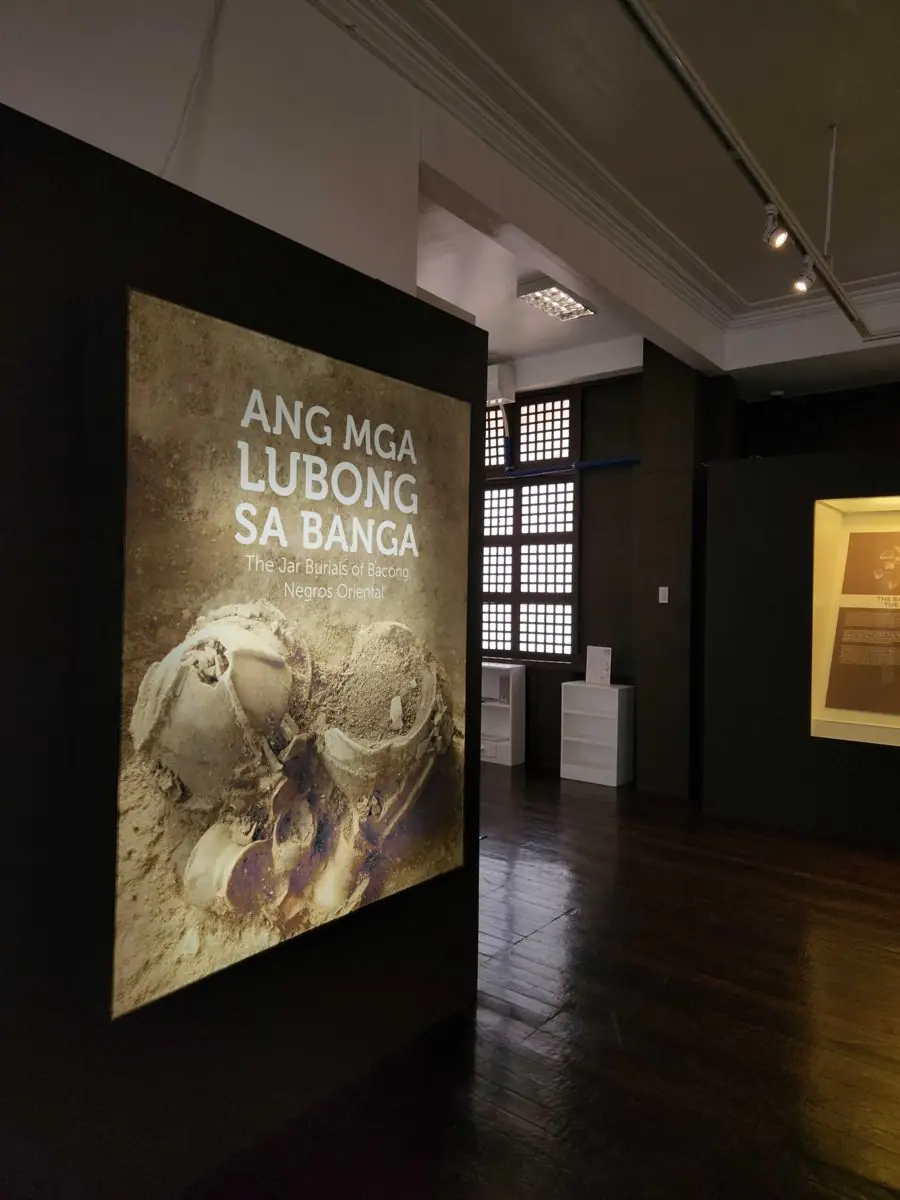
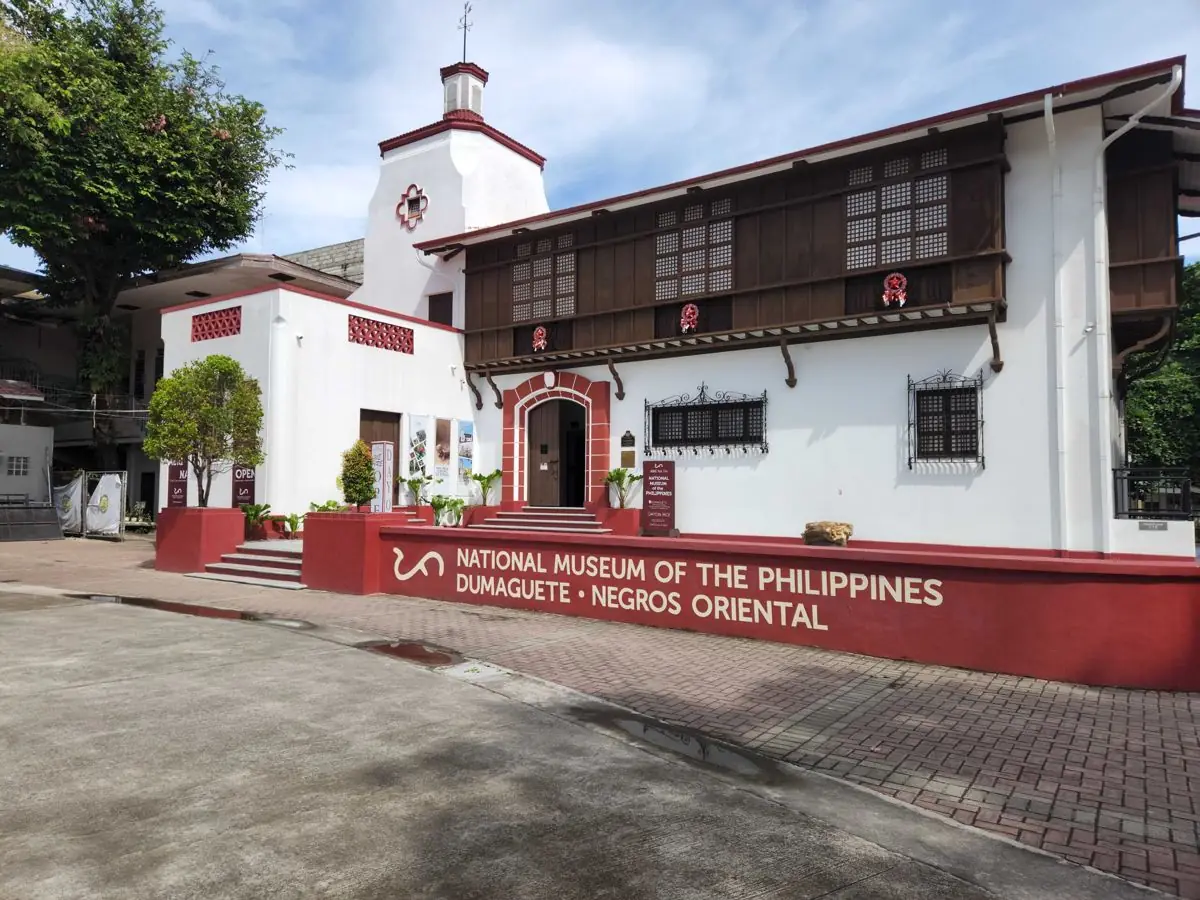
The National Museum, Dumaguete

The National Museum of the Philippines in Dumaguete offers a window into the heritage of Negros Oriental, set in the heart of the city.

Its galleries hold indigenous artifacts, historical relics, and art, with displays on the province's history, culture, and biodiversity. Interactive exhibits and rare collections make it a rewarding stop.

For anyone curious about Dumaguete's past and its living traditions, the museum is an easy and enriching visit, and entry to the National Museum is free.

Mga Larawan

← All stories
Lugar · Dumaguete

Rizal Boulevard Baywalk

After a long day, sometimes all you want is to breathe, feel the wind, and look at the sky. In Dumaguete, that place is the baywalk along Rizal Boulevard.

A walk here calms the mind. There are benches to rest on, a clean bay that speaks of a disciplined city, and the sea and the morning sun for company.

I spent nearly a month here, and the view and the warmth of the people stayed with me. Dumaguete earns its name, the City of Gentle People.

Sources · updated 4 October 2026
Photo credits (5)

Photos from Wikimedia Commons, used under the licences shown; some were resized. All photo credits