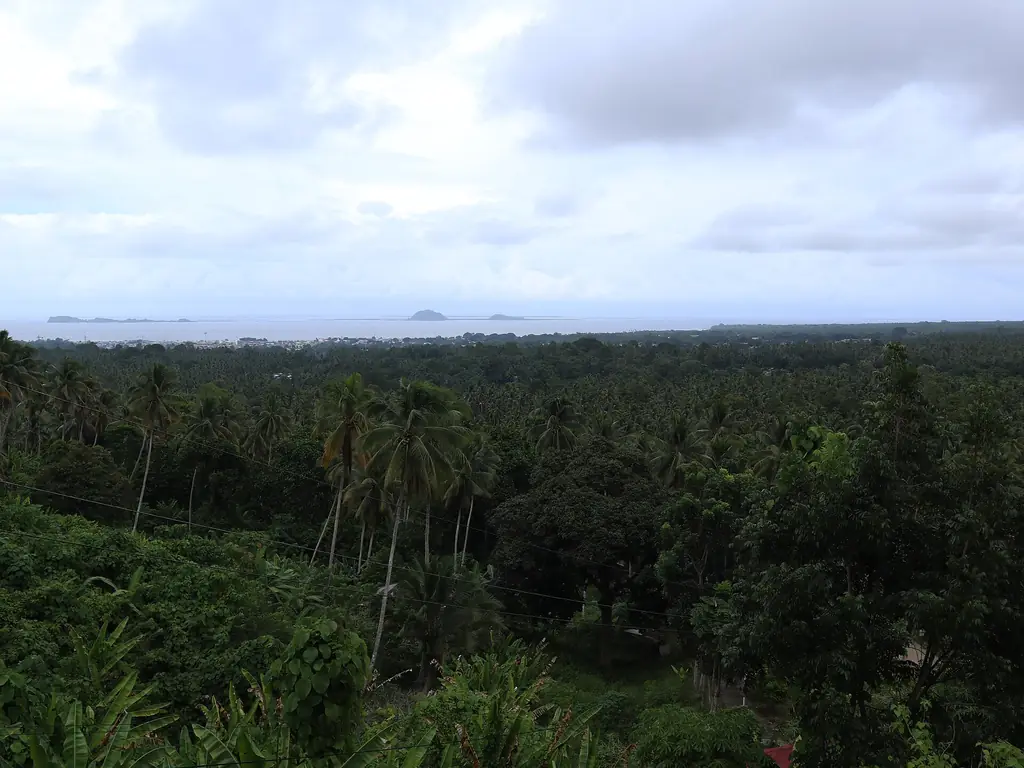
Green hills of Bud Agad seen from Jolo, Sulu
Photo: Patrickroque01 · CC BY-SA 4.0 · Wikimedia Commons
Map

Sulu

Zamboanga Peninsula
Mindanao
Capital Jolo
Population (2024) 1,146,097
Area 1,600 km²
Municipalities 19
Cities 0
Island Group Mindanao
Languages Tausug, Filipino

Population: 2024 census (PSA). Area: land area.

Kapitbahay — Neighboring Provinces
An island province — the sea is the only neighbor. That isolation shaped everything here.

Sulu is an archipelago province of more than 150 islands between Basilan and Tawi-Tawi, with the Sulu Sea to the north and the Celebes Sea to the south — a chain of coral reefs, fishing communities, and the heartland of the historic Sulu Sultanate. Its capital, Jolo, sits on the island of the same name and was for centuries the center of a commercial empire that connected the Philippines to the wider Islamic world. The province is part of Region IX (Zamboanga Peninsula).

JoloCapital
1,600 km²Area
19Municipalities
MindanaoIsland Group
Zamboanga Peninsula (IX)Region

The Tausug people — the people of the current, for that is what tausug means in their language — have lived on these islands and the surrounding sea for centuries, building a culture of maritime trade and Islamic scholarship, with a long history of resistance to colonial rule.

★
The Sulu Sultanate

At its height in the 18th century, the Sulu Sultanate was a major maritime trading power. It controlled key sea routes between China, the Malay world, and the Philippine islands. Jolo was a cosmopolitan trading port where merchants from across maritime Asia did business.

Sulu had 1,146,097 people in the 2024 census. The province has 19 towns on more than 157 islands and islets, set between the Sulu Sea to the north and the Celebes Sea to the south. Jolo, the main island, covers 868.5 square kilometers and is the 16th-largest island in the Philippines.
The Sultanate of Sulu

The Sultanate of Sulu — established in the 15th century by Abu Bakr, a scholar from Johor who married into the local ruling class — became the most powerful Islamic polity in the Philippines. Its control of the sea lanes between China, the Malay world, and the Spice Islands made Jolo one of the major trading ports of Southeast Asia. Spanish colonial forces attacked Jolo repeatedly across three centuries and never established permanent control.

c. 1450

Sulu Sultanate Founded

Sayyid Abubakar, a scholar from Johor, married Paramisuli, daughter of Rajah Baguinda, and inherited his realm, which he made the Sultanate of Sulu. As its first sultan he united the local political units under one rule and extended the sultanate's reach to the Zamboanga Peninsula, Palawan and Basilan.

1578

The Moro Wars Begin

Spanish expeditions against Jolo began in 1578, the start of more than three centuries of conflict between Spain and the Muslim sultanates of the south, which lasted until 1899.

1876

Spanish Capture Jolo

Spanish forces captured Jolo in 1876 and held it as a military station until 1899. In practice Spanish rule was limited to garrisons and a few civilian settlements.

1899

Bates Agreement

On 20 August 1899, Sultan Jamalul Kiram II and Brigadier General John C. Bates signed the Bates Agreement. It began the American period in Sulu and continued the gradual reduction of the sultan's powers that had started under Spain.

1915

Carpenter Agreement

In March 1915, under the Carpenter Agreement, the sultan gave up his temporal powers. Sulu had an appointed American governor until 1935.

1973

Tawi-Tawi Becomes a Separate Province

Presidential Decree No. 302 of 27 September 1973 created the province of Tawi-Tawi from Sulu's southern islands, including Sitangkai, Simunul and the Turtle Islands.

2024

Outside the Bangsamoro Region

Sulu voted against joining the Bangsamoro region in the 2019 plebiscite. On 9 September 2024 the Supreme Court ruled that it therefore could not be included, and it made the decision final on 26 November 2024.

Tausug culture is built around the sea and around Islam — two forces that shaped every aspect of life on the archipelago for centuries. The Tausug are among the most Islamised communities in the Philippines, with a tradition of Islamic scholarship, Quranic recitation, and the legal framework of the Sharia that predates Philippine nationhood by four centuries.

Okir and Brasswork

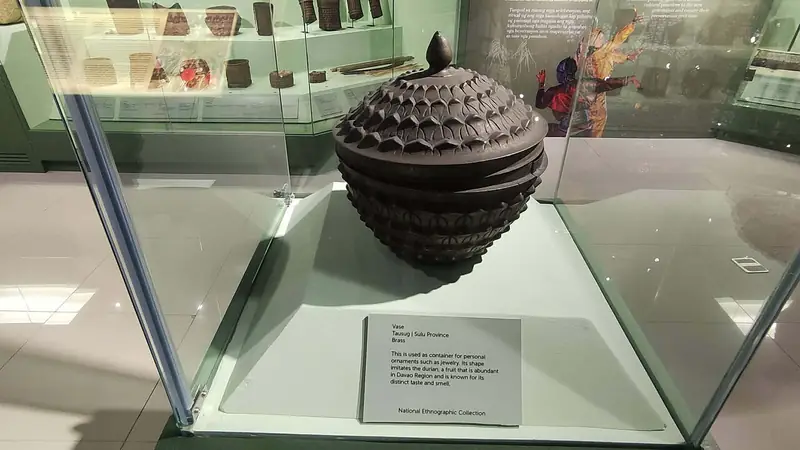
A durian-shaped Tausug brass container (museum piece)
Photo: PAULIX04 · CC BY-SA 4.0 · Wikimedia Commons

The okir decorative art — flowing geometric and botanical motifs used across woodcarving, metalwork, and textiles in the Bangsamoro world — reaches particular sophistication in Sulu. The brasswork of the Tausug craftsmen — betel nut sets, ceremonial containers, musical instruments — is among the finest decorative metalwork in Southeast Asia. The craft tradition is maintained in Jolo and the coastal municipalities despite the disruptions of the past decades.

Pangalay Dance

The pangalay — the classical dance tradition of the Tausug and related groups across the Sulu archipelago — is performed at royal and ceremonial occasions. The dancer's movements are characterised by the elaborate articulation of the fingers and wrists — movements trained from childhood and capable of expressing a complete vocabulary of cultural gesture.

★
The Kris of Sulu

The kris — the wavy-bladed sword of the Malay world — is most elaborately made in Sulu. Tausug master craftsmen produce blades with complex metalwork using techniques brought from Malay and Javanese traditions centuries ago. A fine Sulu kris is simultaneously a weapon, a ritual object, and a work of art.

See the great festivals in Pista ng Pilipinas →

Sulu's food is halal, maritime, and influenced by the Malay and Indonesian traditions that came with the sultanate's trade connections. Rice, fish, and coconut are the foundations. The piyaren and rendang-adjacent preparations that appear across the Bangsamoro world take distinct local forms in the Sulu archipelago, where the variety of seafood available shapes the cuisine more than anywhere else in Mindanao.

Tiyula Itum (Tausug Black Soup)

One of the most distinctive dishes in the Philippines: a dark beef or chicken broth blackened with burned coconut meat and spiced with ginger, lemongrass, and local peppers. The color is extraordinary — deep black, smoky, with a flavor that is at once rich and clean. Served at celebrations and royal occasions. The preparation of the burned coconut base is the technical core of the dish.

Satti (Satay, Sulu Style)

Sulu's version of the grilled skewer tradition found across maritime Southeast Asia: small pieces of beef or chicken grilled over charcoal and served with a spiced coconut sauce and pressed rice cake (puso). The satti of Jolo is sold from stalls before dawn — the morning meal of the working waterfront. The sauce is thicker and more complex than the peanut sauce of Indonesian satay.

✦
Halal Food Throughout

All food in Sulu is halal — pork is not available anywhere in the province. Beef, chicken, seafood, and goat are the primary proteins. The variety of seafood from the Sulu Sea is extraordinary: the same waters that once supplied the sultanate's royal kitchens still produce the fish, crab, and shellfish that define Jolo's market.

Tausug is the dominant language of Sulu — spoken by the Tausug people across the archipelago and serving as the lingua franca of trade throughout the southwestern Philippines. Tausug communities outside the province, including in neighboring countries, also speak it.

TausugMain language
Sama, BajauAlso spoken
Chavacano, MalayTrade
Filipino, EnglishSecond languages

Tausug — Language of the Current

Tausug is an Austronesian language of the Philippine branch, most closely related to the languages of the Visayas — a connection that reflects ancient maritime movement across the Sulu Sea before the Islamization of the archipelago. The language carries an extensive written tradition in the Arabic-derived Jawi script, used for centuries in the Sultanate's correspondence, legal documents, and religious texts.

★
The Sulu Letter to the King of Spain

The Sulu Sultanate maintained diplomatic correspondence with European powers — letters from the Sultan of Sulu to the King of Spain survive in the Archive of the Indies in Seville, written in Malay in the Jawi script. These documents represent some of the oldest surviving diplomatic records of Philippine political entities engaging with European states on formal terms.

Travel advisories for Sulu are issued by the Philippine government and by foreign governments, and they change over time. Check the current advisories before planning a visit. The information presented here describes the province's culture, history, and geography as a record, not as a travel guide for immediate use.

JoloCapital
Air or sea from ZamboangaAccess
Active — check before planningTravel advisory
Cultural and historicalBest context
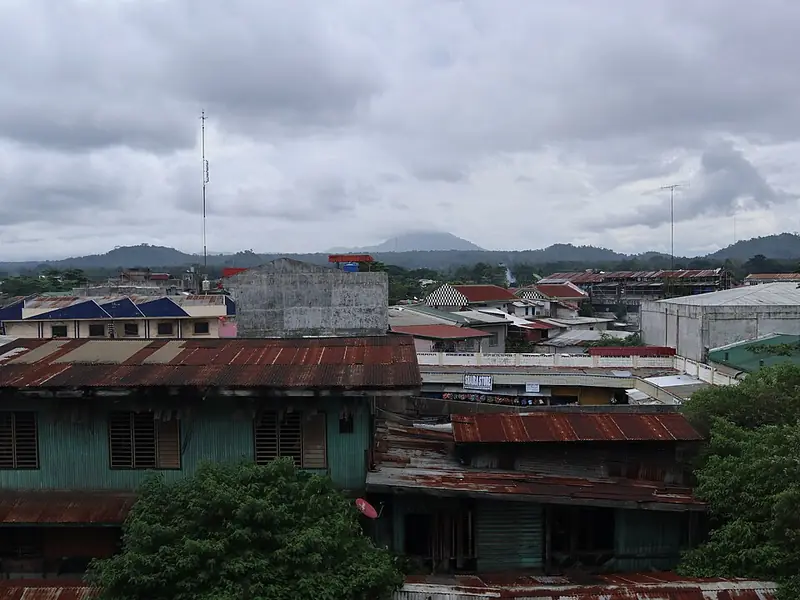
Rooftops of the Walled City district of Jolo
Photo: Patrickroque01 · CC BY-SA 4.0 · Wikimedia Commons

Jolo Town

The capital of Sulu and the historic seat of the Sulu Sultanate. The old town retains traces of the Spanish fortification, the colonial-era street grid, and the waterfront market that has been operating for centuries. The Tulay Bridge and the old market area were central to Jolo's identity as a trading port.

Bud Dajo

An extinct volcano about 8 km southeast of Jolo town, now within Mount Dajo National Park. In March 1906, US forces attacked Tausug villagers who had taken refuge in its crater; estimates of the dead range from about 600 to 1,000, including women and children.

✦
Planning a Visit

Check current official travel advisories and coordinate with local authorities and contacts before travel. Local guidance is essential.

Sulu's natural wealth is mostly in the sea. The Sulu Sea is one of the richest fishing grounds in the country, and Marungas Island has a pearl farm. On land, little forest remains on Jolo, and the province's best-known endemic bird no longer lives there.

Sulu Hornbill
Anthracoceros montani
Critically Endangered
A black-and-white hornbill found only in the Sulu archipelago and locally called tawsi. It is believed to have been hunted to extinction on Jolo and now survives only in Tawi-Tawi. In 2019 only about 27 mature birds were thought to remain in the wild.
Field note: Any report of a hornbill on Sulu's islands would matter. Note the place and date and send them to DENR or a bird conservation group.
Sulu Sea Reefs and Fisheries
Marine ecosystem
Major fishing ground
Coral reefs, seagrass and open water around Sulu's islands support the fishing, pearl farming and boatbuilding that many families depend on. Overfishing and destructive fishing are the main threats.
Meet all 65 Philippine animals in Hayop ng Pilipinas →

Five Hundred Years

In 1450, a scholar arrived at the island of Sulu from Johor with knowledge of Islamic law, governance, and scripture. He married into the ruling family, established a sultanate, built a court, and died — leaving behind an institution that would survive Spanish attacks, Dutch competition, British influence, American conquest, Philippine independence, and decades of conflict.

What survived across those five centuries was not political power. What survived was the identity. The Tausug are the people of the current, and the current does not stop for political boundaries or military defeats. The pangalay dance is still performed. The kris is still made. The Jawi letters are still written. The mosques are still full on Friday.

The sultanate's reach was always contested, across five centuries of contact with larger powers. What endures is what scholars, traders, and travelers have long come to see: five hundred years of Islamic civilization, built on coral and sustained by the sea.

Sources · updated 4 October 2026
Photo credits (3)

Photos from Wikimedia Commons, used under the licences shown; some were resized. All photo credits