Camarines Norte is the northernmost province of the Bicol Region, sitting at the narrow land bridge where Luzon proper transitions into the Bicol Peninsula. It is one of the smaller provinces of Bicol by land area. Its position as the gateway to Bicol has historically made it a transit province, but its coastline — particularly the offshore Calaguas Island group — has made it a destination in its own right for travelers who make the effort to find it.
DaetCapital
2,320 km²Area
12Municipalities
LuzonIsland Group
Bicol (V)Region
The Gateway Province
The province faces the Philippine Sea to the northeast, San Miguel Bay to the east and Lamon Bay to the west. Its terrain is largely mountainous, with a narrow coastal plain along its eastern seaboard. Daet, the capital, is a compact town that functions as the commercial and administrative center. The province relies on agriculture, fishing, and increasingly on tourism driven by the Calaguas Islands.
★
Did You Know?
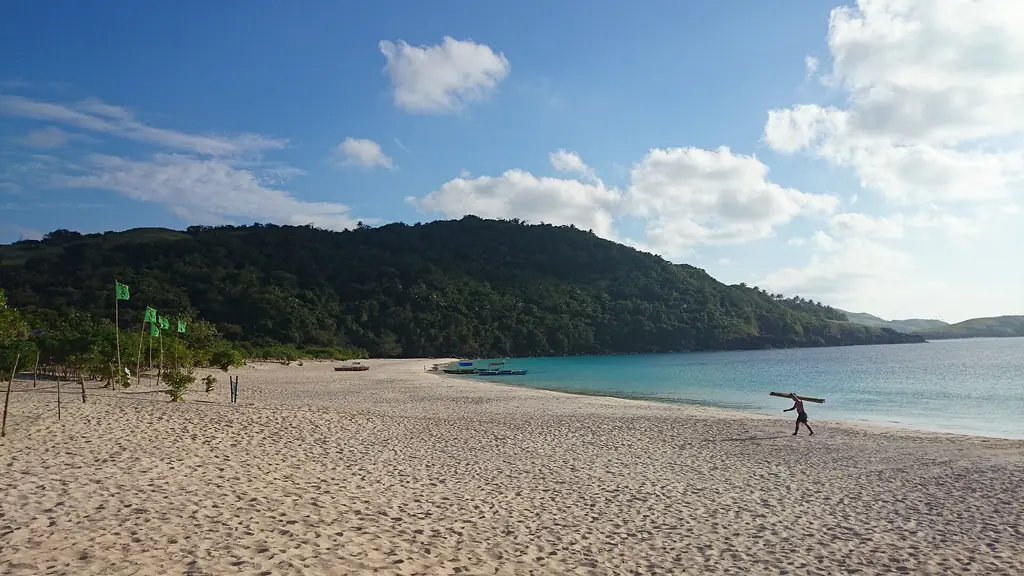
Most of the Calaguas Islands belong to the municipality of Vinzons; the small island of Maculabo belongs to Paracale. Mahabang Buhangin (Long Beach) on Tinaga Island is a long stretch of white sand with very little development.
The 2024 census counted 604,666 people in Camarines Norte. Daet, the capital, is 342 kilometers southeast of Manila, and Labo is the most populous of the 12 municipalities. The economy rests on farming, coconuts and the small, sweet Formosa pineapple, along with gold and iron-ore mining, jewelry making and fishing from 13 fishing ports.
Camarines Norte was carved out of the original Camarines province, a Spanish colonial unit that encompassed much of the Bicol Peninsula. The province's history reflects the patterns common to Bicol — Spanish evangelization, tobacco cultivation imposed as a state monopoly, and periodic resistance.
1626
Gold at Paracale
Paracale rose to prominence in 1626 when a large gold deposit was found near the present town. The Spanish used local labor to dig gold-bearing gravel from the rivers, though the work was small in scale and seldom profitable.
1829
Camarines Divided
The old province of Camarines, created in 1636, was divided in 1829 into Camarines Norte and Camarines Sur. Camarines Norte received Daet as its capital along with Talisay, Indan (now Vinzons), Labo, Paracale, Mambulao (now Jose Panganiban), Capalonga and other towns. The two were merged as Ambos Camarines from 1854 to 1857 and again from 1893.
1898
Revolt and the First Rizal Monument
From 14 to 17 April 1898, local Katipunan members led by Ildefonso Moreno rose against the Spanish in Daet; thirteen residents were executed during Holy Week. On 20 December 1898, revolutionary officers unveiled in Daet the first monument to José Rizal.
1919
A Separate Province Again
Act No. 2809 of 3 March 1919 separated Camarines Norte from Camarines Sur once more, with Miguel R. Lukban as its first governor.
1941
The First Guerrilla Encounter
On 18 December 1941, at Laniton in Basud, local fighters and USAFFE units engaged the Japanese advance toward Daet. It is considered the first guerrilla encounter of the war in the Philippines. A shrine marks the site, and veterans' families gather there every 18 December.
Gold drew the Spanish to Paracale and Mambulao from the 16th century, and gold was mined in several river systems. Modern mining activity, primarily for gold and copper, continues in the mountainous portions of the province, though it has been a source of environmental conflict.
Camarines Norte is culturally Bicolano — its people speak a dialect of Bikol, observe Marian devotion with intensity, and share the regional food traditions of the Bicol Peninsula. The province has no single landmark cultural event on the scale of Naga's Peñafrancia festival, but its municipal fiestas are active and well-attended.
The Agta people — a Negrito group — maintain communities in the mountainous interior of Camarines Norte. They are one of the most ancient inhabitants of the region and have resisted full integration into lowland society. Their presence is acknowledged in official records but remains largely invisible in the province's public cultural life.
★
José Rizal in Daet
The Rizal monument in Daet was unveiled on 20 December 1898, making it the first monument to José Rizal and predating the one in Manila's Luneta. Its base was made from stones of the demolished Spanish jail. It is the centerpiece of the province's Bantayog Festival.
Gold Mining Tradition
Small-scale gold panning in the rivers of Camarines Norte has been practiced since pre-colonial times. The rivers of Paracale have been worked by panners for generations. Paracale's week-long Pabirik Festival, named for gold panning, celebrates the town's history as the gold town of Camarines Norte.
Camarines Norte shares the Bicolano food tradition — built around coconut milk, hot chili (siling labuyo), and fresh seafood. The province's long coastline provides abundant fish, shellfish, and seaweed. Inland farming communities rely on root crops and vegetables alongside rice.
Laing
Dried taro leaves cooked in thick coconut milk with bagoong (shrimp paste) and siling labuyo chili. Laing is the signature dish of the Bicol region and is prepared throughout Camarines Norte. The dried leaves absorb the coconut milk over slow cooking, creating a rich, spiced vegetable stew. Pork or shrimp is often added.
Pork belly or strips cooked in coconut milk with large quantities of siling haba (finger chili) and siling labuyo. The heat level in authentic Camarines Norte preparation is not symbolic — this dish is genuinely very hot. It is eaten with large amounts of plain rice.
Laing
Bicol Region
15 minutesPrep
45 minutesCook
6Serves
Ingredients
200g, crumbledDried taro leaves (gabi leaves)
2 cupsCoconut milk
1 cupCoconut cream
200g, cut into stripsPork belly
2 tablespoonsBagoong alamang (shrimp paste)
6–10, whole or slicedSiling labuyo (bird's eye chili)
1, slicedOnion
4 cloves, mincedGarlic
1 thumb, slicedGinger
Method
Do not stir the taro leaves until fully cooked — stirring early causes itching from the taro's oxalic acid crystals.
Combine coconut milk, bagoong, garlic, onion, and ginger in a pan. Bring to a simmer.
Add pork belly. Simmer 10 minutes.
Add dried taro leaves. Do not stir. Let the coconut milk soak into the leaves over medium-low heat, about 20 minutes.
Add chilies and coconut cream. Now stir to incorporate. Cook another 15 minutes until oil separates from the coconut cream and the dish is thick and rich.
Taste and adjust seasoning. Serve with steamed rice.
Cook's note
The no-stir rule at the beginning is essential. Dried taro leaves must absorb moisture and cook through before being agitated or they will cause an itchy, burning sensation in the mouth.
Camarines Norte has long been Bikol-speaking. Its traditional language is Central Bikol, the language of Naga and Camarines Sur, whose Daet dialect is spoken in the province's second district. In recent years Tagalog has spread quickly and is now the most common language in many homes and towns, especially near Quezon province.
Central BikolTraditional language
Tagalog, Filipino, EnglishOther languages
Manide (Camarines Norte Agta)Indigenous
The Manide, also called the Camarines Norte Agta, are an indigenous people of the province. Their language, Manide, had about 3,800 speakers in 2010, concentrated in Jose Panganiban, Labo and Paracale. English is widely used in business and education.
★
Distinct Bikol Varieties
Linguists distinguish several Bikol languages rather than dialects — Bikol Naga, Bikol Legazpi, Buhi-non Bikol, and others are mutually intelligible but distinct enough to be classified separately. Camarines Norte's Bikol is Central Bikol, in its Daet dialect.
Camarines Norte is reached by the Maharlika Highway, the main road from Manila to the Bicol Region. Daet is 342 kilometers from Manila: 6–7 hours by private car or 8–10 hours by bus. Regular buses from Manila (Cubao, Pasay) run to Daet. The nearest airport with regular service is in Naga City, Camarines Sur, about 1.5 hours south. The main draw for most visitors is the Calaguas Islands, which requires an additional boat trip.
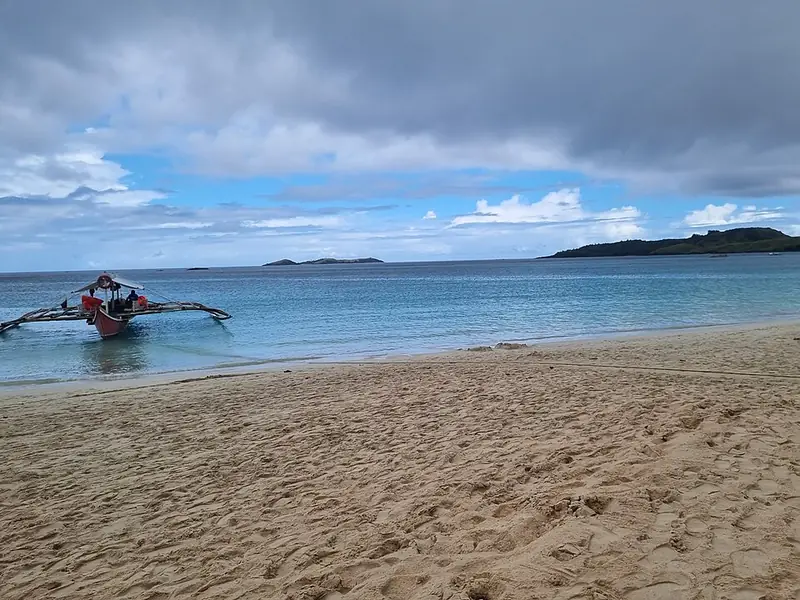
A cluster of islands off the northeastern coast of Camarines Norte, reached by motorized outrigger from the ports of Paracale and Daet. Most of the islands belong to Vinzons. Mahabang Buhangin on Tinaga Island is the centerpiece — a long, white-sand beach with clear water and minimal development. No electricity grid, no hotels — camping and basic homestays are the accommodation options. It demands effort to reach and rewards that effort.
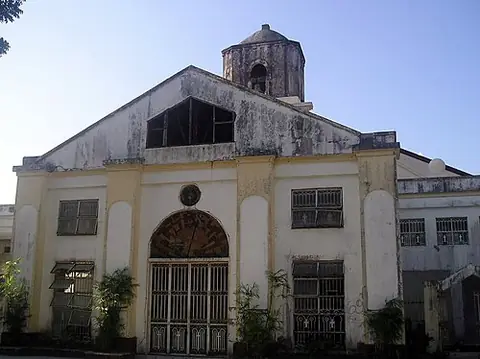
The town of Daet retains a compact heritage district with the town plaza, the claimed first Rizal monument in the Philippines (1898), and several Spanish-period structures. The provincial capitol building and the church of Saint John the Baptist are the main architectural anchors.
Paracale Gold Mining Area
The coastal municipality of Paracale has been a gold town since a large deposit was found in 1626, and small-scale gold panning still goes on along its rivers. Its Pabirik Festival celebrates that history.
✦
Calaguas Trip Planning
The Calaguas Islands are best visited on weekdays. Weekend crowds have grown significantly in recent years. Bring everything — food, freshwater, shelter. There are no resorts, no ATMs, and no reliable phone signal once on the island.
Camarines Norte is mountainous, with lowland rainforest in the interior. Mount Labo, a forested volcano 1,544 meters high, rises on the border with Camarines Sur and Quezon; it is potentially active, with warm and hot springs, but has not erupted since the Pleistocene. Bicol Natural Park, first declared a national park in 1934 and a natural park in 2000, covers 5,201 hectares across Basud and Mercedes in Camarines Norte and Sipocot and Lupi in Camarines Sur. Its forest is dominated by apitong, yakal and lauan trees.
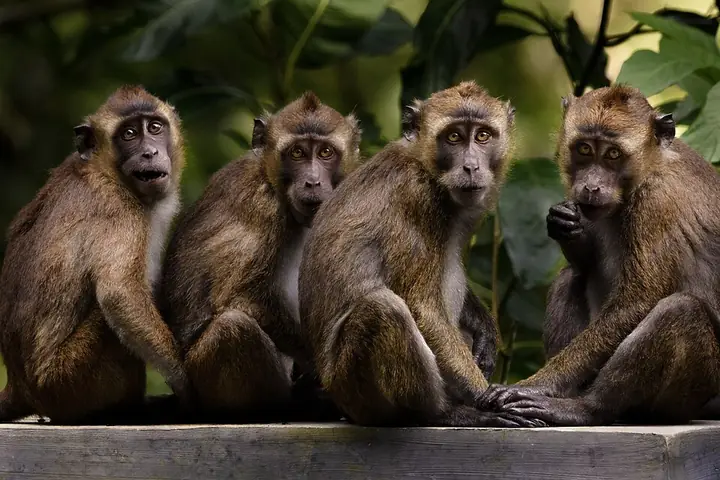
The common wild monkey of the Philippines, with a very long tail, and a Philippine subspecies of the long-tailed (crab-eating) macaque. The IUCN lists this subspecies as Near Threatened; the species as a whole is Endangered. The National Museum recorded it in Bicol Natural Park in 1991, along with civets, fruit bats, red junglefowl and green imperial pigeons.
Field note: Do not feed wild monkeys; it makes them bold and puts them at risk.
The boat takes two to three hours from the mainland, depending on sea conditions, and for most of that time there is nothing to see but open water and sky. Then Tinaga Island appears, low and green, and as the boat swings around to the eastern shore the beach comes into view — a long curve of white sand with almost nobody on it.
Mahabang Buhangin means Long Beach, which is the most literal possible name for what it is. The first time most Filipinos hear about Calaguas, they ask why they haven't been. The answer is the same as for every genuinely unspoiled place: it takes a bus journey, a jeepney ride, and a long boat trip to reach, and there is no resort at the end of it, and you have to bring your own food and water. Every year more people decide the effort is worth it, and every year the question of how long the beach stays unspoiled becomes more pressing.
The local government of Vinzons has been working on this. It has set up a program that makes every visitor responsible for keeping the island clean. The fishing communities on the island have mixed feelings — they benefit from the tourism income and worry about what the tourism will do to the place they live. It is the same conversation happening on beaches all over the Philippines, in slightly different forms, with the same unresolved ending.
Camarines created 1636, divided 1829, towns assigned; Ambos Camarines 1854–1857 and from 1893; Act 2809 of 3 March 1919, Lukban; 14–17 April 1898 uprising (Ildefonso Moreno); 18 December 1941 Laniton, Basud; Daet 342 km from Manila, 8–10 h by bus, 6–7 h by car; 12 municipalities, Labo most populous; Philippine Sea, San Miguel Bay, Lamon Bay; languages (Bikol, Tagalog spreading, Manide in Jose Panganiban, Labo, Paracale); Formosa pineapple, mining, jewelry; 13 fishing ports; Bantayog, Pinyasan and Pabirik festivals — Wikipedia: Camarines Norte (rev. 1375502337)
Daet: thirteen executed during Holy Week, April 1898; first Rizal monument unveiled 20 December 1898, base of stones from the old Spanish jail — Wikipedia: Daet (rev. 1377560758)
Calaguas: Tinaga and Guintinua; most islands under Vinzons, Maculabo under Paracale; access from Paracale and Daet; Mahabang Buhangin; visitor responsibility program — Wikipedia: Calaguas (rev. 1364046057)
Mount Labo: 1,544 m potentially active stratovolcano in Camarines Norte, Camarines Sur and Quezon; last eruption Pleistocene; warm and hot springs — Wikipedia: Mount Labo (rev. 1369573625)
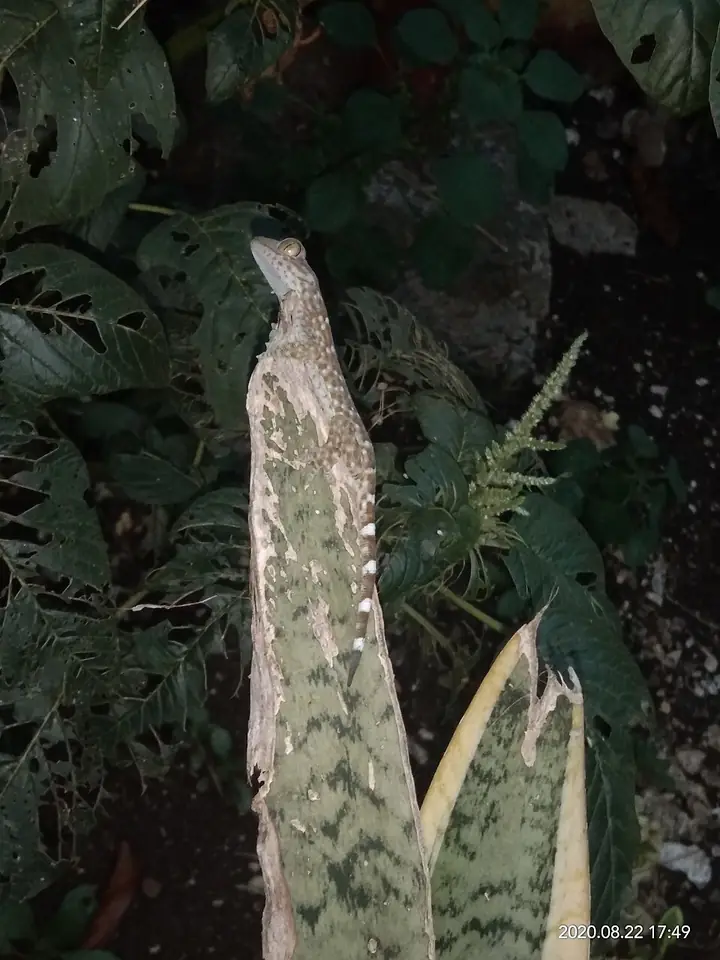
Bicol Natural Park: national park 13 February 1934, natural park 29 December 2000; 5,201 ha in Basud, Mercedes, Sipocot and Lupi; apitong, yakal, lauan; 1991 National Museum wildlife list (macaque, tokay gecko, civets, red junglefowl) — Wikipedia: Bicol Natural Park (rev. 1362700006)
Philippine long-tailed macaque (Macaca fascicularis philippensis): Near Threatened (IUCN, subspecies assessment, Ong & Richardson 2008); subspecies of the crab-eating macaque, endemic to the Philippines — Wikipedia: Philippine long-tailed macaque (rev. 1375611265)