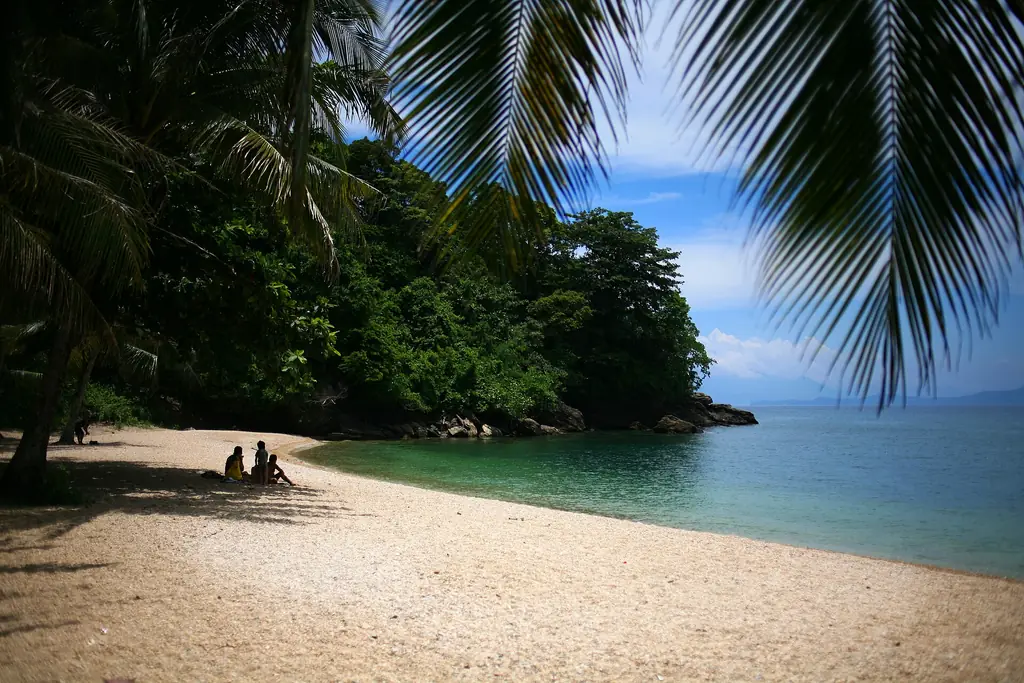
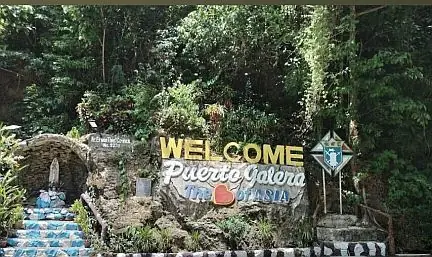
Oriental Mindoro faces the Verde Island Passage to the north and the Tablas Strait to the east. Calapan City, the capital and only city, is the main port and commercial center. The province contains the Verde Island Passage—one of the most biodiverse marine corridors on earth—and Puerto Galera, a UNESCO biosphere reserve since 1977 and a well-known diving destination.
Calapan CityCapital
4,238 km²Area
14 + 1 cityMunicipalities
LuzonIsland Group
MIMAROPA (IV-B)Region
The Verde Island Passage
The Verde Island Passage between Oriental Mindoro and Batangas was called the "center of the center of marine shorefish biodiversity" by marine scientists in 2006, and it has more than 300 species of corals. Puerto Galera sits at the eastern entrance to this passage. Its bays and headlands shelter dive sites that record hundreds of fish species, abundant coral, and large pelagic animals during certain seasons.
★
UNESCO Biosphere Reserve
Puerto Galera was designated a UNESCO biosphere reserve in 1977, the first in the Philippines. It takes in forests, grasslands, mangroves and coral reefs at the northern tip of Mindoro, and UNESCO lists the tamaraw among its endemic species.
The 2024 census counted 919,504 people in Oriental Mindoro, which has 14 municipalities and one city. Calapan, the only city on the island, is also the regional center of MIMAROPA.
Oriental Mindoro's coast was known to pre-colonial traders operating through the Verde Island Passage—one of the major maritime routes between Luzon and the southern Philippines. Calapan was the capital of the united Mindoro province until the island was divided in 1950, and it remains the provincial capital.
1942
Japanese Landing
A Japanese force landed on northeastern Mindoro on 27 February 1942 and occupied the island.
1945
Calapan Liberated
After the Allied invasion of Mindoro, Filipino and American forces landed at Bongabong and captured Calapan, then capital of the united Mindoro province, on 24 January 1945.
1950
Mindoro Divided
Republic Act No. 505 divided Mindoro into Oriental Mindoro and Occidental Mindoro on 13 June 1950. Oriental Mindoro kept Calapan as its capital.
1977
Puerto Galera Biosphere Reserve
UNESCO designated Puerto Galera a biosphere reserve under its Man and the Biosphere Program in 1977, the first in the Philippines. The reserve covers about 14,661 hectares at the northern tip of Mindoro.
1994
Mindoro Earthquake
An earthquake in the Verde Island Passage on 15 November 1994 triggered a tsunami and landslides. It killed 69 people in the province, most of them in the tsunami.
Oriental Mindoro's lowland population is predominantly Tagalog-speaking, with migrants from Batangas and Manila arriving over the past century. Mangyan communities occupy the mountain interior. From north to south the Mangyan groups of the island are the Iraya, Alangan, Tadyawan, Tawbuid, Buhid and Hanunoo.
Puerto Galera as Cultural Crossroads
Puerto Galera has been attracting foreigners since the 1970s and has developed a layered identity: dive tourism, Mangyan cultural tourism, and an expatriate community that has created restaurants, guesthouses, and a social scene distinct from the rest of Oriental Mindoro.
★
Mangyan Handicrafts
The Mangyans of Oriental Mindoro, particularly the Hanunuo from the southern part of the island, sell woven baskets, bags, and ambahan-inscribed bamboo at markets in Calapan and Puerto Galera. The weavings use natural dyes from forest plants and are distinct in pattern from lowland Filipino textiles.
The Calapan City Fiesta and the provincial founding anniversary are the main civic celebrations. But in coastal barangays, the rhythm of the year is also shaped by the dive season, the fishing runs, and the ferry schedule to Batangas across the Verde Island Passage, the link that connects Oriental Mindoro to the national transport network.
Oriental Mindoro's food is primarily Tagalog coastal cooking—seafood-centric, with pork dishes for celebrations and daily meals built from rice, fish, and vegetables. Puerto Galera's restaurant scene has been shaped by its international visitors and offers a wider range of cuisines than a province of its size would otherwise support.
Kinilaw na Tanigue
Fresh tanigue (Spanish mackerel) or tuna cured in native cane vinegar with ginger, onion, chili, and coconut milk. The acid from the vinegar denatures the protein, cooking the fish without heat. It is prepared fresh and eaten immediately—not a preserved dish. A standard in any coastal barangay in Oriental Mindoro.
Adobong Kangkong
Water spinach (kangkong) cooked adobo-style—braised in vinegar, soy sauce, garlic, and bay leaf until tender. A common side dish in Calapan carinderias, inexpensive and available year-round. The kangkong grows in abundance in the province's low-lying areas.
Sinabawang Tahong (Mussel Soup)
Oriental Mindoro coast
15 minutesPrep
15 minutesCook
4Serves
Ingredients
1 kg, scrubbedfresh mussels (tahong)
1 thumb, slicedginger
4 cloves, smashedgarlic
1 medium, slicedonion
4 cupswater
1 tbspfish sauce
3 stalks, choppedspring onion
4 pieces, halvedcalamansi
Method
Bring water to a boil with ginger, garlic, and onion.
Add mussels and cover. Cook 5–7 minutes until all shells have opened.
Discard any mussels that do not open.
Season with fish sauce. Finish with spring onion.
Serve in bowls with calamansi on the side for squeezing.
Cook's note
Fresh mussels are critical. Use the mussel liquid that collects in the pot—it is the most flavorful part of the broth. The soup should be ready in under 20 minutes of cooking.
Tagalog is the primary language of Oriental Mindoro, spoken in Calapan City and the lowland municipalities. The Mangyan communities of the interior speak their own languages—Iraya in the north, Alangan in the central mountains. English is widely used in Puerto Galera's tourism industry.
TagalogPrimary
Iraya, Alangan MangyanIndigenous
English widely usedTourism areas
★
Iraya Language
Iraya is a Mangyan language spoken by the Iraya people of northern Mindoro, concentrated around the Puerto Galera area. The Iraya kept to themselves during the Spanish period, apart from the lowland Tagalogs who became Christian.
The Mangyan languages, from north to south, belong to the Iraya, Alangan, Tadyawan, Tawbuid, Buhid and Hanunoo peoples. Their languages are not mutually intelligible, but several groups write with the Hanunó'o script. The Hanunó'o are also known for the ambahan, poems in lines of seven syllables that are recited, chanted or carved on bamboo.
Bus to Batangas Port (~2 hrs), then ferry to Calapan (~1.5 hrs)From Manila
Bangka boat from Batangas Port directly (~1.5 hrs)To Puerto Galera
November to May (dry season)Best months
Jeepney, tricycle, van for hireInternal transport
Places to Visit
Puerto Galera
Puerto Galera (Beautiful Port) is the province's primary tourist destination. Its protected coves—White Beach, Sabang Beach, and Muelle Bay—offer diving, snorkeling, and beach accommodation. The dive sites around Sabang include Verde Island Channel, Shark Cave, and the Canyons, known for wall diving and strong currents that bring in large fish.
Calapan City Heritage District
Calapan has a compact heritage area around its old church and plaza. The San Nicholas de Tolentino Church dates from the Spanish period and anchors the city center. The city is primarily a transport hub and commercial center but has local restaurants serving Mindoro specialties.
Mount Halcon
Mount Halcon, usually given as about 2,586 meters high, is the highest mountain in Mindoro and a demanding climb—dense forest, multiple river crossings, and difficult trails. Serious mountaineers come specifically for Halcon. The trailhead is in Baco municipality. Permits and guides are required through the DENR.
✦
Getting to Puerto Galera
The fastest route is the bangka boat from Batangas Port directly to Sabang or Muelle Bay. Do not confuse the Puerto Galera ferry route with the Calapan ferry, which goes to a different port. Rough weather in Verde Island Passage can suspend bangka service.
Oriental Mindoro's interior rises to Mount Halcon, Mindoro's highest mountain. Naujan Lake, about 8,125 hectares of open water, is the fifth-largest lake in the country and a national park since 1956; it became a Ramsar wetland of international importance in 1999. Offshore, the Verde Island Passage has more than 300 coral species and is home to threatened sea turtles, humphead wrasse and giant clams.
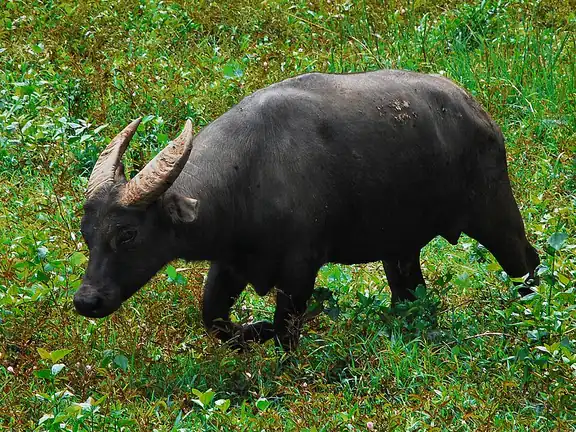
A small wild buffalo found only on Mindoro, the only endemic Philippine bovine. It now survives in a few remote grassy plains; the largest population lives in Mounts Iglit–Baco Natural Park, which reaches Bongabong, Bansud, Gloria and Mansalay in Oriental Mindoro.
Field note: Never hunt or disturb tamaraw. Report sightings and snares to the DENR.
Mindoro Bleeding-heart
Gallicolumba platenae
Critically Endangered
A ground dove found only on Mindoro, with a red patch on its white breast. Only 50–249 mature birds are thought to remain, threatened by logging, quarrying and snares.
Field note: Do not buy wild-caught birds. Report snares to the DENR.
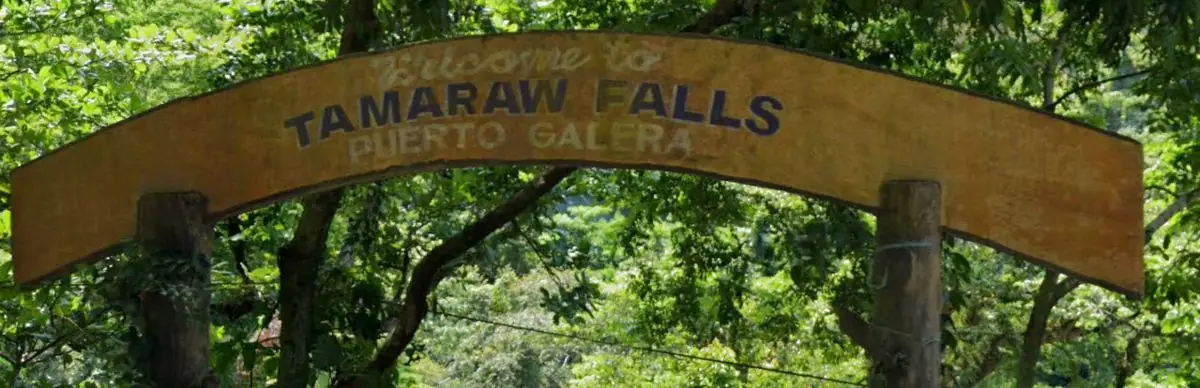
Tamaraw Falls is one of the best-loved stops on the road around Puerto Galera, in Oriental Mindoro. It drops about 128 meters, roughly 423 feet, in a wild Y-shape where twin falls meet.
It is named after the tamaraw, the dwarf buffalo found only in Mindoro and now critically endangered. The name is a small tribute meant to keep the animal in mind.
The falls sit right beside the road, so a look costs nothing, though there is a small fee to enter the mini-resort below, with cool pools fed by the falling water. What you see from the roadside is only part of the full drop; the rest reveals itself as you go down.
Japanese landing 27 Feb 1942, Calapan captured 24 Jan 1945, RA 505 of 13 June 1950, 1994 earthquake (69 killed), Calapan only city and MIMAROPA center, borders (Tablas Strait), Lake Naujan, Mangyan dialects — Wikipedia: Oriental Mindoro (rev. 1375543704)