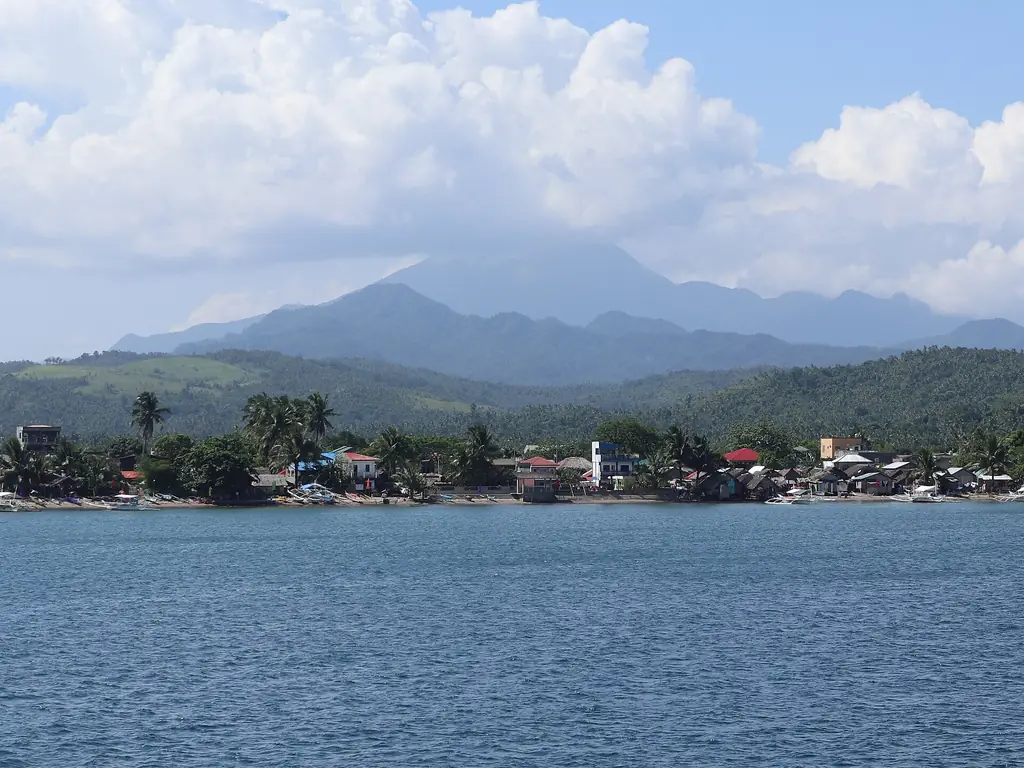
Mount Bulusan rising behind the coast at Matnog, seen from the San Bernardino Strait
Photo: Patrickroque01 · CC BY-SA 4.0 · Wikimedia Commons
Map

Sorsogon

Bicol Region
Luzon
Capital Sorsogon City
Population (2024) 845,066
Area 2,119 km²
Municipalities 14
Cities 1
Island Group Luzon
Languages Bikol, Waray Sorsogon

Population: 2024 census (PSA). Area: land area.

Kapitbahay — Neighboring Provinces

Sorsogon is the southernmost province of Luzon — the final landmass before the San Bernardino Strait separates the largest island from the Visayas. It ends in Matnog, where the ferry to Samar waits, and the traveler who has been driving south from Manila reaches the edge of the island.

Sorsogon CityCapital
2,119 km²Area
14 + 1 cityMunicipalities
LuzonIsland Group

Donsol municipality is the reason many travelers come to Sorsogon. Every year from November to June, whale sharks — butanding in the local language — congregate in the waters off Donsol in some of the largest numbers recorded anywhere for the world's largest fish. They come to feed on the plankton blooms in the Ticao Pass.

★
The Butanding

The whale sharks of Donsol were little understood until a group of divers swam peacefully with them in December 1997 and shared the video with the media and WWF-Philippines. Research and regulated tourism followed, and Time magazine named swimming with Donsol's whale sharks the best animal encounter in Asia in 2004.

Sorsogon had 845,066 people in the 2024 census, in 14 towns and Sorsogon City, which was formed in 2000 by merging the towns of Bacon and Sorsogon. It is bordered by Albay to the north, the Philippine Sea to the east, the San Bernardino Strait to the south and the Ticao and Burias passes to the west. Roll-on/roll-off ferries leave from Matnog, Pilar and Bulan.
Crossroads of the Archipelago

Sorsogon's geography made it a transit point for centuries. The San Bernardino Strait between Luzon and Samar was one of the major maritime routes of the pre-colonial archipelago, and the communities at Matnog and Bulan controlled passage through it. The Spanish understood this and established Sorsogon as a strategic province early in the colonial period.

1569–1570

First Mass and Chapel in Luzon

Augustinian friars with the expedition of Luis Enríquez de Guzmán landed at Gibalon, in present-day Magallanes, where Fray Alonso Jiménez celebrated Mass and the first chapel in Luzon was built. The name of the old Ibalong region comes from this village.

1894

Separate Province

Sorsogon was separated from Albay on 17 October 1894 and became a province of its own, with the town of Sorsogon as capital.

1935

Bulusan National Park

Proclamation No. 811 of 7 June 1935 made the forests around Mount Bulusan a national park. Under the NIPAS law it became the Bulusan Volcano Natural Park in 2000.

1997–1998

Donsol's Whale Sharks

Donsol residents had long feared whale sharks. On 26 December 1997, diver Romir Aglugub's group swam peacefully with them, and their video, shared with the media and WWF-Philippines, started research and tourism. By 1998 the butanding had become Donsol's symbol.

2000

Sorsogon City

Sorsogon City was created in 2000 by merging the towns of Bacon and Sorsogon.

Sorsogon's culture is Bikolano at its root — sharing language, food, and Catholic tradition with the broader Bicol Region. But the southernmost position gives it a sense of being the end of something, and the communities of the Donsol coast have developed a distinctly maritime identity built around the sea and its creatures.

The Donsol Transition

The transformation of Donsol from a whale shark hunting community to a whale shark tourism community is a widely cited conservation success story. Fishermen became butanding interaction officers — trained guides who ensure that tourists approach the whale sharks without touching or disturbing them. The income from tourism replaced and eventually exceeded what hunting had provided.

Kasanggayahan Festival

Sorsogon's provincial festival — Kasanggayahan — is held each October and brings together the province's municipalities in street dancing, cultural presentations, and sports competitions. The name means 'togetherness' in Bikolano. The festival celebrates both the province's natural heritage and its Bikolano cultural identity.

★
Bulusan Volcano

Mount Bulusan — Sorsogon's active volcano — erupts periodically, with phreatic eruptions in 2016, 2022 and 2025. The Bulusan Volcano Natural Park surrounding it is one of the few old-growth forest remnants in the Bicol Region. The lake at the volcano's base is a popular if occasionally evacuated picnic area.

See the great festivals in Pista ng Pilipinas →

Sorsogon's food follows the Bikolano tradition — defined by coconut milk, chilli, and fresh seafood — with the seafood profile of the southernmost province adding its own emphases. The waters of the Ticao Pass and San Bernardino Strait deliver an abundance of pelagic fish alongside the whale sharks.

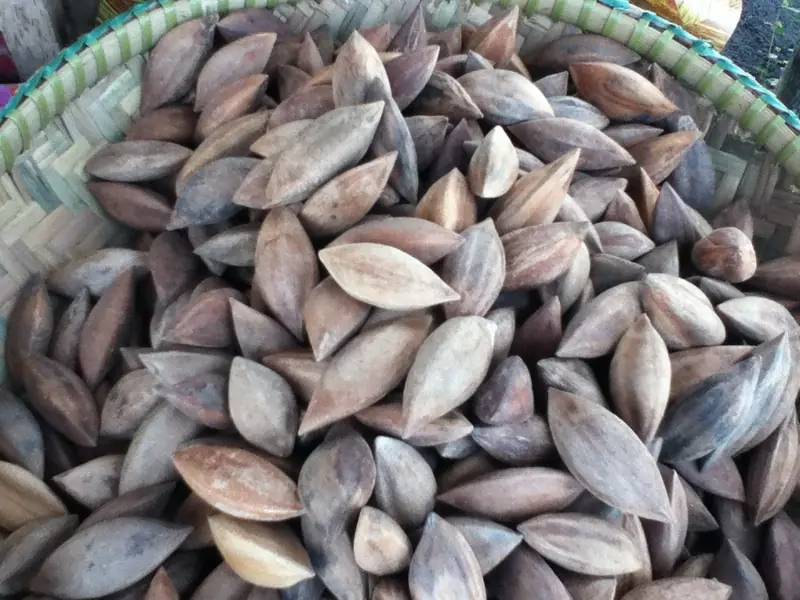
A basket of shelled pili nuts
Photo: Lance Catedral from Quezon City, Metro Manila, Philippines · CC BY-SA 2.0 · Wikimedia Commons

Pili Nut Dishes

The pili nut — native to the Bicol Region and grown widely in Sorsogon — is one of the Philippines' most distinctive ingredients. Candied pili, pili-based pastillas, pili oil for cooking, and pili tarts are the standard pasalubong of the province. The nut has a rich, buttery flavor stronger than cashew or macadamia.

Bicol Express

Bicol Region — attributed to Sorsogon and Camarines Sur equally
15 minPrep
35 minCook
6Serves
Ingredients
  • 500gPork belly, cubed
  • 250gSiling haba (long green chilli), sliced
  • 6–10, to tasteSiling labuyo (bird's eye chilli)
  • 2 cupsCoconut milk (gata)
  • 1 cupCoconut cream (kakang gata)
  • 2 tbspShrimp paste (bagoong alamang)
  • 6 clovesGarlic, minced
  • 1 largeOnion, chopped
Method
  1. Blanch the long green chillies in salted boiling water for 2 minutes. Drain and squeeze out excess liquid. This removes some bitterness and reduces the raw vegetable texture.
  2. Sauté garlic and onion in oil until fragrant. Add pork and cook until browned on all sides.
  3. Add bagoong alamang. Stir and cook 2 minutes.
  4. Pour in coconut milk. Add bird's eye chillies. Bring to a simmer.
  5. Add blanched long green chillies. Simmer 20 minutes, stirring occasionally, until pork is tender and sauce has thickened.
  6. Add coconut cream. Simmer 5 more minutes. The sauce should be rich and thick.
Cook's note

The heat level is non-negotiable in a proper Bicol Express — this dish is supposed to be genuinely spicy. Reducing the bird's eye chillies to accommodate non-Bikolano diners is accepted, but reducing the long green chillies changes the character of the dish entirely. The chillies are not garnish; they are the point.

Bikol is the main language of Sorsogon, and standard Bikol Naga is used in writing and widely understood. But the local speech changes from town to town. In Barcelona, Gubat, Bulusan, Matnog, Irosin and Santa Magdalena, people speak Waray Sorsogon, which is close to the Waray of Northern Samar, while Bacon, Prieto Diaz and Magallanes use an Albay Bikol variety.

BikolMain language
Waray SorsogonSouth and east
Sorsogon Ayta (Prieto Diaz)Endangered
Filipino, EnglishSecond languages

Bikol Language Family

The Bikol languages form a sub-branch of the Philippine language family, spoken across the six provinces of the Bicol Region. Sorsogon Bikol carries some distinct vocabulary related to the province's maritime environment and its transitional position between the Luzon and Visayas language zones.

★
Butanding in Bikolano

The word 'butanding' — the local name for the whale shark — is now internationally recognized in marine biology and tourism literature because of Donsol's fame. It is a Bikolano word, and its spread into English-language conservation discourse is one of the small linguistic legacies of the Donsol whale shark program.

In Sorsogon City, Casiguran and Juban, the local Bikol shares words with Hiligaynon. Pilar and Donsol speak a variety close to the Bikol of nearby Camalig and Daraga in Albay. The Sorsogon Ayta language of Prieto Diaz had only about 150 speakers in 2000, and UNESCO lists it as critically endangered.

Sorsogon is at the end of the road from Manila — a nine-to-ten hour drive south through the Bicol Peninsula, or a faster approach by air to Legazpi in Albay and then two hours by road. The province rewards the traveler who has committed to the journey.

9–10 hrs (road) or fly to LegazpiFrom Manila
Nov–JuneButanding season
To Samar (1.5 hrs)Matnog ferry
Sorsogon City or DonsolBest base

Donsol Whale Shark Interaction

From November to June, whale sharks feed in the plankton-rich waters of the Donsol coast. Interaction tours operate under WWF-developed protocols: no touching, 3-meter minimum distance, no flash photography. Butanding interaction officers accompany every boat. Book through the Donsol tourism office — arrivals without advance booking may not be accommodated during peak season.

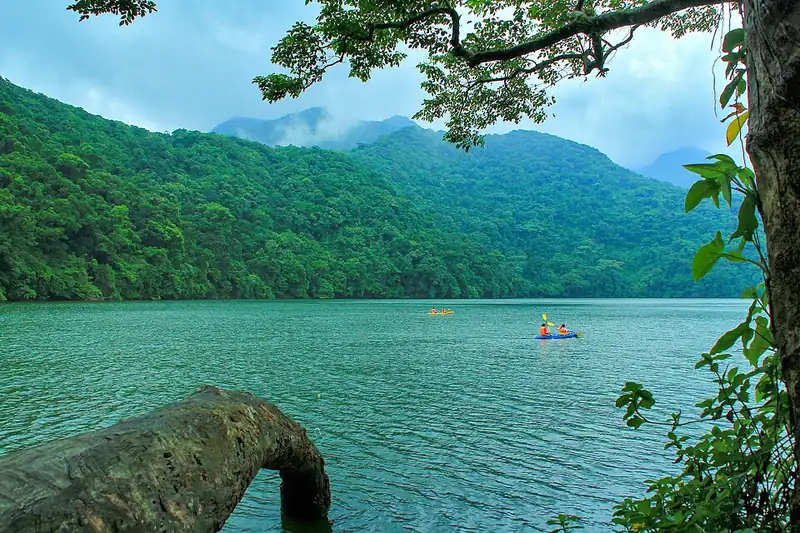
Kayaks on Bulusan Lake inside the natural park
Photo: Allan Fesalbon Castañeda · CC BY-SA 4.0 · Wikimedia Commons

Bulusan Volcano Natural Park

The forest surrounding Bulusan Volcano is one of the few remaining old-growth forests in the Bicol Region. The lake at the volcano's base — Lake Bulusan — is accessible by road and has a picnic area. Check the volcanic activity status before visiting — phreatic eruptions occasionally trigger temporary closure of the park.

Subic Beach on Calintaan Island, Matnog
Photo: ramon garra · CC BY-SA 4.0 · Wikimedia Commons

Matnog

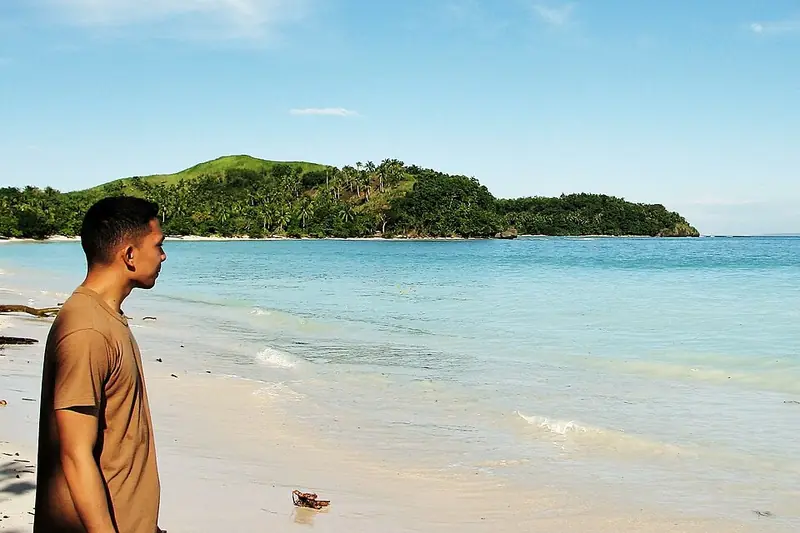
The southernmost municipality of Luzon. The ferry from Matnog to Allen, Northern Samar takes about 1.5 hours across the San Bernardino Strait. The strait passage gives a clear view of the transition from Luzon to the Visayas — open water on both sides, the two island groups visible simultaneously in good weather.

Irosin Hot Springs

Natural hot spring pools fed by the geothermal activity of the Bulusan volcanic complex. The Mapaso hot spring in Irosin municipality is the most accessible. The water temperature varies by pool — some are warm, some are near-scalding. The surrounding forest makes the setting pleasant.

Sorsogon is world famous for its gentle giants. Whale sharks gather off Donsol between November and June, with the most sightings from February to May, and the province has built a regulated, community-run tourism around them. Inland, the Bulusan Volcano Natural Park protects about 3,673 hectares of rainforest, lakes and slopes around the active volcano.

A whale shark (butanding) at Donsol, Sorsogon
Photo: Shubert Ciencia from Nueva Ecija, Philippines · CC BY 2.0 · Wikimedia Commons
Whale Shark
Rhincodon typus
Endangered
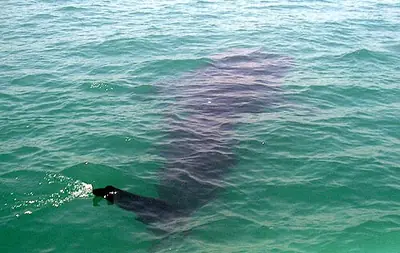
The largest fish in the world, and completely harmless — it feeds on plankton. Locally called butanding. Donsol sees them between November and June. Rules limit each boat to six swimmers, ban scuba diving with them, and require swimmers to keep at least three meters away.
Field note: Never touch or block a whale shark. Keep the required distance. Sunblock should be reef-safe, as chemicals harm plankton and reefs.
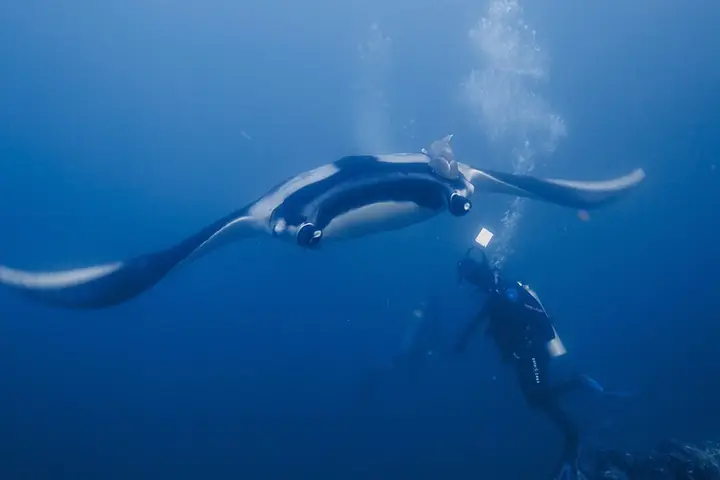
A giant oceanic manta ray with a diver (location not recorded)
Photo: Elias Levy · CC BY 2.0 · Wikimedia Commons
Giant Manta Ray
Mobula birostris
Endangered
A huge ray that, like the whale shark, feeds on plankton and is harmless. Its numbers have dropped sharply from overfishing, and mantas are still sold in some markets around Sorsogon even though they are protected in the Philippines.
Field note: Report manta catches or sales to the BFAR or the DENR.
Bulusan Volcano Forest
Highland ecosystem
Natural Park
Bulusan Volcano Natural Park protects forest, lakes and slopes that shelter long-tailed macaques, the Philippine duck, the Philippine hawk-eagle, the Philippine eagle-owl and many other birds, as well as two endemic plant species.
Field note: Bulusan is an active volcano. Check the alert level with PHIVOLCS before any field work near the summit or lake.
Meet all 65 Philippine animals in Hayop ng Pilipinas →

The Butanding of Donsol

For years the whale sharks, or butanding, that gather off Donsol were little understood. On 26 December 1997, the diving instructor Romir Aglugub and his group swam peacefully with them. Their video was shared with the media and WWF-Philippines, which helped dispel myths and started scientific research in Donsol.

In 1998 the Philippines banned the fishing, sale, import and export of whale sharks for commercial purposes. By then the sharks had become a symbol of Donsol, which earned the title “Whale Shark Capital of the World.” In 2004 Time magazine named swimming with Donsol's butanding the best animal encounter in Asia.

The sharks still face risks. Some carry propeller scars, which local fishermen blame on fishing boats in the off-season rather than on tourist boats during the main February to June season. Locals also say commercial fishermen have shot sharks caught in their nets. Visitors follow WWF guidelines: keep your distance and never touch the animals.

Sources · updated 4 October 2026
Photo credits (6)

Photos from Wikimedia Commons, used under the licences shown; some were resized. All photo credits