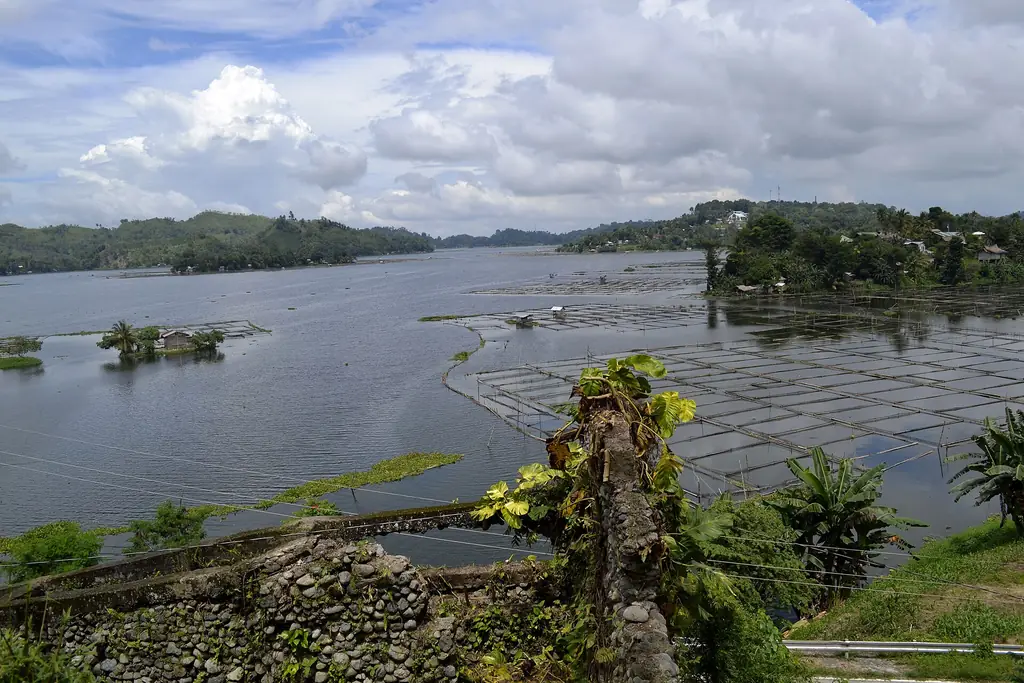
Lake Sebu and its hills, South Cotabato
Photo: GinaD · CC BY-SA 3.0 · Wikimedia Commons
Map

South Cotabato

SOCCSKSARGEN
Mindanao
Capital Koronadal City
Population (2024) 1,732,068
Area 4,429 km²
Municipalities 10
Cities 2
Island Group Mindanao
Languages Hiligaynon, Cebuano, Tboli, Ilocano

Population: 2024 census (PSA). Area: land area. Population, area and city count include General Santos, which the census lists separately from the province.

Kapitbahay — Neighboring Provinces

South Cotabato sits in the heart of Mindanao's agricultural south — a province of highland lakes, lowland farmland, and the remarkable cultural heritage of the T'boli people, who have inhabited the Lake Sebu highlands for centuries and who continue to weave t'nalak, the province's celebrated abaca cloth.

Koronadal CityCapital
4,429 km²Area
10 + 2 citiesMunicipalities
MindanaoIsland Group

Lake Sebu — a highland lake surrounded by T'boli communities — is the centrepiece of the province's identity. The lake itself, the waterfalls that cascade from its edges, and the communities living around its shores form a rare meeting of culture and landscape.

★
T'nalak — The Dream Cloth

The T'boli women of Lake Sebu weave t'nalak from abaca fibre using a resist-dyeing technique. The patterns come from dreams — the weaver receives the design from Fu Dalu, the spirit of the abaca, while sleeping. No two master weavers produce the same pattern.

South Cotabato and the city of General Santos together counted 1,732,068 people in the 2024 census. The province itself has ten towns and one component city, Koronadal, its capital. General Santos, a highly urbanized city, lies within the province but is governed separately. Koronadal is mostly Hiligaynon-speaking and is nicknamed the "Ilonggo Capital of Mindanao".
T'boli and the Lake Sebu Highlands

The T'boli people have occupied the highlands around Lake Sebu for as long as their oral history reaches. They were not conquered by the Spanish — the highlands of southern Mindanao remained beyond effective colonial control throughout the 350-year Spanish period. It was American administration and subsequent settlement that brought the most significant disruption to their territorial domain.

1914

Part of Cotabato

The area of present-day South Cotabato and Sarangani belonged to Davao until 1914, when districts in Mindanao were reorganized and it became part of the undivided Cotabato province. Settlers from Luzon and the Visayas began arriving the same year.

Late 1930s

Settlers Under Paulino Santos

Under President Manuel L. Quezon, General Paulino Santos led the first wave of organized settlers to the Koronadal Valley. After World War II, more migrants from Luzon and the Visayas followed.

1966

South Cotabato Established

Republic Act No. 4849 created South Cotabato from the southern towns of Cotabato, and the province was separated on 18 July 1966. Its first towns included Koronadal, Banga, Norala, Polomolok, Surallah, Tantangan, Tupi, General Santos, Glan, Kiamba and Maitum.

1992

Sarangani Is Formed

Seven coastal and southern towns, Malungon, Alabel, Malapatan, Glan, Maasim, Kiamba and Maitum, left South Cotabato to form the new province of Sarangani in 1992.

1993

Lake Sebu Ancestral Domain

DENR Administrative Order No. 2, series of 1993, recognized the claim of the Tboli and Ubo that Lake Sebu and its surroundings are their ancestral domain.

2000

Koronadal Becomes a City

Republic Act No. 8803, approved on 16 August 2000, made the provincial capital, Koronadal, a component city.

LD

Lang Dulay

T'boli Master Weaver, National Living Treasure1928 — 2015

Lang Dulay was declared a National Living Treasure (Gawad sa Manlilikha ng Bayan) in 1998 — the highest recognition given to Philippine folk artists. She wove t'nalak for over seven decades, keeping a repertoire of about 100 patterns, some received in dreams, and passing her knowledge to apprentices. Her work is held in museum collections internationally and set the standard by which all t'nalak is judged.

South Cotabato's cultural identity centers on the T'boli people and their living heritage — the t'nalak cloth, the hegelung two-stringed lute, the brass ornaments of the Lake Sebu highlands. But the province is also home to B'laan, Ubo, and Maguindanaon communities, as well as the Christian settler majority that has shaped the lowland towns since the American period.

T'nalak Weaving

T'nalak is woven on a backstrap loom from abaca fibre that has been treated with natural dyes — traditionally black and red against the natural beige of the abaca. The resist-dyeing process requires tying sections of the fibre before dyeing to preserve the pattern — a technique that predates written documentation and that continues unchanged in the Lake Sebu highland villages.

T'nalak Festival

The T'nalak Festival, held annually in July, celebrates the heritage of the T'boli people with street dancing, cultural performances, and a t'nalak weaving competition. Weavers from across the Lake Sebu highlands bring their work. The festival has grown from a local celebration into a national cultural event that draws visitors from across the country.

★
Seven Falls

The seven waterfalls of Lake Sebu cascade from the lake's edge down toward the lower valleys — a series of falls crossed by a zipline. The falls and the lake form a landscape that T'boli oral tradition describes as the home of Fu Dalu, the abaca spirit who sends the t'nalak patterns in dreams.

See the great festivals in Pista ng Pilipinas →

South Cotabato's food reflects its diversity — the tilapia and snakehead fish of Lake Sebu, the pork and chicken dishes of the Visayan and Ilocano settler communities, and the traditional preparations of the T'boli highlands that use forest ingredients unavailable in lowland markets.

Lake Sebu Tilapia

Tilapia from Lake Sebu is widely regarded as the best freshwater fish in Mindanao — firm, clean-flavoured, fed on the natural plankton of the highland lake. Grilled over charcoal with calamansi and soy, or cooked in coconut milk with local greens. The fish is served whole at every restaurant and homestay around the lake.

Tinolang Manok (T'boli Style)

The T'boli preparation of chicken tinola uses highland ginger and malunggay leaves gathered from the forest edge rather than commercially grown. The broth is clear and clean. The T'boli do not use commercial stock — the flavor comes entirely from the chicken, ginger, and whatever wild greens are in season.

✦
Floating Restaurants on Lake Sebu

Several floating restaurants on Lake Sebu serve fresh tilapia within sight of the water it came from. Order the grilled tilapia and the pakbet with fresh lake fish. Arrive before noon — the afternoon fog on the lake can make the return to shore awkward on a small boat.

South Cotabato is linguistically diverse. Cebuano and Hiligaynon are the dominant languages of the lowland settler communities. The highland indigenous communities speak T'boli and B'laan, both of the Bilic branch of the Philippine language family, and Ubo Manobo. Hiligaynon is the most widely spoken language overall, followed by Cebuano, which is the majority language of General Santos, Polomolok, Tampakan and Tupi.

HiligaynonMain language
Cebuano, TagalogAlso spoken
T'boli, B'laan, Ubo ManoboIndigenous
Maguindanaon, IlocanoOthers

T'boli Language

T'boli is spoken by approximately 100,000 people in the Lake Sebu highlands and surrounding areas. It encodes a rich oral tradition — the tudbulul epic, sung by specialist performers, tells the history and cosmology of the T'boli world over performances that can last for days. The language is closely tied to the t'nalak weaving tradition — the names of patterns, the ritual vocabulary of the weaver's communication with Fu Dalu, and the social categories related to weaving skill all exist in T'boli and not in Filipino or Cebuano.

★
The Tudbulul Epic

The T'boli tudbulul is one of the longest oral epics in the Philippines — a sung narrative performed over multiple nights. It tells the story of T'boli cosmology, the founding of their world, and the origins of their cultural practices. Very few people can perform the full tudbulul today.

South Cotabato is reached via General Santos City or Koronadal. Lake Sebu is about two hours from General Santos by road — through the lowland plains of Koronadal and then up into the highlands. The lake itself is worth at least a full day.

2 hrsFrom GenSan
Fly to GenSanFrom Manila
JulyT'nalak Festival
Dry season (Dec–May)Best for lake

Lake Sebu

A highland lake at 300 meters elevation, surrounded by the T'boli communities of South Cotabato. The lake surface is dotted with water hyacinth, the shoreline is green with forest, and the seven waterfalls cascade from its edges. Stay at a T'boli-owned lodge for the fullest experience of the highland community.

Seven Falls

Seven waterfalls descending from Lake Sebu — the most dramatic is Hikong Bente, dropping 70 meters into a canyon. A zipline traverses the gorge for those who want the aerial perspective. The walk to the viewing platforms passes through T'boli agricultural land and secondary forest.

T'boli Weaving Communities

Several T'boli villages around Lake Sebu welcome visitors who want to watch t'nalak weaving. The Moro Integrated Development Authority (MIDA) craft center in Lake Sebu town proper has weavers working on-site and textiles for sale. Purchasing directly from a weaver's home is possible through community guides — and is worth more to the artisan.

✦
Buying T'nalak

Authentic t'nalak — hand-dyed, hand-woven on backstrap loom — is expensive and should be. A small piece represents days of work. Mass-produced imitations are sold throughout Mindanao. Ask to see the weaver at work. If the cloth was made in an hour, it was not made the T'boli way.

Mount Matutum, an active stratovolcano 2,286 meters high, is the highest point in South Cotabato. Its forested slopes, home mainly to B'laan communities, shelter endangered species including the Philippine eagle and the Philippine tarsier. Lake Sebu, in the Allah Valley highlands, is one of the country's important watersheds.

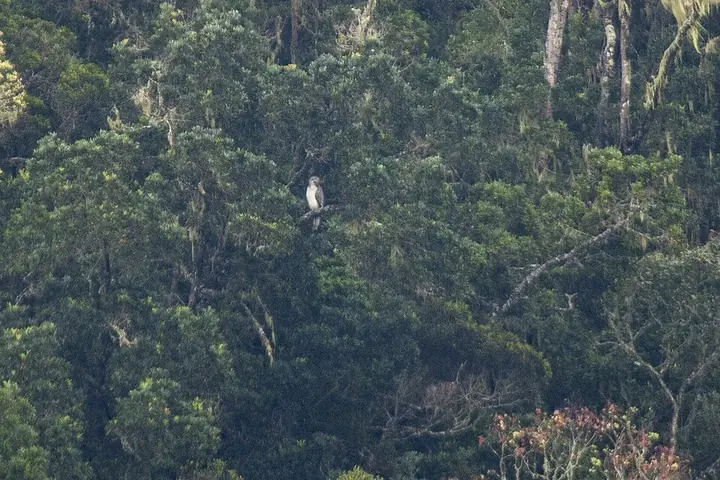
A Philippine eagle in the wild (photographed in Mindanao)
Photo: Francesco Veronesi from Italy · CC BY-SA 2.0 · Wikimedia Commons
Philippine Eagle
Pithecophaga jefferyi
Critically Endangered
The national bird and one of the world's largest eagles, found only in the Philippines. It is among the endangered species recorded on the forested slopes of Mount Matutum.
Field note: Report sightings, and never disturb a nest. Killing a Philippine eagle carries a prison term under the Wildlife Act.
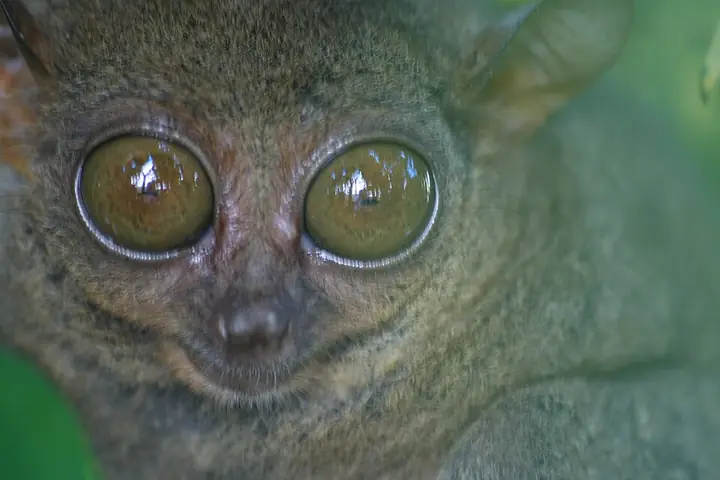
A Philippine tarsier (photographed in Bohol)
Photo: John Martin PERRY · CC BY-SA 4.0 · Wikimedia Commons
Philippine Tarsier
Carlito syrichta
Near Threatened
A tiny nocturnal primate with huge eyes. Mount Matutum's forests are one of the places in South Cotabato where it has been recorded.
Field note: Do not handle tarsiers or use camera flash. They are easily stressed.
Meet all 65 Philippine animals in Hayop ng Pilipinas →
← All stories
Pagkain · Koronadal

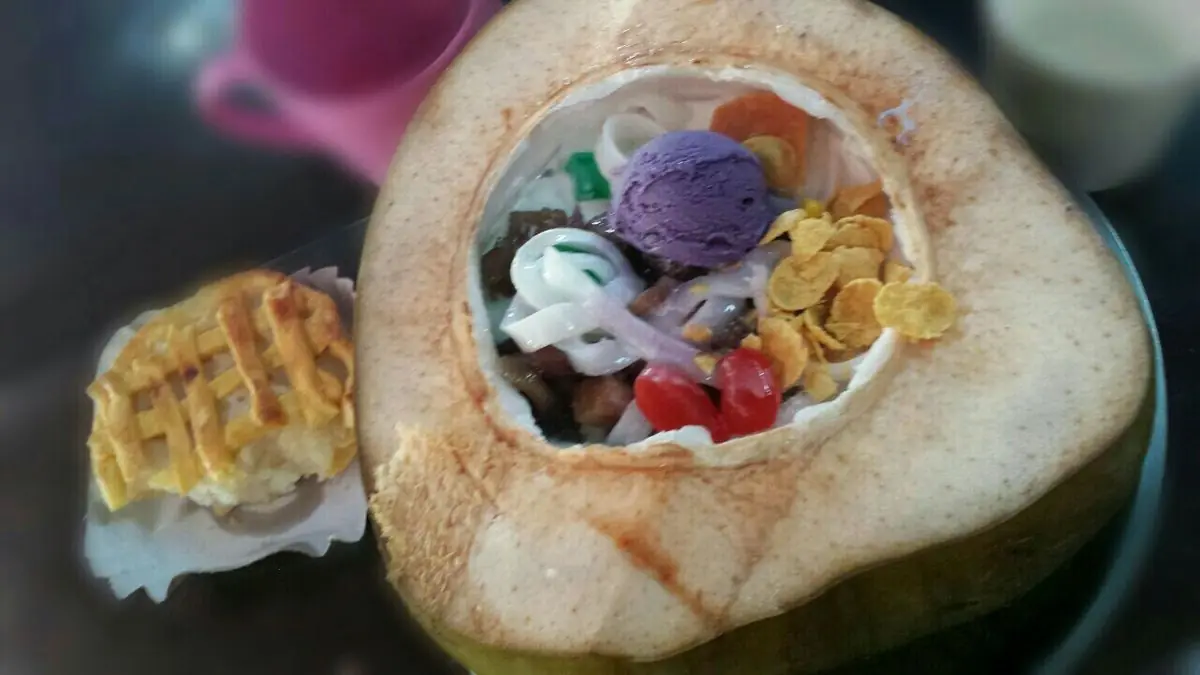
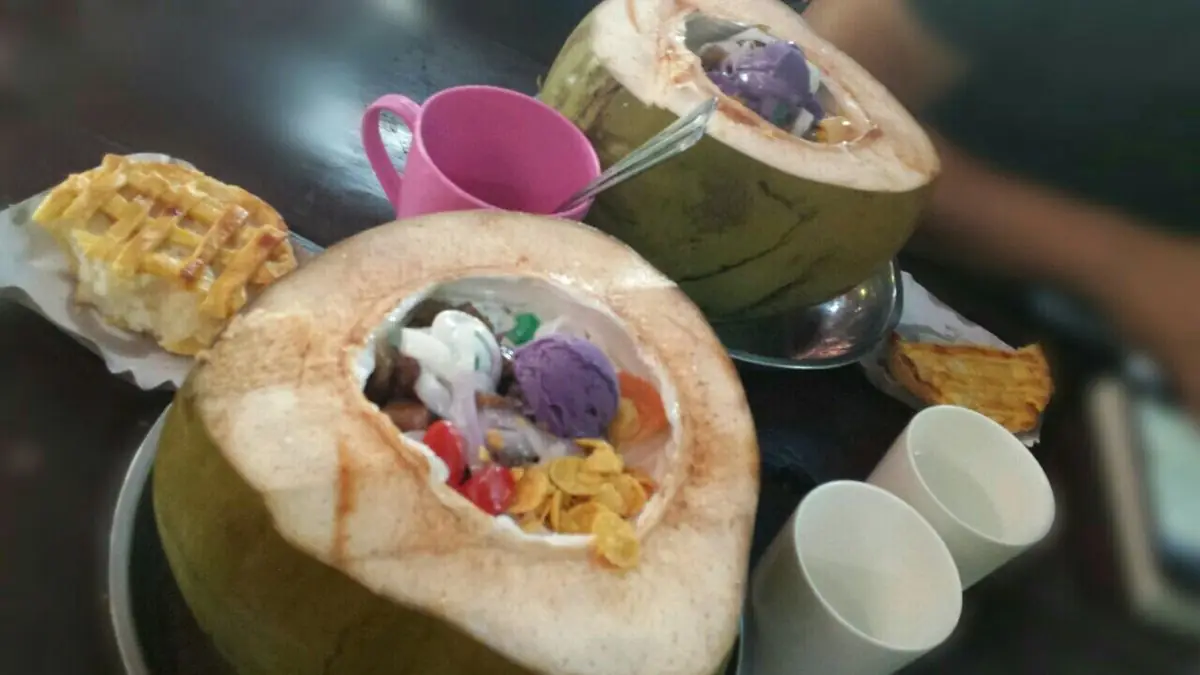
Buko Halo-Halo of Koronadal

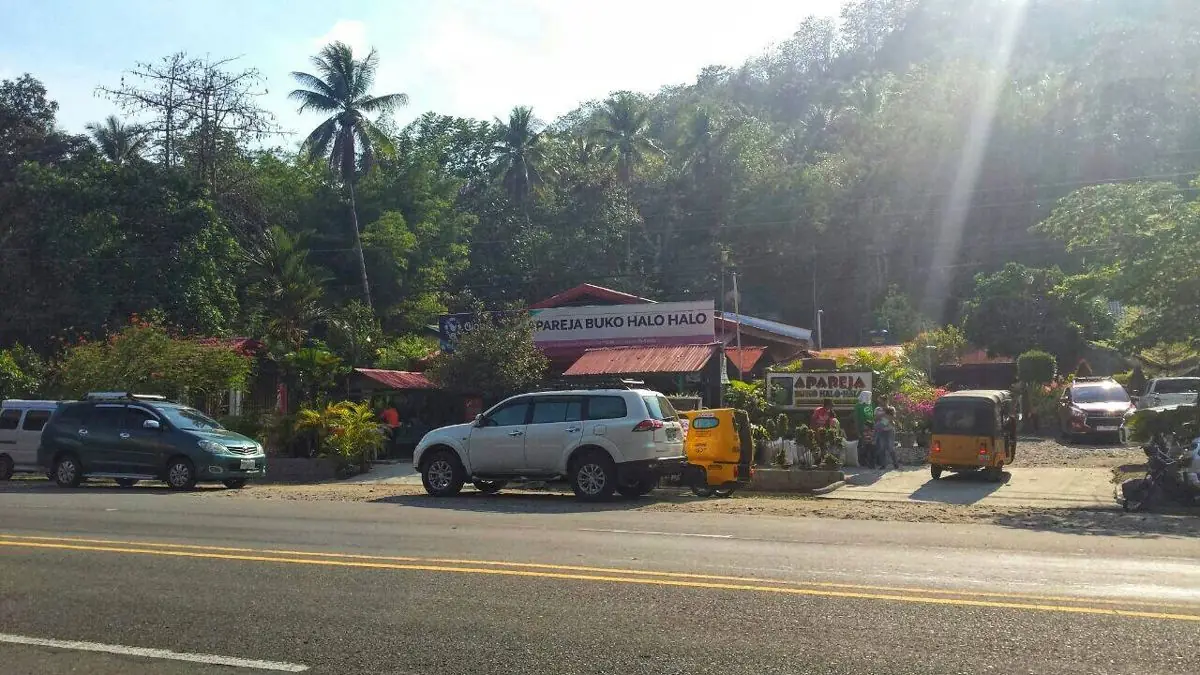
Summer is coming is a very Filipino kind of warning, and the answer to it is halo-halo, the country's favorite way to beat the heat. In Koronadal, South Cotabato, there is one place I always stop, Apareja Buko Halo-Halo, a good break on the road from General Santos.

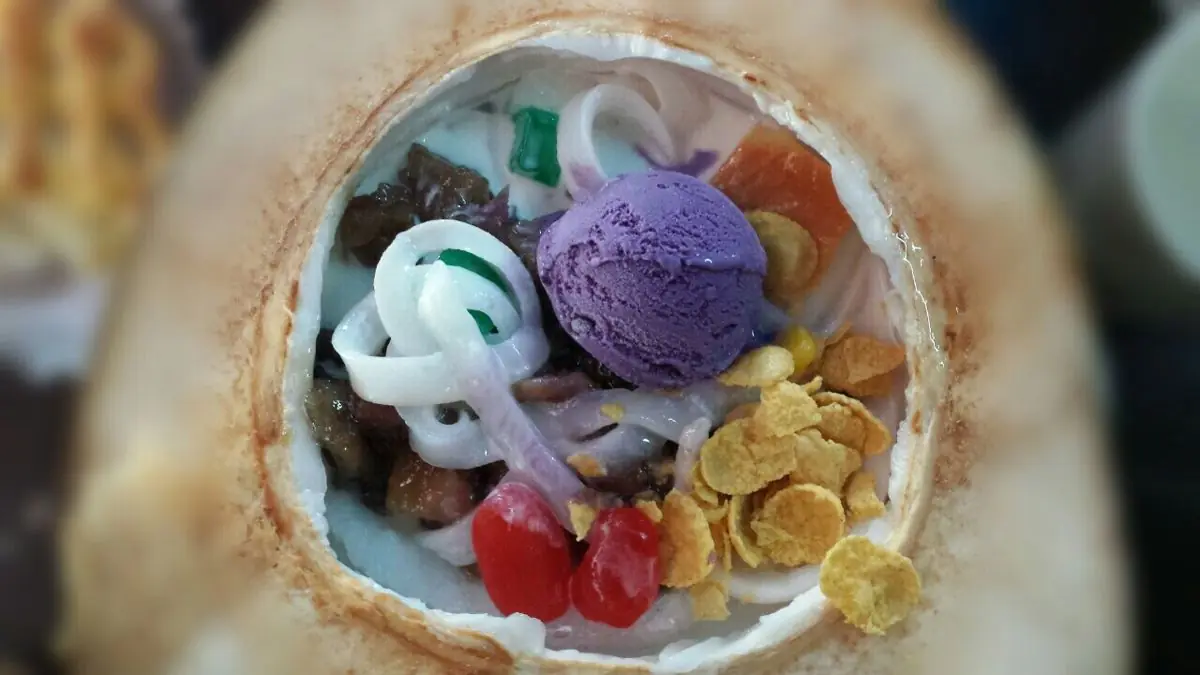
Their halo-halo comes served inside a young coconut, so you can scrape the sweet meat as you go. Inside are sweet potato and banana, red kaong, gelatin, corn flakes, shaved ice and milk, leche flan, and a scoop of ube ice cream on top, with a pitcher of fresh buko juice on the side.

I ordered a buko pie too, making it a triple-buko meal. I never finished the pie, too full of halo-halo, but I left refreshed and happy, already planning to come back.

Mga Larawan

Sources · updated 4 October 2026
Photo credits (3)

Photos from Wikimedia Commons, used under the licences shown; some were resized. All photo credits