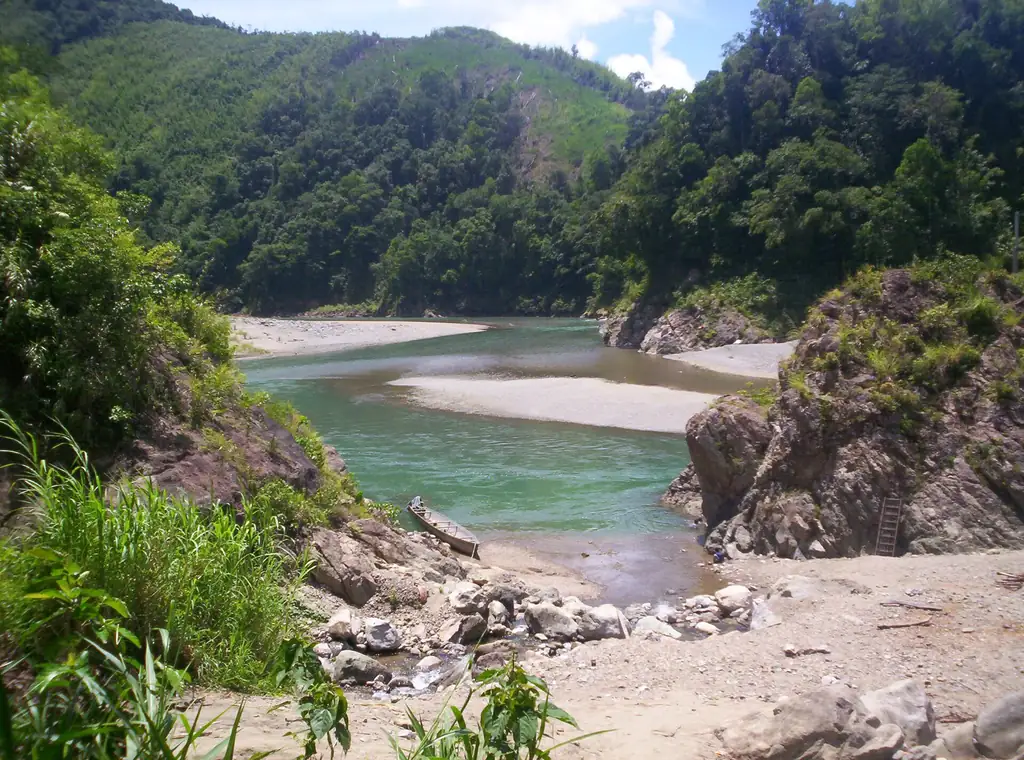
Clear river among rocks and forest at Dibagat, Kabugao, Apayao
Photo: Andrew Garnett · Public domain · Wikimedia Commons
Map

Apayao

Cordillera Administrative Region
Luzon
Capital Kabugao
Population (2024) 126,587
Area 4,413 km²
Municipalities 7
Cities 0
Island Group Luzon
Languages Isnag, Ilocano, Kalinga

Population: 2024 census (PSA). Area: land area.

Kapitbahay — Neighboring Provinces

Apayao is the northernmost province of the Cordillera Administrative Region, a place of forest, rivers, and very few people. It is among the least densely populated provinces in the Philippines — a fact that reflects not underdevelopment so much as the character of the land itself, which is steep, forested, and largely intact.

KabugaoCapital
4,413 km²Area
7Municipalities
LuzonIsland Group

Kabugao sits along the Apayao River in the northern interior. It is accessible by road from Cagayan province, though the journey is long. The town is small and unhurried — a provincial capital that serves a province where most of the territory has no roads at all.

★
Least Densely Populated

Apayao has one of the lowest population densities of any province in the Philippines — fewer than 30 people per square kilometer across its 4,413 km². Most of the land is old-growth forest, part of the Northern Sierra Madre and Cordillera forest corridor.

The Isnag people — also written as Isneg or Apayao — are the primary indigenous inhabitants of the province. They have lived along the Apayao River and its tributaries for centuries, organized in small river communities and known for their skills in weaving, tattooing, and the traditional practice of headhunting, which had largely ceased by the mid-20th century.
The Isnag resisted Spanish penetration more effectively than most indigenous groups in Luzon. The forested mountains and the distance from the coast made colonization impractical. Spanish missionaries attempted entry in the 17th and 18th centuries, but permanent mission establishments were difficult to maintain, and the Isnag's reputation for headhunting deterred sustained contact.

1610–1684

Dominican Missions

Dominican friars set up a mission in what is now Pudtol in 1610 and built a church at what is now Kabugao in 1684. The Isneg uplands still stayed largely outside Spanish control until late in the 19th century.

1907

Sub-Province of Cagayan

Act No. 1642 of 9 May 1907 made Apayao a sub-province of Cagayan. In 1908, Act No. 1876 created the Mountain Province, and Apayao became one of its sub-provinces.

1942–1945

War and the Isneg Guerrillas

Japanese forces entered Apayao in 1942. An Isneg guerrilla force was organized under a United States Army captain who had escaped the fall of Bataan, and Filipino troops and Cordilleran guerrillas drove the Japanese out in 1945.

1966

Kalinga-Apayao

Republic Act No. 4695 of 18 June 1966 split the old Mountain Province into Benguet, Mountain Province, Ifugao and Kalinga-Apayao. Apayao stayed a sub-province of Kalinga-Apayao.

1987

Cordillera Administrative Region

Executive Order No. 220 of 15 July 1987 created the Cordillera Administrative Region from Abra, Benguet, Ifugao, Kalinga-Apayao and Mountain Province.

1995

Apayao Becomes a Province

Republic Act No. 7878, approved on 14 February 1995, made Kalinga and Apayao separate regular provinces, with Kabugao as Apayao's capital.

2013–2015

Philippine Eagles in Luzon

On 22 March 2013, scientists confirmed a stronghold of Philippine eagles in Luzon near the Calanasan lowland forest, after a search that began in 2011. The first active nest in Apayao was found in July 2015.

The terrain kept much of the province remote for a long time. Road access has improved since the 1990s, but large portions of the province remain accessible only by river or foot trail.

The Isnag are river people. The Apayao River — also called the Abulug in its lower reaches — is the main corridor of life in the province. Communities are oriented toward the river, and travel traditionally followed the waterways. Even now, with roads extending into some municipalities, the river remains central.

Tattoo and Identity

Isnag tattooing was historically connected to headhunting — warriors who had taken heads earned the right to specific tattoo patterns. The practice was complex and socially embedded, marking status, achievement, and identity. By the mid-20th century, headhunting had stopped and the associated tattooing declined. Older Isnag elders who carry these tattoos are now rare.

★
Preserved Forest

Apayao contains some of the largest intact lowland and montane forest remaining in Luzon. The Isnag's traditional land management — which treated the forest as a shared resource rather than a commodity — contributed to its preservation. The Maragat watershed forest is now a protected area.

Weaving

Isnag weaving produces distinctive textiles in geometric patterns, using abaca and cotton. The cloth is used for traditional garments, blankets, and ceremonial items. Women are the primary weavers, and the patterns carry cultural information — family identity, region of origin, and ceremonial purpose.

See the great festivals in Pista ng Pilipinas →

Food in Apayao is subsistence-oriented and river-dependent. Fish from the Apayao River and its tributaries form the protein base. Root crops — camote, gabi, cassava — supplement rice. Wild vegetables and foraged greens are part of daily cooking. The food is not elaborate, but it is clean and uses ingredients that are entirely local.

Pinapaitan

A bitter soup made from goat or beef innards, cooked with bile as the souring and bittering agent. Common across the Cordillera and Cagayan Valley, pinapaitan is an acquired taste — the bitterness is real and intentional.

Sinanglaw

A Cordillera soup made with beef or carabao innards, cooked with bile and flavored with ginger and vegetables. Similar to pinapaitan but with regional variations in the spicing and cut of meat.

Inabraw (Ilocano River Fish Stew)

Northern Luzon / Apayao
10 minutesPrep
20 minutesCook
4Serves
Ingredients
  • 500g, cleaned and slicedfreshwater fish
  • 3 tbspbagoong isda (fermented fish sauce)
  • 1-inch knob, slicedginger
  • 2 medium, quarteredtomatoes
  • 2 cups (malunggay, kangkong, or patani)assorted native vegetables
  • 4 cupswater
Method
  1. Bring water to a boil with ginger and tomatoes.
  2. Add bagoong isda and stir. Simmer for 5 minutes.
  3. Add fish pieces and cook for 8–10 minutes until cooked through.
  4. Add vegetables in the last 3 minutes of cooking. Do not overcook.
  5. Taste for saltiness from the bagoong before adding any additional salt. Serve immediately.
Cook's note

Freshwater fish from the Apayao River — mudfish, tilapia, or small carp — are the authentic choice. The bagoong provides the salt, so add carefully.

Isnag — also called Isneg or Apayao — is the indigenous language of the province. It belongs to the Northern Philippine branch of Austronesian, related to the Cordilleran language family. The language has been documented by SIL International and other linguists, and a number of Bible portions and literacy materials exist in Isnag.

Ilocano, IsnagMain languages
50.8%Ilocano (2000)
30.0%Isnag (2000)
Filipino, EnglishSecond languages
★
Ilocano as Lingua Franca

Ilocano is the practical common language for inter-community communication in Apayao, given the province's proximity to Ilocos Norte and Cagayan, both heavily Ilocano. Most Isnag adults speak at least functional Ilocano alongside their native tongue.

Ilocano arrived in Apayao through trade, migration, and the presence of Ilocano lowlanders in the valley towns. The school system teaches in Filipino and English, which are the standard languages for education and government. In practice, Kabugao and the municipal centers operate in a mix of Ilocano and Filipino.

The Isnag language is spoken primarily in home and community contexts, with varying levels of fluency in younger generations depending on how close their communities are to the road. Upriver communities, with less outside contact, tend to have stronger Isnag retention.

Apayao is genuinely remote. The roads are not reliable year-round, and parts of the province are accessible only by river. This is not a province for travelers looking for infrastructure. It is a province for travelers who want to see what the Philippines looks like with most of the people removed.

Tuguegarao (TUG), ~4 hrs driveNearest Airport
Via Cagayan Valley — Tabuk then northAccess Route
March to MayBest Season
Variable; 4WD recommended for interiorRoad Condition

Apayao forms the northern tip of the Cordillera Administrative Region. It borders Cagayan to the north and east, Ilocos Norte and Abra to the west, and Kalinga to the south, and Kabugao is its capital.

Apayao River

The main river of the province runs through the interior and provides the primary travel corridor for riverside communities. Boat trips along the river reveal old-growth forest, wildlife, and communities untouched by the main road network.

Dupag Rock Formation

A limestone formation in Luna municipality with caves, rock formations, and a river that can be navigated by kayak or banca. The area is being developed as a low-impact eco-tourism site with community guides.

Kabugao Town Center

The provincial capital on the Apayao River. The town has basic accommodation and serves as the departure point for river trips and treks into the interior. The market is the place to find Isnag woven products and locally grown produce.

◆
Plan Carefully

Road access to Kabugao can be cut during heavy rains. Confirm road conditions before departure. Bring cash — there are no reliable ATMs in the interior municipalities. Coordinate with local guides in advance.

Apayao is biologically rich. The province records 139 bird species, 61 of them endemic, along with dipterocarp trees, Rafflesia flowers and many food and medicinal plants used by the Isneg. In 2015 Calanasan began protecting 3,000 hectares of its forest. Apayao is also one of very few provinces in the country with an approved forest land use plan.

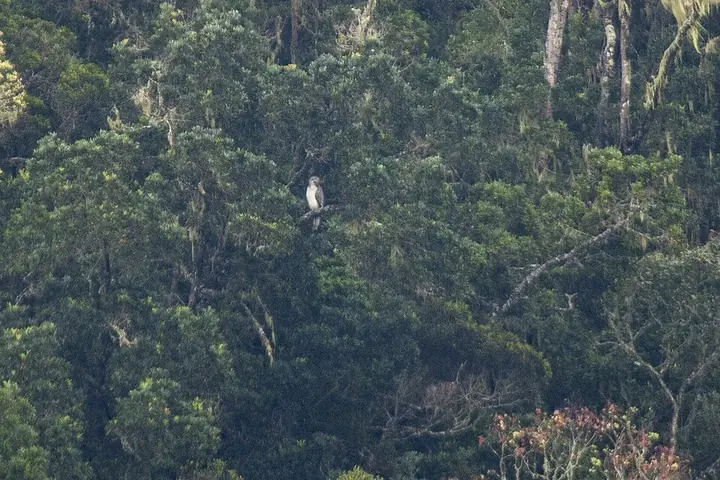
A Philippine eagle in the wild (photographed in Mindanao)
Photo: Francesco Veronesi from Italy · CC BY-SA 2.0 · Wikimedia Commons
Philippine Eagle
Pithecophaga jefferyi
Critically Endangered
The national bird, which needs large areas of old forest to hunt. In 2013 scientists confirmed a stronghold of the species in Luzon near the Calanasan lowland forest, and the first active nest in Apayao was found in July 2015.
Field note: Keep well away from any nest and report sightings to the Philippine Eagle Foundation or DENR. Nesting pairs abandon sites when disturbed.
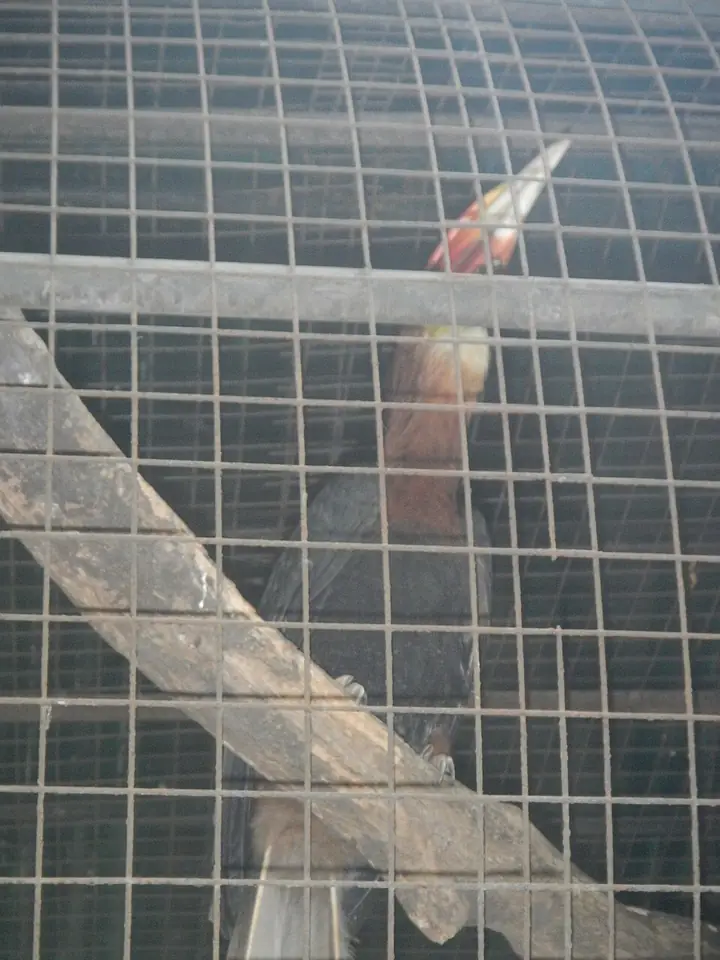
A rufous hornbill (photographed at Ninoy Aquino Parks & Wildlife Center, Quezon City)
Photo: Ramon FVelasquez · CC BY-SA 3.0 · Wikimedia Commons
Rufous Hornbill
Buceros hydrocorax
Vulnerable
The largest hornbill in the Philippines, called kalaw and "clock of the mountains" for its booming call. It lives in Apayao's lowland forests. Hunting, capture and possession are illegal under Republic Act 9147.
Meet all 65 Philippine animals in Hayop ng Pilipinas →

The river does not look like a road, but it was one. The Apayao River connected communities that had no other connection. A family upriver would load their canoe with sweet potato, forest products, and woven cloth, paddle downstream for a day, trade in the market town, and return. The transactions were simple and regular. The river carried the economy.

The Isnag built their settlements on the river's banks and oriented their houses toward the water. When the Spanish missionaries came up from Cagayan in the 18th century, they traveled the same river. When the American constabulary established posts in the early 20th century, they followed the river too. The waterway that the Isnag used for commerce became the vector for everyone who wanted something from the interior.

What the outsiders consistently underestimated was how much forest there was. The Cordillera mountains behind Apayao are not a gentle highland — they are steep, dense, and navigable only by trails that require local knowledge. For generations the forest also sheltered traditional communities that simply wanted to be left alone.

The forest is still there. Apayao retains more old-growth forest than almost any province in Luzon. This is partly geography, partly politics, and partly the Isnag tradition of treating the forest as something you live within rather than something you convert. The trees are older than the Spanish records of the province. The river carries the same water it always has. The province that nobody visits has kept, mostly by accident, what everyone else has already lost.

Sources · updated 4 October 2026
Photo credits (3)

Photos from Wikimedia Commons, used under the licences shown; some were resized. All photo credits