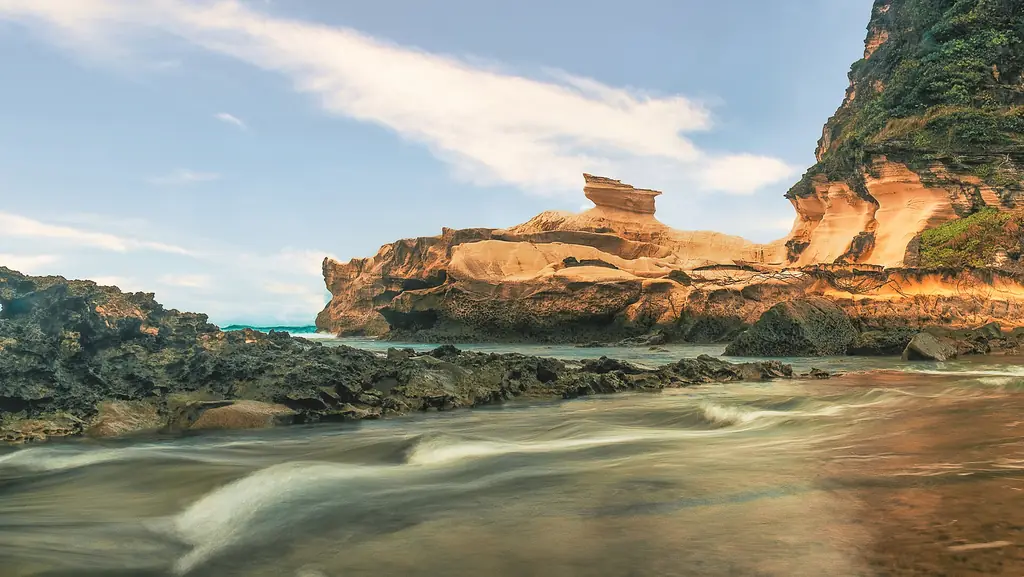
White limestone of the Kapurpurawan Rock Formation, Burgos
Photo: Luzviminda7641 · CC0 · Wikimedia Commons
Map

Ilocos Norte

Ilocos Region
Luzon
Capital Laoag City
Population (2024) 618,850
Area 3,468 km²
Municipalities 21
Cities 2
Island Group Luzon
Languages Ilocano, Filipino

Population: 2024 census (PSA). Area: land area.

Kapitbahay — Neighboring Provinces

Ilocos Norte occupies the northwestern tip of Luzon, where the Cordillera mountains meet the South China Sea. It is a province of strong winds, Spanish colonial churches, white sand beaches, and long-distance views of the northern sea. It is also the home province of former president Ferdinand Marcos.

Laoag CityCapital
3,468 km²Area
21 + 2 citiesMunicipalities
LuzonIsland Group

Laoag City is the province's most populous settlement and its political, commercial and industrial hub, and the northernmost city in the Philippines; its airport is the busiest in the Ilocos Region. The sinking bell tower and St. William's Cathedral, founded by the Augustinians in 1580, anchor the old center.

★
Wind Energy Pioneer

The Bangui Wind Farm on Bangui Bay began operating in 2005 with 15 turbines, and a second phase in 2008 brought it to 20 Vestas turbines, each 70 meters tall, standing in a single row along 9 kilometers of shore facing the West Philippine Sea. They have become one of the most photographed landmarks in the Ilocos region and produce electricity for the Luzon grid.

Pagudpud, at the province's northern tip, is the destination that draws most travelers — white sand beaches at Saud and the Blue Lagoon line Luzon's northern coast and lack the crowds of more developed coastal resorts. The rest of the province offers colonial churches, sand dune landscapes, and an Ilocano culture with distinct food, textile, and festival traditions.

The 2024 census counted 618,850 people in Ilocos Norte's 21 municipalities and two component cities, Laoag, the capital, and Batac. The province covers about 3,468 square kilometers of Luzon's northwestern corner, facing the West Philippine Sea, with Cagayan and Apayao to the east and Abra and Ilocos Sur to the south. Ilocano is the main language; indigenous Yapayao and Isneg communities live in the uplands, and the mountain town of Adams is home to Ilocanos, Yapayaos, Kankanaeys and others. Besides Ferdinand Marcos, the province is the birthplace of the revolutionary general Artemio Ricarte and of Gregorio Aglipay, co-founder of the Philippine Independent Church.
The Ilocos coast was among the first areas of Luzon to experience sustained Spanish colonization. Its location on the main sea route from Manila to the north made it strategically important, and the Spanish established missions and towns along the coast from the 1570s onward.

13 June 1572

Salcedo Sails North

Juan de Salcedo, the 22-year-old grandson of Miguel López de Legazpi, sailed north from Manila with eight armed boats and 45 men. He landed at present-day Vigan and went on to Laoag, Currimao and Badoc, and Augustinian missions soon followed along the coast.

1589–1660

Uprisings Against the Friars

Abuses by Augustinian friars set off a series of revolts, among them the Dingras Uprising of 1589 and Pedro Almasan's revolt in San Nicolas in 1660.

1694–1710

Paoay Church Built

The Augustinian friar Antonio Estavillo began the present church of Saint Augustine in Paoay in 1694, and it was completed in 1710. Its giant buttresses made it one of the best-known examples of what is called Earthquake Baroque.

1762–1763

The Silangs' Revolt

During the British occupation of Manila, Diego Silang allied with the British and led an Ilocano revolt to end Spanish rule. After the Spanish offered a reward, two former allies, Miguel Vicos and Pedro Becbec, killed him in Vigan on 28 May 1763. His widow Gabriela carried on the fight until she was captured in Abra and hanged in Vigan on 20 September 1763.

2 February 1818

Ilocos Divided

A royal decree split the old province of Ilocos into Ilocos Norte and Ilocos Sur. La Union and Abra later became provinces of their own.

1917–1989

The Marcos Years

Ferdinand Marcos was born in Sarrat on 11 September 1917, became president in 1965 and declared martial law in 1972. Human rights violations were documented in the province itself: farmers from Vintar, Dumalneg, Solsona, Marcos and Piddig were tortured, and in 1984 eight farmers in Bangui and three indigenous people in Vintar were killed. The People Power Revolution of 1986 ended his rule, and he died in exile in Honolulu in 1989.

2005–2008

Bangui Wind Farm

The first 15 turbines of the NorthWind project on Bangui Bay began operating in June 2005, and five more were added in August 2008, for 20 turbines and 33 megawatts in a single row along 9 kilometers of shore.

Ilocano culture is known for its frugality, industry, and strong regional identity. The Ilocano have historically been the great internal migrants of the Philippines — settling in the Cagayan Valley, the Mountain Province, and Mindanao, bringing their language and customs with them. The home province remains the cultural reference point.

Paoay Church and Baroque Heritage

The Church of Saint Augustine in Paoay, begun in 1694 by the Augustinian friar Antonio Estavillo and completed in 1710, is one of four Baroque churches in the Philippines inscribed as UNESCO World Heritage Sites. Its massive buttressed walls, fused with local earthquake-resistant design, are a well-known example of what is often called Earthquake Baroque. It was declared a National Cultural Treasure in 1973 and inscribed on the UNESCO World Heritage List in 1993.

Ilocano folk song lives on in serenades. In "Manang Biday", a traditional courtship song that is also danced, a young man begs a maiden to open her window, and serenading a sweetheart is still practiced by Ilocanos. (The ballad "Sarung Banggi", sometimes called Ilocano, is in fact the best-known song in the Bikol language, by the Albay composer Potenciano Gregorio.) Oral poetry runs deep too: the epic Biag ni Lam-ang, about a hero who could speak at birth, is believed to have pre-colonial roots.

See the great festivals in Pista ng Pilipinas →

Ilocano food is austere and fermented. The cuisine makes heavy use of bagoong (fermented fish or shrimp paste), pinakbet (vegetable stew with bagoong), and various dishes that rely on curing, salting, and fermenting to preserve food in a province that historically had more people than arable land.

Pinakbet Ilocano

The Ilocano version of pinakbet is the original — bitter melon, eggplant, okra, squash, and tomatoes cooked with bagoong na isda (fermented fish paste) without the addition of meat. Simpler and more bitter than the Tagalog adaptation. The vegetables should be cooked just until tender, not soft.

Bagnet

Double-fried pork belly — boiled first until tender, dried, then deep-fried twice until the skin is shatteringly crisp and the fat is rendered and golden. Bagnet is the Ilocano version of lechon kawali and is considered superior by Ilocanos. It is often eaten with diced tomatoes and bagoong.

Dinengdeng

Ilocos Norte
15 minutesPrep
20 minutesCook
4Serves
Ingredients
  • 2 piecesgrilled fish (any firm white fish)
  • 3 tbspbagoong na isda (fermented fish)
  • 3 cupswater
  • 1 mediumbitter melon (ampalaya), sliced
  • 8 piecesokra, whole
  • 2 mediumeggplant, sliced
  • 200gsquash, cubed
  • 2 mediumtomatoes, sliced
  • 1 thumbginger, sliced
Method
  1. Bring water to a boil with bagoong and ginger.
  2. Add squash first and cook for 5 minutes.
  3. Add eggplant and okra. Cook for 3 minutes.
  4. Add bitter melon and tomatoes.
  5. Lay the grilled fish on top.
  6. Cover and cook for 5 more minutes.
  7. Do not stir — the fish should steam on top of the vegetables.
  8. Serve immediately with rice.
Cook's note

Dinengdeng is sometimes called 'inabraw' — an Ilocano vegetable broth dish. The key is the bagoong na isda, which provides salt, umami, and the characteristic Ilocano flavor. Grilling the fish first adds a smoky depth. Use native bagoong from Ilocos if available — it has a different, more complex flavor than commercial bagoong.

Ilocano is the primary language of Ilocos Norte and is the third most widely spoken native language in the Philippines, with speakers across northern Luzon, the Cagayan Valley, and a large diaspora in Hawaii and California.

IlocanoPrimary Language
8.7 million native speakers (2020)Speakers
Austronesian / Northern PhilippineLanguage Family
Ilocos Region (Region I)Region

Ilocano has a literary tradition predating Spanish colonization, with its own script (Kur-itan) and oral narrative forms. The Spanish period produced Ilocano Christian texts and eventually a colonial literary tradition. The modern period has a significant body of Ilocano journalism, poetry, and fiction — Pedro Bucaneg (1592–c. 1630), a poet blind from birth who is called the father of Ilocano literature, dictated poems and translations, and some historians credit him with the first written version of the epic Biag ni Lam-ang.

★
Hawaii's Ilocano Community

Ilocano workers began arriving in Hawaii in the early twentieth century to work in the sugarcane and pineapple fields. Today Filipinos are the largest Asian ancestry group in Hawaii, and about 85 percent of them speak Ilocano; the language is also spoken in California and Canada, carried by the 19th- and 20th-century Ilocano diaspora.

Laoag City is reached by flights from Manila (under an hour) or by overnight bus (about 9 hours). From Laoag, the province's main attractions spread northward to Pagudpud and inland toward the sand dunes and colonial churches.

~490 kmDistance from Manila
~55 minutes from NAIAFlight Time
8–10 hours overnightBus Time
Laoag International AirportAirport

Pagudpud (Saud Beach and Blue Lagoon)

At the northern tip of Luzon, Pagudpud offers two distinct beaches: Saud Beach, a long crescent of white sand on Luzon's northern coast, and the Blue Lagoon, a sheltered cove with turquoise water. Both are less developed than comparable beaches in other regions and accessible by bus or van from Laoag.

Paoay Church

The UNESCO-listed Saint Augustine Church in Paoay, south of Laoag, is the most architecturally significant of the Ilocano colonial churches. Its massive side buttresses — added to stabilize the structure against earthquakes — give it a fortress-like quality unlike any other baroque church in the Philippines.

Bangui Wind Farm

The 20 wind turbines of Bangui stand in a single row along 9 kilometers of the Bangui Bay shoreline. The view — white towers against the South China Sea, backed by the Cordillera foothills — is striking and specific to this coastline. A road runs alongside the turbines and is walkable or accessible by tricycle from Bangui town.

La Paz Sand Dunes

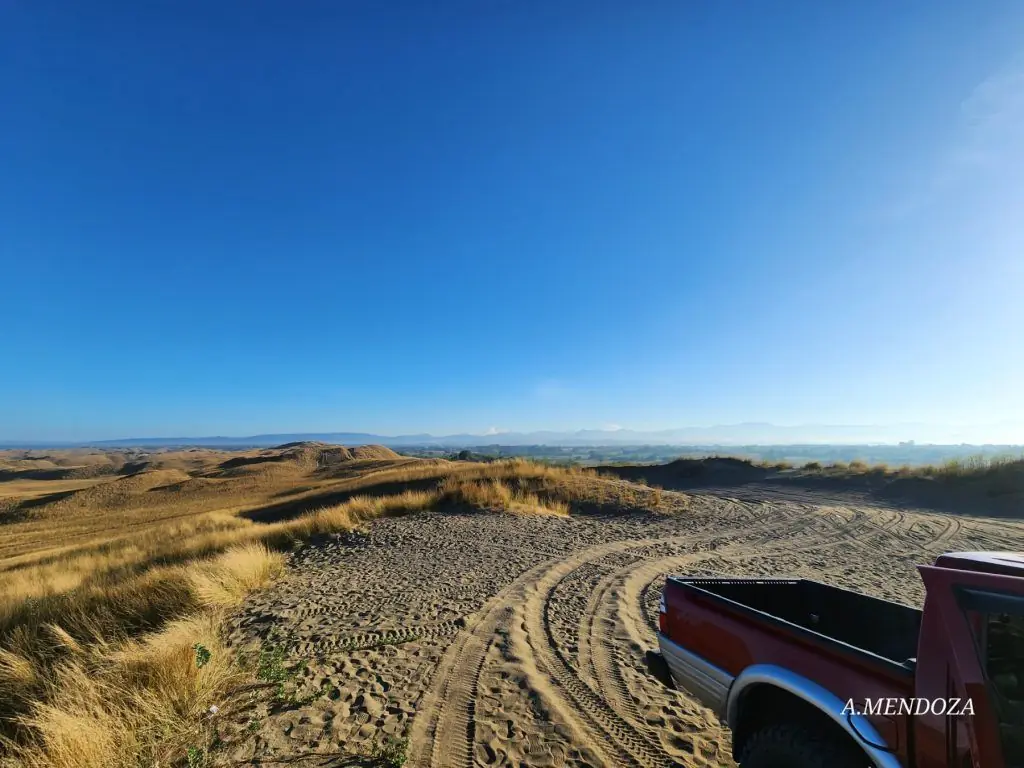
A long stretch of coastal sand dunes near Laoag. 4x4 rides and sandboarding are available from operators at the site. The landscape is more Saharan than Philippine. The dunes formed from centuries of wind-blown beach sand accumulating inland from the coast.

The forested Patapat Mountains at Luzon's northern tip are protected as the Kalbario–Patapat Natural Park, proclaimed on 20 April 2007 in Pagudpud and Adams. The park itself covers 3,800 hectares, with a 1,937-hectare buffer zone, and holds springs, waterfalls such as Kabigan Falls, closed-canopy mountain forest and streams that run down to Pasaleng Bay, where the Patapat Viaduct winds along the mountainside. It is a key biodiversity area and important bird area: the rufous hornbill is a common sight, and threatened birds such as the Philippine eagle-owl, the whiskered pitta and the flame-breasted fruit-dove live there, along with the small rufous horseshoe bat and endemic frogs. Slash-and-burn farming, illegal logging and hunting are the main threats. Along the coast, the wind- and wave-sculpted Kapurpurawan rock formation in Burgos and the La Paz Sand Dunes in Laoag show the force of the northern winds.

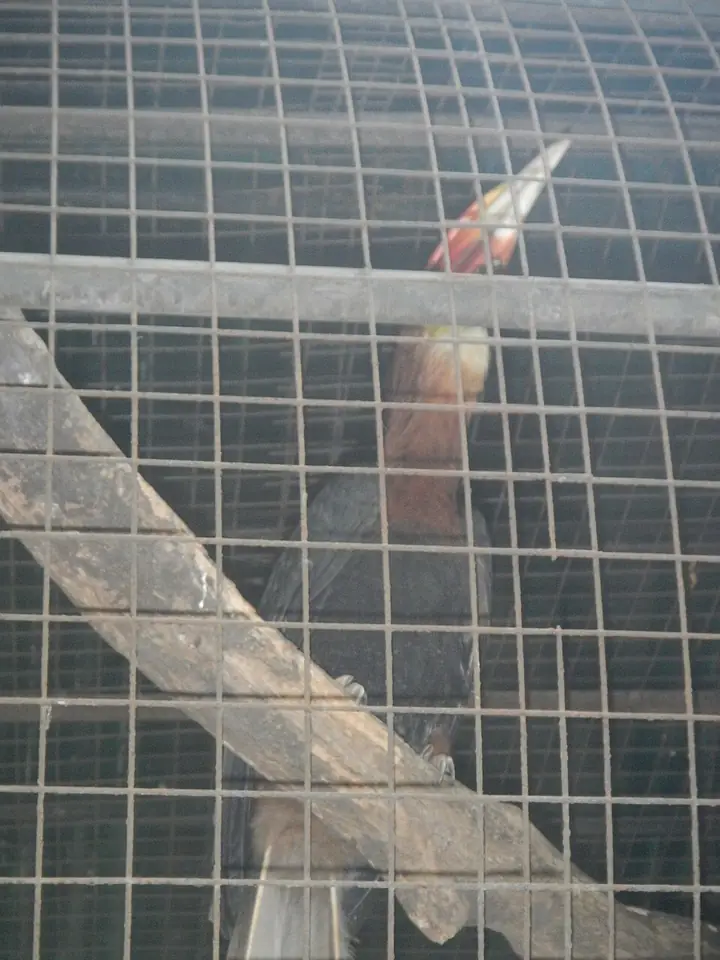
A rufous hornbill (photographed at Ninoy Aquino Parks & Wildlife Center, Quezon City)
Photo: Ramon FVelasquez · CC BY-SA 3.0 · Wikimedia Commons
Rufous Hornbill
Buceros hydrocorax
Vulnerable
Called kalaw, it is the largest of the Philippines' ten endemic hornbill species, with a huge red bill and casque. Groups of kalaw glide and flap across the valleys of Kalbario–Patapat, and the park's conservation work centers on them.
Field note: Hornbills need big old trees to nest in; never cut nest trees or take chicks.
Philippine Eagle-Owl
Ketupa philippensis
Vulnerable
The largest owl in the Philippines, found only in the country. It rests in trees by day and hunts small animals at dusk along forest edges near streams, and it is among the threatened birds recorded in Kalbario–Patapat.
Field note: Keep forest along streams intact and report injured owls to the DENR.
Meet all 65 Philippine animals in Hayop ng Pilipinas →
← All stories
Kasaysayan · Ilocos

Juan de Salcedo

Juan de Salcedo, one of the boldest figures of the early Spanish colony, was born around 1549 in Mexico. He was the grandson of Miguel Lopez de Legazpi, the first Spanish governor-general of the Philippines.

He arrived in 1569, at about twenty, and soon led expeditions along the northern coast of Luzon. In 1572 he founded the Spanish town of Vigan, which he named Villa Fernandina, opening the north to Spanish rule.

He pushed along the Ilocos coast and into the edges of the Cordillera, and was known, for his time, for dealing fairly with the local people.

His life was short. He died in Vigan in 1576, of illness, at about twenty-seven. The old street of Calle Salcedo in Vigan still carries his name.

← All stories
Kasaysayan · Laoag

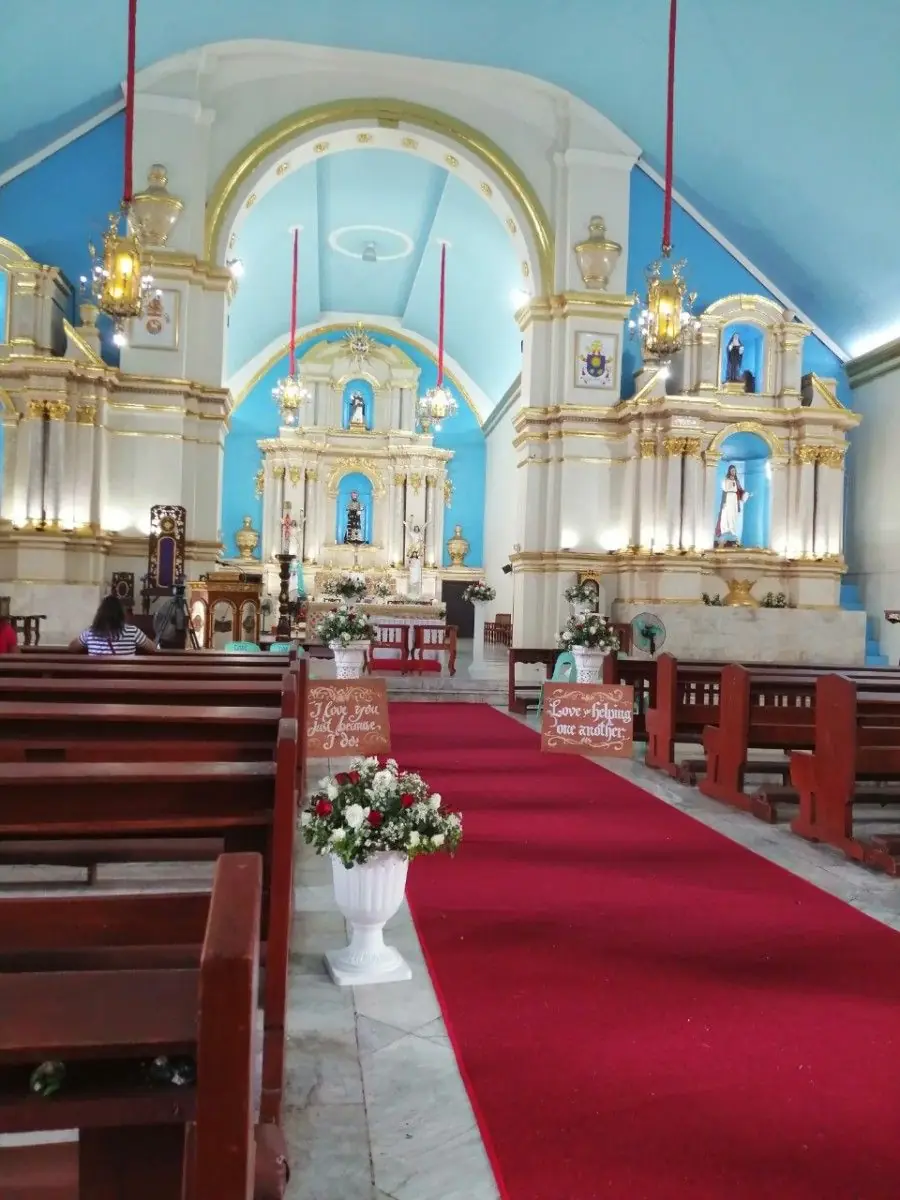
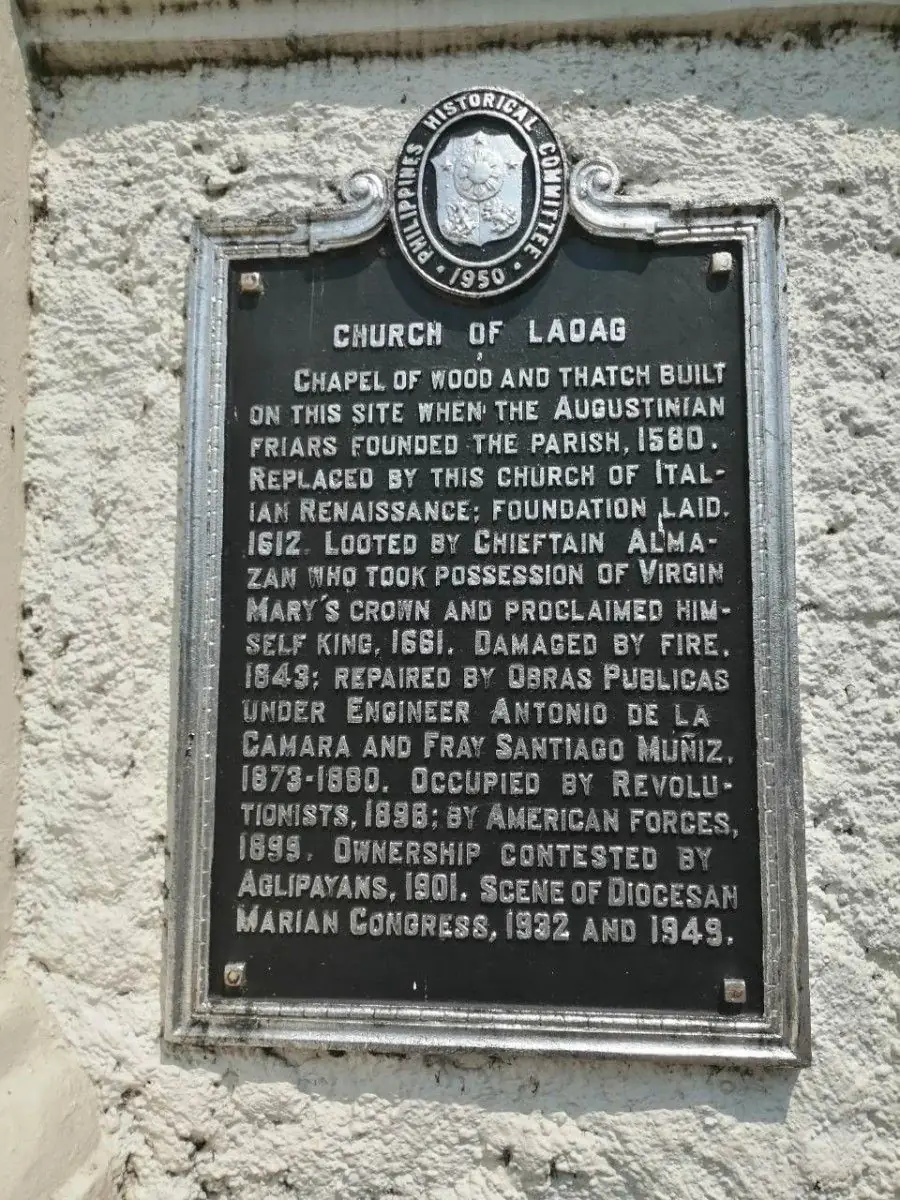
St. William's Cathedral

In every new place, the first thing I look for is the church. St. William's Cathedral, the Laoag Metropolitan Cathedral, is one I will not forget.

The Augustinians set up the parish in 1580 with a simple church of wood. The present stone church rose in 1612, in an Italian Renaissance style, and it became a cathedral in 1961 with the founding of the Diocese of Laoag.

It stands within easy walking distance of the city center. Ask anyone in Laoag and they will point the way, because everyone knows it.

Mga Larawan

← All stories
Kasaysayan · Laoag

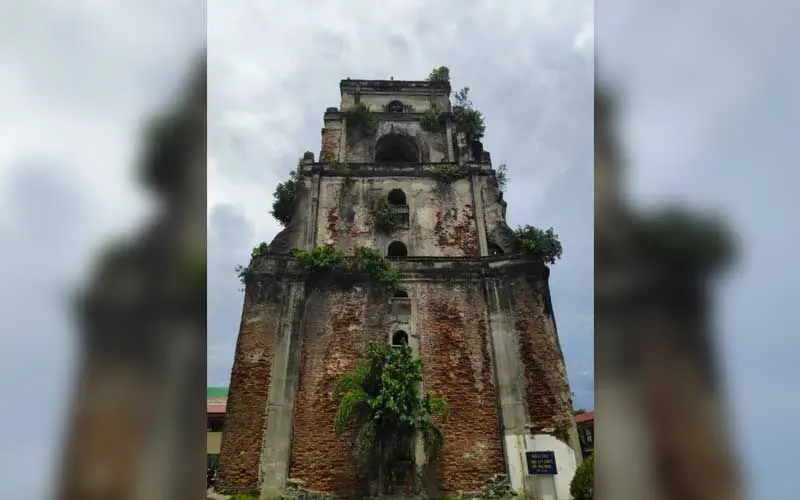
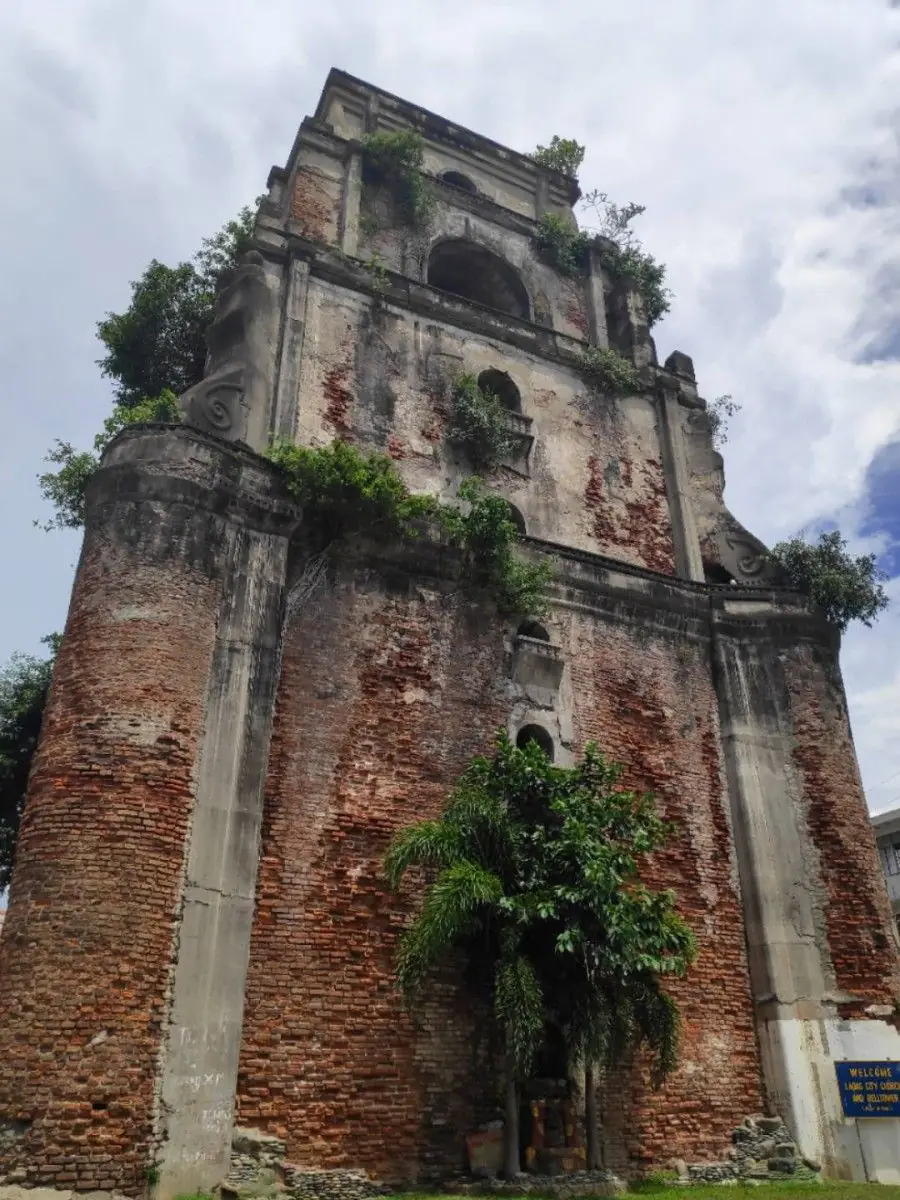
The Sinking Bell Tower

Near the cathedral stands the Sinking Bell Tower of Laoag, built by the Augustinians around 1612 as a separate bell tower.

Its great stone weight sits on soft, sandy ground, and over the centuries it has slowly settled, sinking about an inch a year. Old lore says a person on horseback could once ride through its doorway, and that today you must stoop to enter. Whether or not the tale is exact, the tower truly is sinking.

I saw more than a tourist spot here. I saw nature quietly taking back its ground, a reminder that for all we build, we remain at nature's mercy.

Mga Larawan

← All stories
Lugar · Laoag

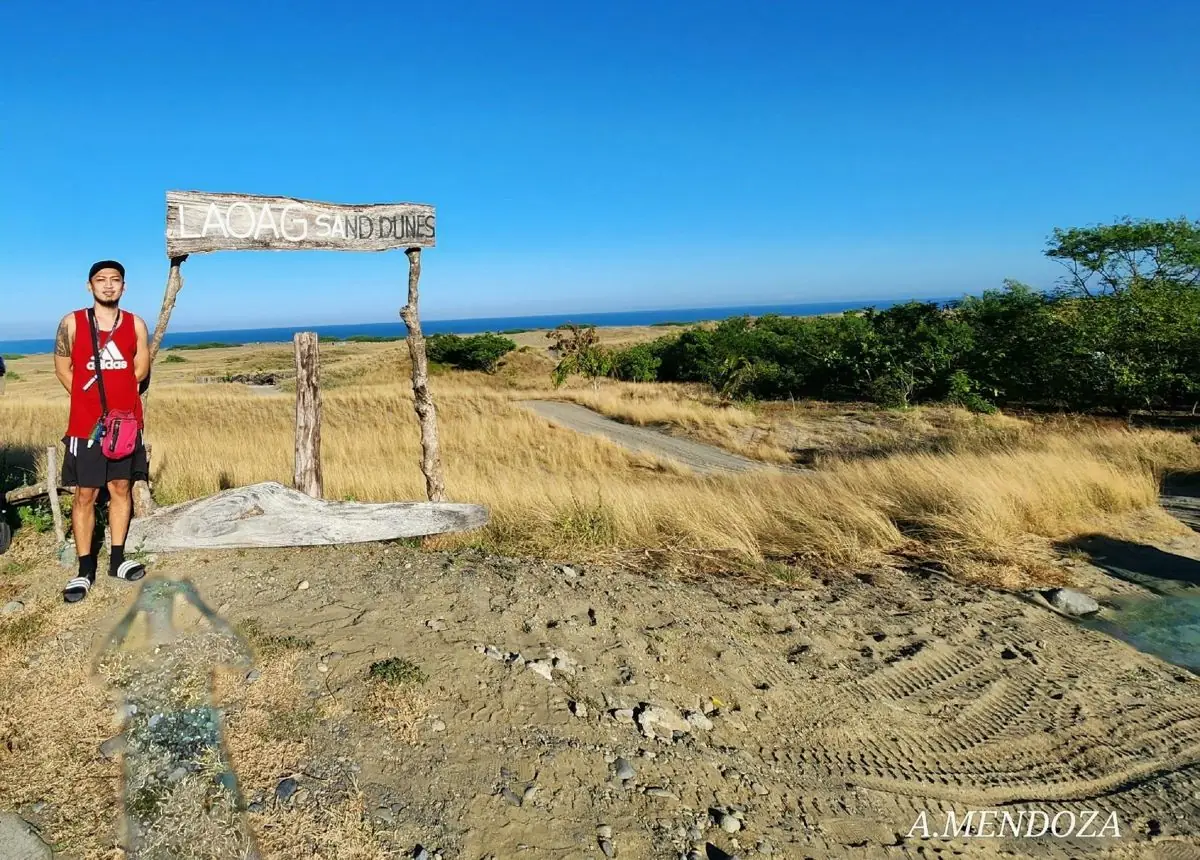
The La Paz Sand Dunes

After two months of work in Ilocos Norte, I finally reached the Desert of the North, the La Paz Sand Dunes, only about forty minutes from Laoag.

Locals call the dunes Bantay Bimmaboy, for hills shaped like pigs. This sweep of sand by the sea has stood in for deserts on screen, appearing in the classic film Himala, in Panday and Temptation Island, and even in Hollywood's Born on the Fourth of July.

If you are planning a trip to Laoag, put the dunes on your list.

Mga Larawan

Sources · updated 4 October 2026
Photo credits (2)

Photos from Wikimedia Commons, used under the licences shown; some were resized. All photo credits