Map

Ilocos Sur

Ilocos Region
Luzon
Capital Vigan City
Population 704,033
Area 2,580 km²
Municipalities 32
Cities 2
Island Group Luzon
Languages Ilocano, Filipino
Kapitbahay — Neighboring Provinces

Ilocos Sur sits on the northwestern Luzon coast, sandwiched between the Cordillera foothills and the South China Sea. It contains one of the most significant historical sites in Southeast Asia: Vigan City, a Spanish colonial town whose cobblestone streets and baroque architecture survive with a completeness found nowhere else in the region.

Vigan CityCapital
2,580 km²Area
32Municipalities
LuzonIsland Group

Vigan is the jewel and the burden of Ilocos Sur — a UNESCO World Heritage Site that defines the province's international identity while also generating the preservation pressures and tourism management challenges that come with that designation. The provincial capital is the oldest city in the Philippines established by a European colonial power.

UNESCO World Heritage City

Vigan was inscribed as a UNESCO World Heritage Site in 1999. It is described as the best-preserved example of a planned Spanish colonial town in Asia. Its historic core — the Mestizo District or Calle Crisologo — contains over 200 houses from the eighteenth and nineteenth centuries, still occupied and maintained by their owners.

Outside Vigan, Ilocos Sur is an agricultural province of weaving towns, tobacco fields, and colonial churches. The province produced several major figures in Philippine history, including Padre Jose Burgos, one of the three martyred priests of 1872 whose execution helped catalyze the Philippine nationalist movement.

The Ilocos coast was a well-established trading area before Spanish contact — indigenous Ilocano communities had trade relationships with Chinese merchants, and the area supported a settled agricultural population. The Spanish arrived in the 1570s and rapidly established missions and civil towns along the coast.

1572

Spanish Establish Vigan

Juan de Salcedo established a Spanish settlement at the mouth of the Mestizo River. The town was called Villa Fernandina and would eventually develop into the City of Vigan. Its position at the river's mouth made it a natural administrative and commercial center for the Ilocos region.

1762

Diego Silang Rebellion

During the British occupation of Manila, Diego Silang led an Ilocano revolt against Spanish authority and briefly controlled Vigan. He was assassinated in 1763 by Spanish-aligned forces. His wife Gabriela Cariño led a subsequent uprising before being captured and hanged.

1872

Execution of Padre Burgos

Father Jose Burgos of Vigan was among the three Filipino priests (GOMBURZA) garrotted by Spanish authorities for their alleged involvement in the Cavite Mutiny. Their execution galvanized the Philippine nationalist movement. Jose Rizal dedicated his novel El Filibusterismo to their memory.

1898–1900

Philippine-American War

Vigan was occupied by American forces in 1899 after a brief engagement. The Philippines was ceded to the United States. Ilocos Sur became part of the American colonial administration and eventually the Philippine Commonwealth.

1999

Vigan UNESCO Inscription

The Historic Town of Vigan was inscribed on the UNESCO World Heritage List, recognizing it as the best-preserved example of a Spanish colonial planned town in Asia. The inscription brought international visitors and preservation funding.

Ilocano culture in Ilocos Sur is expressed most visibly in its textile production, its food culture, and the material heritage of Vigan. The province has maintained craft traditions — inabel weaving, pottery, burnay ceramics — that elsewhere in Luzon have been lost to industrial substitution.

Vigan's Living Heritage

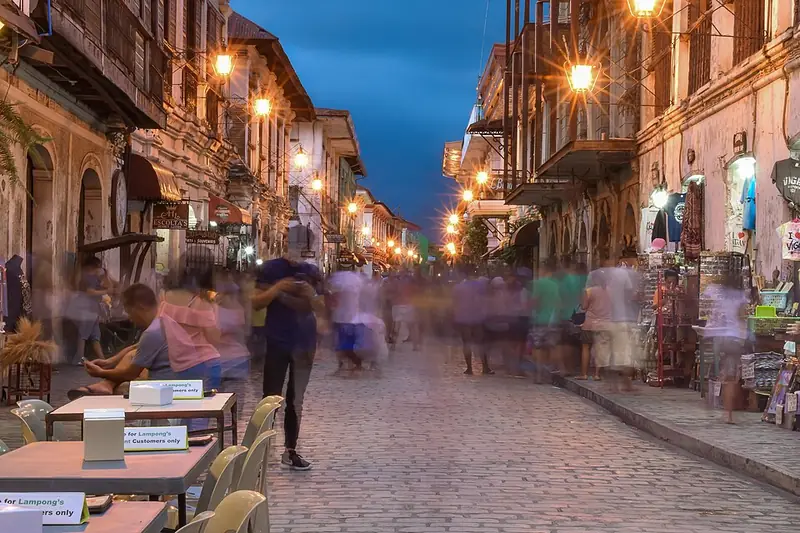
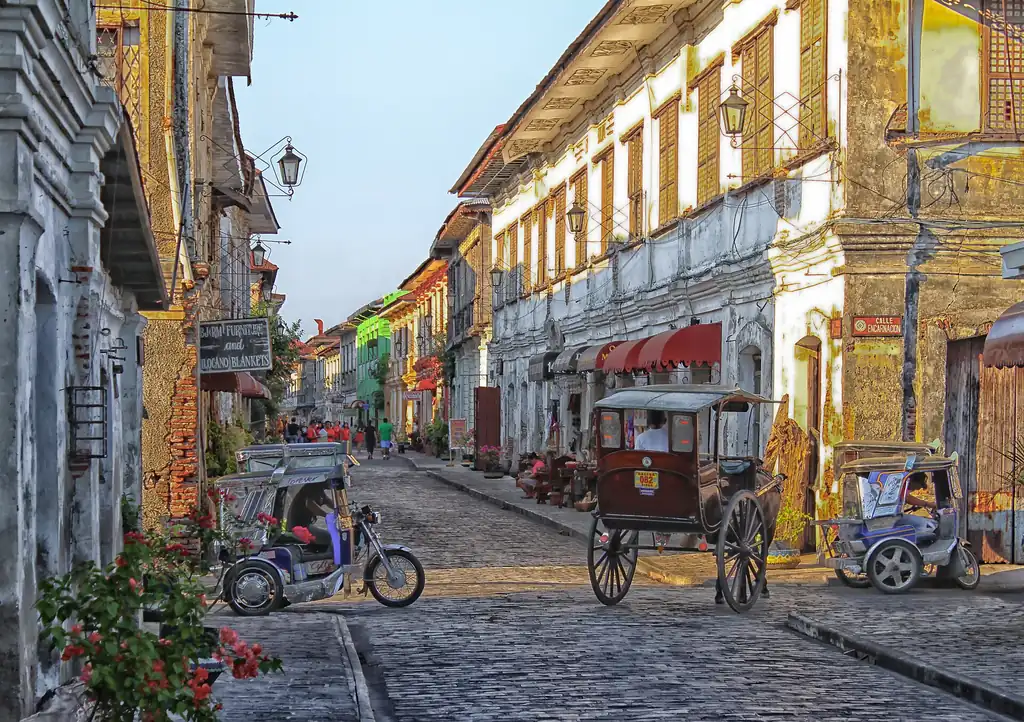
Calle Crisologo in Vigan is the most intact Spanish colonial street in Southeast Asia — a narrow cobblestone lane flanked by two-story houses with wooden floors, Chinese tile roofs, and ground-floor bodega arcades. The street is closed to motorized vehicles and is lit by gas lamps at night. The effect, particularly in the early morning before tourists arrive, is of a functional historical artifact.

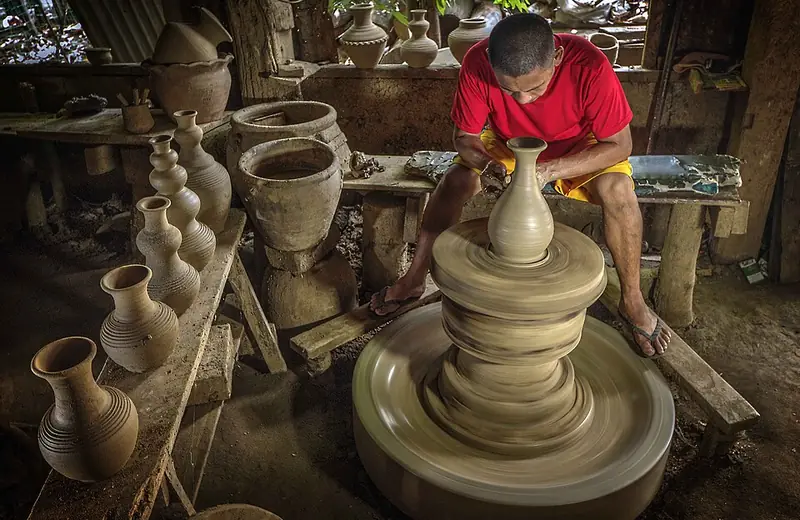
Burnay Pottery

Vigan is the center of burnay pottery — traditional Ilocano earthenware fired in wood-burning kilns using local clay. Burnay pots are used for storing bagoong, vinegar, and basi (Ilocano sugarcane wine). The pottery tradition in Vigan dates to the Chinese mestizo traders who established the technique during the colonial period. Several kilns remain operational in the Barangay Pariok area of Vigan.

JB

Padre Jose Burgos

Catholic Priest and Nationalist Figure1837–1872

Born in Vigan, Jose Burgos was a secular Filipino priest who advocated for the rights of Filipino clergy against Spanish discrimination. He was accused of involvement in the Cavite Mutiny of 1872 and executed by garrote alongside Fathers Gomez and Zamora. His execution, widely seen as unjust, provided the Philippine nationalist movement with three martyrs whose memory Jose Rizal carried into his literary work.

See the great festivals in Pista ng Pilipinas →

Ilocos Sur shares the broader Ilocano food tradition with its northern neighbor — fermented fish paste, bagnet, pinakbet — but adds Vigan-specific products that have become nationally recognized: Vigan empanada, Vigan longganisa, and the basi wine that was once traded throughout the Ilocos coast.

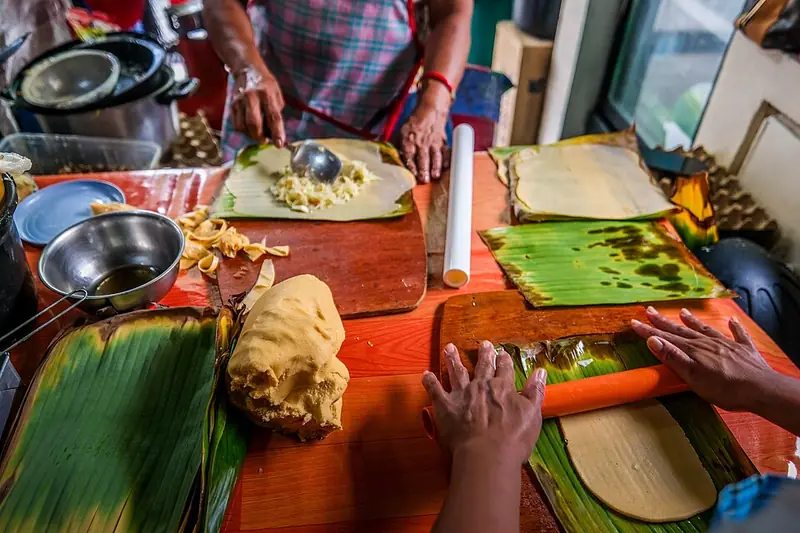
Vigan Empanada

An Ilocano empanada with a bright orange shell made from rice flour, fried until crisp and filled with papaya, egg, and Vigan longganisa. The shell crackles when bitten and shatters across the hands. Eaten with sukang Iloko (Ilocano cane vinegar) and chili. Sold from street carts near the Vigan plaza.

Vigan Longganisa

A small, garlicky pork sausage distinctive for being sold and cooked without casing — the meat mixture is formed directly into patties or rough cylinders for frying. Strongly seasoned with garlic and vinegar. The fat renders and crisps in the pan. A standard breakfast item throughout Ilocos.

Basi

Ilocos Sur
30 minutesPrep
Fermentation: 3–6 monthsCook
variesServes
Ingredients
  • 10 literssugarcane juice, freshly extracted
  • as neededbasi starter (binubudan or duhat bark and leaves)
  • 1 cupsugarcane bagasse (spent cane fiber)
Method
  1. Cook fresh sugarcane juice in a large vat until reduced by a third.
  2. Allow to cool to room temperature.
  3. Add the basi starter — duhat bark, leaves, and sometimes ground rice — which provides wild yeast for fermentation.
  4. Transfer to burnay clay jars. Seal with a sugarcane leaf wrap tied with vine.
  5. Allow to ferment for a minimum of 3 months; traditional producers age basi for 1–2 years.
  6. The finished basi is reddish-brown, mildly sweet, and tart.
Cook's note

Basi is the traditional Ilocano sugarcane wine and has been produced in Ilocos Sur for centuries. The 1807 Basi Revolt was triggered by the Spanish colonial government's attempt to monopolize its production. Home production of basi is traditional throughout the Ilocos region and the recipe varies by family and municipality. Commercial basi from Vigan producers is available but the home-brewed version is considered superior.

Ilocano is the language of Ilocos Sur, shared with Ilocos Norte and the Ilocano diaspora across northern Luzon and beyond. In Vigan, the Ilocano spoken has absorbed some vocabulary from the historical Chinese mestizo community that shaped the city's commercial culture.

IlocanoPrimary Language
Austronesian / Northern PhilippineLanguage Family
Ilocos Region (Region I)Regional Identity
Kur-itan script, oral and written literatureLiterary Tradition

Vigan's Chinese mestizo heritage has left traces in local vocabulary — terms for specific trade goods, architectural elements, and cooking techniques that come from Hokkien Chinese rather than Ilocano or Spanish roots. These lexical traces mark the commercial history of the city without displacing Ilocano as the primary language.

Vigan is the primary destination in Ilocos Sur. It is reached from Manila by overnight bus (8–9 hours) or from Laoag (1.5 hours south) or San Fernando, La Union (3 hours north). The historic center is compact and walkable, though the surrounding province requires transport.

~408 kmDistance from Manila
8–9 hours overnightBus Travel Time
~80 km (1.5 hours)Distance from Laoag
Laoag International Airport, then bus southAirport Option

Calle Crisologo

The main street of Vigan's heritage district, closed to motorized vehicles. Cobblestones, gas lamps, and two-story Chinese-Baroque houses form a street that functions as both a living neighborhood and a historical document. Kalesa (horse-drawn carriage) rides are available for tourists — the transport is appropriate to the street's aesthetic but should be vetted for animal welfare standards before use.

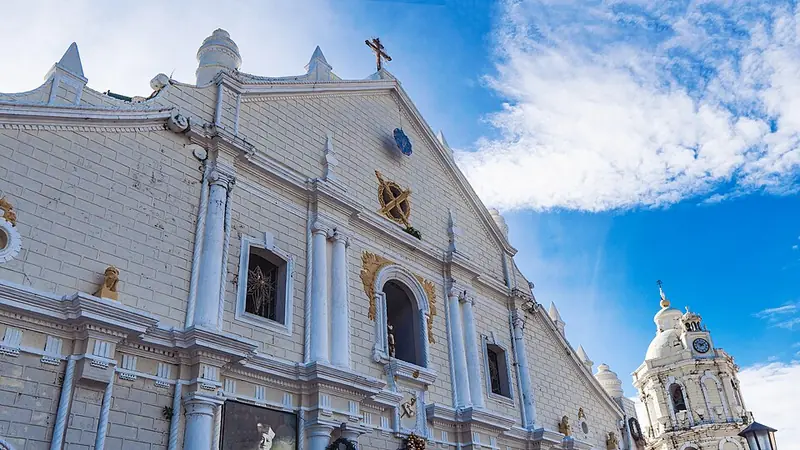
Vigan Cathedral (Saint Paul Cathedral)

The Cathedral of the Conversion of Saint Paul, facing the main plaza, is a massive baroque structure rebuilt multiple times after earthquake damage. The current form dates largely to the eighteenth and nineteenth centuries. The cathedral faces a large public plaza that was the center of colonial civic life and remains the center of Vigan's public events.

Burnay Pottery District

Several working kilns in Barangay Pariok, a short tricycle ride from the historic center, produce traditional burnay earthenware. Visitors can watch potters at work and buy directly from the kiln. The clay pots are heavy but the small jars and cups make practical souvenirs.

Vigan Timing

The Vigan City Fiesta (January 25) is the busiest period, with parades, street food, and cultural events but crowded accommodations. Weekday visits outside of January are considerably quieter. The heritage district is most atmospheric at dawn before tour groups arrive and again in the evening when the gas lamps are lit.

Wildlife and natural heritage content coming.

Meet all 65 Philippine animals in Hayop ng Pilipinas →
← All stories
Kasaysayan · Santa Maria

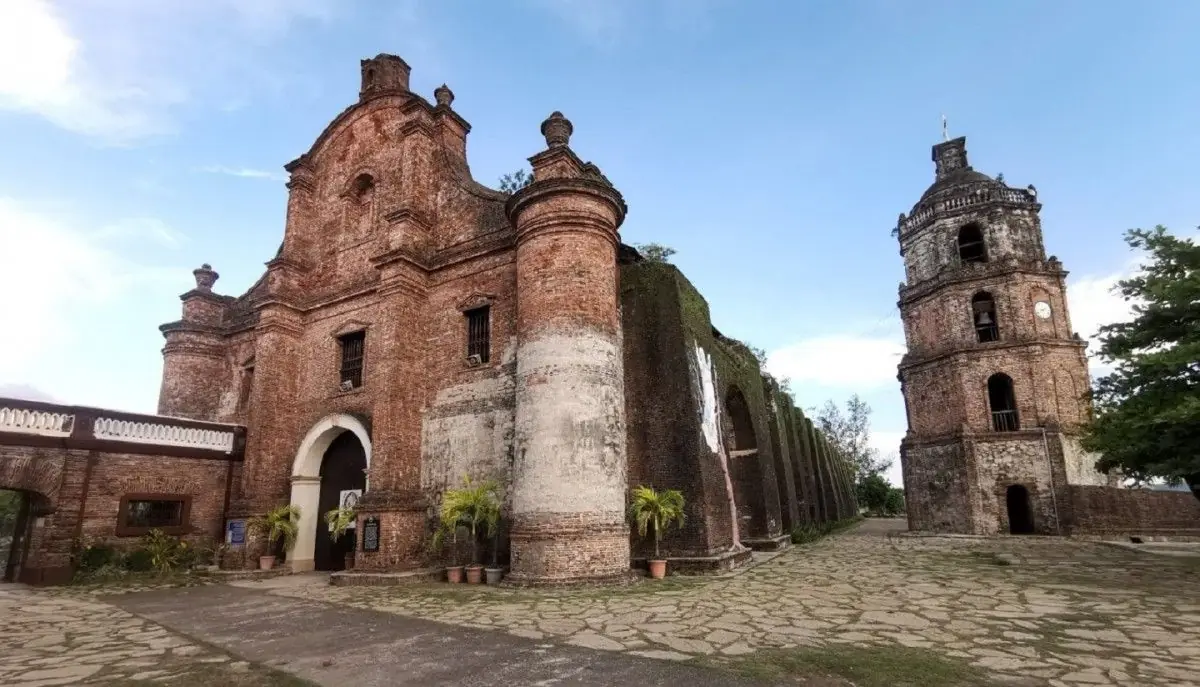
Santa Maria Church

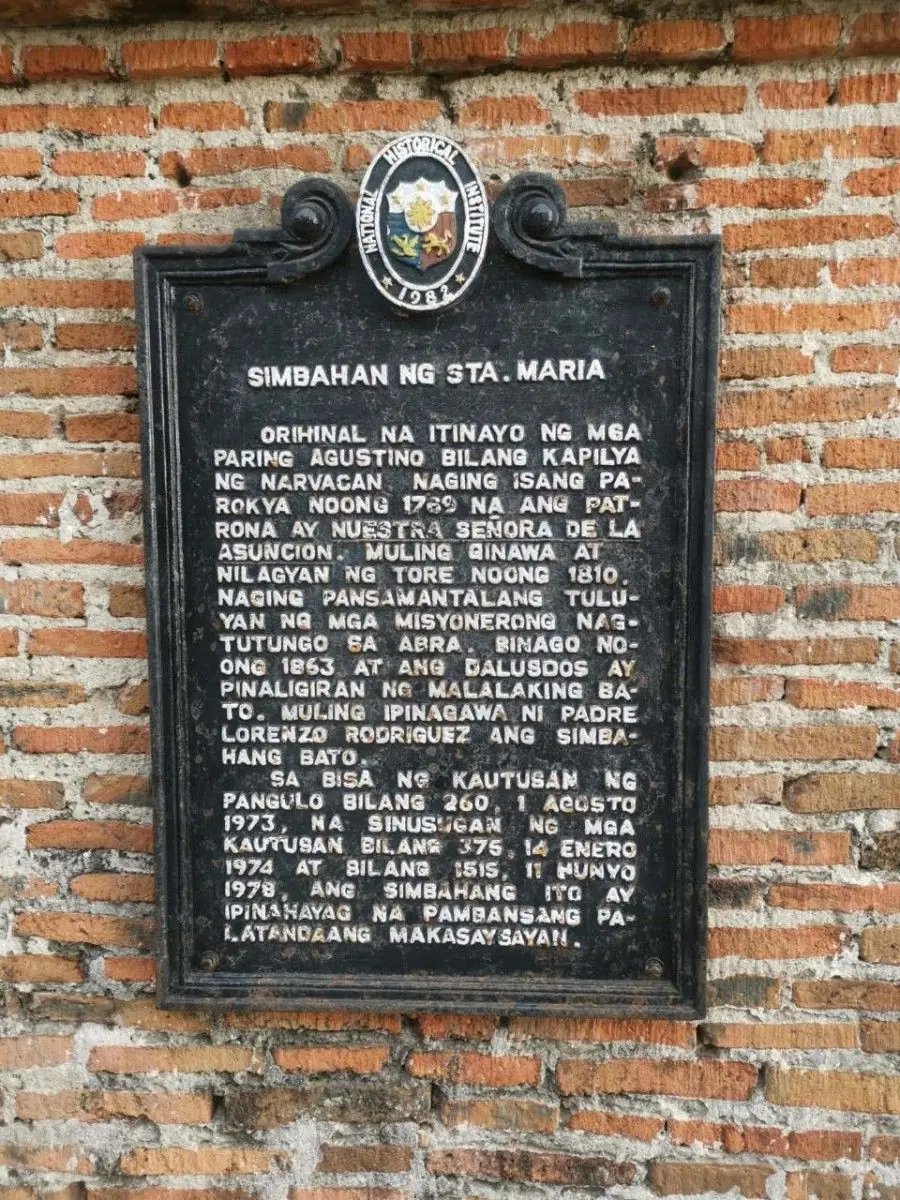
The Nuestra Senora de la Asuncion Church, the Church of Our Lady of the Assumption, stands in the town of Santa Maria, Ilocos Sur. It is one of the four Baroque Churches of the Philippines named a UNESCO World Heritage Site in 1993.

Built by the Augustinians around 1765, it is unusual among Philippine churches. Instead of facing a town plaza, it sits alone on a hill, reached by a long stone stairway, and it was made to double as a fortress. Its heavy brick walls are a fine example of the earthquake baroque style.

To climb the steps and stand before it is to meet more than two centuries of faith and history.

Mga Larawan