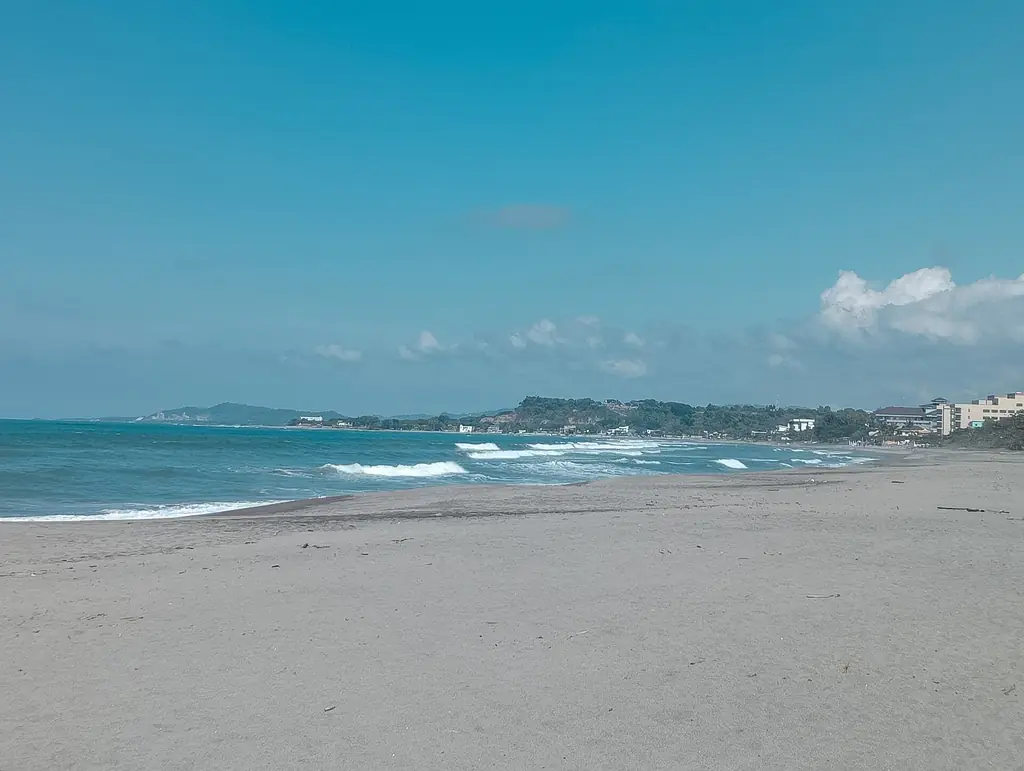
Surf rolling onto San Juan Beach, La Union
Photo: Ralff Nestor Nacor · CC BY-SA 4.0 · Wikimedia Commons
Map

La Union

Ilocos Region
Luzon
Capital San Fernando City
Population (2024) 825,072
Area 1,498 km²
Municipalities 19
Cities 1
Island Group Luzon
Languages Ilocano, Pangasinan, Kankanaey

Population: 2024 census (PSA). Area: land area.

Kapitbahay — Neighboring Provinces

La Union is a coastal province on the western edge of Luzon, facing the South China Sea. It is one of the Ilocos Region provinces, though its southern municipalities share cultural and linguistic ties with the Ilocano north and the Pangasinan lowlands to the south. Its coastline runs for about 90 kilometers, and it is best known today as the surf capital of northern Luzon — the break at San Juan drawing surfers from across the country year-round.

San Fernando CityCapital
1,498 km²Area
19 + 1 cityMunicipalities
LuzonIsland Group
Ilocos (I)Region
★
Two Capitals Named San Fernando

La Union's capital, San Fernando City, shares its name with San Fernando City in Pampanga — the capital of that province in Central Luzon. The two are unrelated and roughly 250 kilometers apart. The Ilocos San Fernando is the smaller of the two.

The province is mostly hilly interior terrain with a narrow coastal plain. The Cordillera foothills rise sharply behind the shoreline in the northern municipalities. Agriculture — rice, tobacco, vegetables — fills the lowland areas. The coast itself, with its long stretches of gray-brown sand and waves from the South China Sea, drew the surf community that now defines the province's tourism.

San Fernando City is the administrative and commercial center. It sits roughly midway along the province's coastline and serves as the main transport hub connecting the Ilocos region to Metro Manila and the Cordillera provinces.

The 2024 census counted 825,072 people in La Union, which has 19 municipalities, the city of San Fernando and 576 barangays. Twelve of its towns are on the coast, and small-scale fishing still makes up most of the province's fish catch.
The area now known as La Union was originally inhabited by Ilocano and Pangasinan peoples. It was part of the broader Ilocos governorate during the Spanish period, its towns belonging to Pangasinan and Ilocos Sur until the province was formed in 1850.

1572

Salcedo on the Coast

The conquistador Juan de Salcedo sailed up this coast in 1572 on his way north to Vigan. The area was then part of Pangasinan and Ilocos, inhabited by Ilocano and Pangasinan peoples and, inland, by Kankanaey and Ibaloi.

1850

La Union Is Founded

On 2 March 1850 Governor-General Antonio María Blanco signed the decree that created La Union, the 34th province, from towns of Pangasinan and Ilocos Sur and land of the Cordillera. A royal order of Queen Isabella II confirmed it in 1854.

1898

Revolution in La Union

The revolution in La Union began with an uprising at Santo Tomas on 22 May 1898. From May to August, revolutionaries, later joined by the brigade of General Manuel Tinio, fought Spanish forces in San Fernando, Bacnotan, Balaoan, Bangar and other towns until the Spaniards surrendered.

1941–1945

War on the Lingayen Gulf

Japanese planes attacked Camp Wallace on 8 December 1941. On 22 December, Japanese troops landed on the beaches from Agoo to Damortis and took San Fernando. Filipino and American forces captured the Baroro Bridge in Bacnotan on 4 January 1945, and the province became a supply base for the planned invasion of Japan.

1998

San Fernando Becomes a City

Republic Act No. 8509, signed on 13 February 1998, converted San Fernando into a component city. Residents ratified it on 20 March 1998, the date now marked by the Pindangan Festival.

2012

Ilocano Made Official

In 2012 the province recognized Ilocano (Iloko) as the official provincial language of La Union.

The surf culture of San Juan developed organically through the 1990s and 2000s as travelers from Manila discovered the consistent breaks along the coast. By the 2010s, the area had transformed from a quiet fishing community into a recognized surfing destination with a developed tourist economy.

La Union sits at the transition zone between Ilocano and Pangasinan culture. The northern municipalities are predominantly Ilocano-speaking and follow Ilocano social traditions — the emphasis on thrift, communal labor, and the Catholic feast calendar. Southern municipalities show more Pangasinan influence in language and practice.

The Surf Community

San Juan municipality has developed a beach culture unlike anything else in the Ilocos Region. Surf schools, board rental shacks, hostels, cafes, and weekend music events have reshaped the town's economy and social life. Local families who once fished from outriggers now run accommodation businesses and serve as surf instructors. The surf community has brought in residents from across the Philippines and a stream of foreign visitors, creating a social mix unusual in this part of Luzon.

★
Surf Capital of Northern Luzon

The break at San Juan, La Union, works on northwest and north swells generated in the South China Sea during the northeast monsoon (amihan) season from October to March. The waves are generally small to medium — ideal for beginners and intermediate surfers — making the spot accessible to a wide range of skill levels.

Traditional Ilocano festivals continue in the interior municipalities. Bangar and other towns celebrate their patron saints with processions, agri-cultural fairs, and family reunions. San Fernando celebrates its founding as a city with the Pindangan Festival each March.

See the great festivals in Pista ng Pilipinas →

La Union shares the Ilocano food tradition: simple, intensely flavored, centered on preserved meats, sour broths, and vegetables from highland gardens. Bagnet — the deep-fried Ilocano pork belly — appears at every table. Pinakbet uses a wider range of vegetables than the Manila version. Freshwater fish from mountain streams and saltwater catches from the South China Sea both appear at market.

Bagnet

Deep-fried pork belly that has been boiled first in water with salt and aromatics, then dried and submerged in hot oil until the skin blisters and crunches. The defining dish of Ilocano cooking, eaten with pinakbet, rice, and bagoong.

Pinakbet

Mixed vegetables — bitter melon, eggplant, okra, squash, string beans, tomatoes — cooked with bagoong isda (fermented fish paste) from Pangasinan or bagoong alamang. The Ilocano version uses bagoong isda rather than shrimp paste, giving the dish a stronger, saltier flavor.

Dinengdeng

Ilocano / La Union
10 minutesPrep
20 minutesCook
4Serves
Ingredients
  • 3 tbspBagoong isda (fermented fish paste)
  • 3 cupsWater
  • 2 piecesGrilled or fried fish (whole or fillet)
  • 200g, cubedSquash
  • 100g, cut into 2-inch piecesString beans
  • 1 medium, slicedEggplant
  • 1 small, slicedBitter melon
  • 2 medium, quarteredTomato
  • 1-inch piece, slicedGinger
Method
  1. Bring water to a boil in a pot. Add bagoong isda and ginger. Simmer for 5 minutes.
  2. Add squash and cook for 3 minutes.
  3. Add eggplant, string beans, and bitter melon. Cook for 5 minutes.
  4. Add tomato and grilled fish. Simmer for another 3 minutes.
  5. Taste and adjust with more bagoong if needed. Serve hot with rice.
Cook's note

Dinengdeng is essentially an Ilocano vegetable soup with fermented fish broth. It is lighter than pinakbet and more soupy. The pre-grilled fish adds a smoky depth to the broth.

Ilocano is the primary language of La Union, spoken across most of the province's 19 municipalities. It is part of the northern Philippine branch of the Austronesian language family and is the third most widely spoken language in the Philippines after Filipino and Cebuano.

IlocanoOfficial (provincial)
Pangasinan, Kankanaey, IbaloiAlso spoken
Filipino, EnglishNational

In the southern municipalities of La Union, particularly those bordering Pangasinan, the Pangasinan language is also spoken, and Kankanaey and Ibaloi are heard in the upland towns near Benguet. In 2012 the province recognized Ilocano as its official provincial language; Filipino and English are used in government, schools and commerce.

★
Ilocano Diaspora

Ilocano is spoken not just in the Ilocos Region but throughout northern Luzon, in the Cagayan Valley, and among the large Ilocano diaspora in Hawaii, California, and other parts of the United States. Ilocanos were among the earliest Filipino immigrants to Hawaii's sugar plantations in the early 1900s.

The surf and tourism community in San Juan has introduced a layer of Manila Filipino, English, and even some foreign languages into the coastal zone. This linguistic mixing is audible in the beach cafes and hostels of San Juan but does not extend far into the interior municipalities.

La Union is roughly 5 to 6 hours from Metro Manila by bus via the TPLEX and NLEX expressways. Regular bus lines depart from Cubao, Sampaloc, and Pasay. The province is also accessible from Baguio City in about 2 hours, by Naguilian Road down to Bauang, by the Marcos Highway or by Kennon Road.

~5–6 hours by busFrom Manila
~2 hours by roadFrom Baguio
NAIA (Manila) or ClarkNearest Airport
October to March (amihan)Best Surf Season

San Juan Surf Beach

The main surfing area in La Union, centered on Urbiztondo Beach in San Juan municipality. Surf schools, board rentals, and a dense strip of cafes and accommodations line the beach road. The break works best on northeast swells from October to March, but smaller waves are surfable year-round.

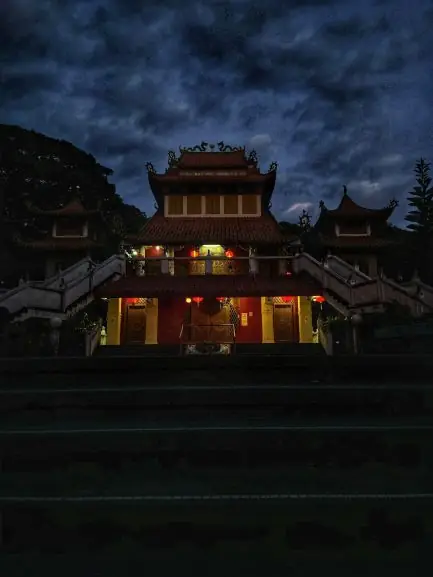
Ma-Cho Temple

A Chinese-Filipino Taoist temple on a hilltop in San Fernando City, dedicated to the sea goddess Ma-Cho (Mazu). Built in the 1970s by Filipino-Chinese devotees, it overlooks the coast and reflects the Chinese-Filipino community that has shaped La Union's commercial life.

Tangadan Falls

A waterfall in the upland municipality of San Gabriel, in the foothills of the Cordillera. It is reached by a trek along the river, and the area is cooler than the coast.

Pindangan Ruins

The ruins of the large church of Pindangan, the 1762 settlement that became San Fernando; the church was destroyed by an earthquake. The stone walls and bell tower shell are among the more atmospheric colonial remnants on the Ilocos coast.

La Union lies between the South China Sea and the foothills of the Cordillera. Its beaches are a favored nesting ground for three species of sea turtle, known locally as pawikan. Local governments protect stretches of coast and sea through the Bauang-Bakawan Eco-Tourism Park, the Urbiztondo Fish Sanctuary in San Juan, the Aringay Marine Protected Area and the Dalumpinas Oeste Pawikan Conservation Center in San Fernando, where the barangay began a program in 2011 to protect the growing number of turtle nests.

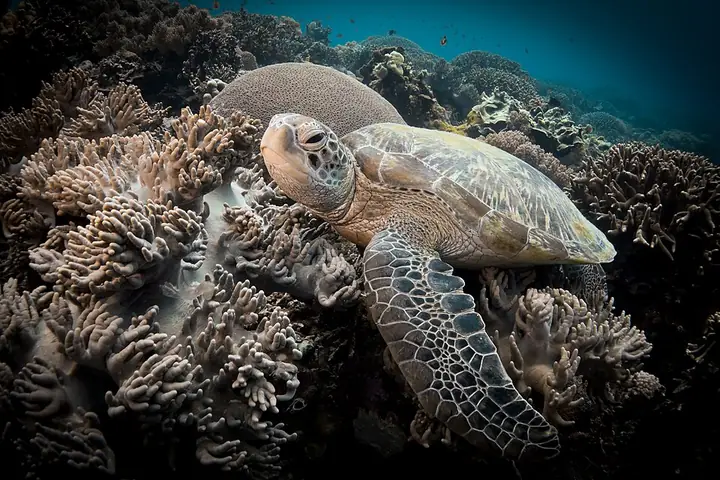
A green sea turtle over coral at Apo Island
Photo: Anna Varona · CC BY 4.0 · Wikimedia Commons
Green Sea Turtle
Chelonia mydas
Least Concern
The largest hard-shelled sea turtle, which grazes on seagrass and algae. It is one of the three turtles that nest on La Union's beaches. After decades of conservation work, the IUCN moved it from Endangered to Least Concern worldwide in October 2025.
Field note: Keep lights off the beach at night in nesting season, and report nests to the local pawikan center.
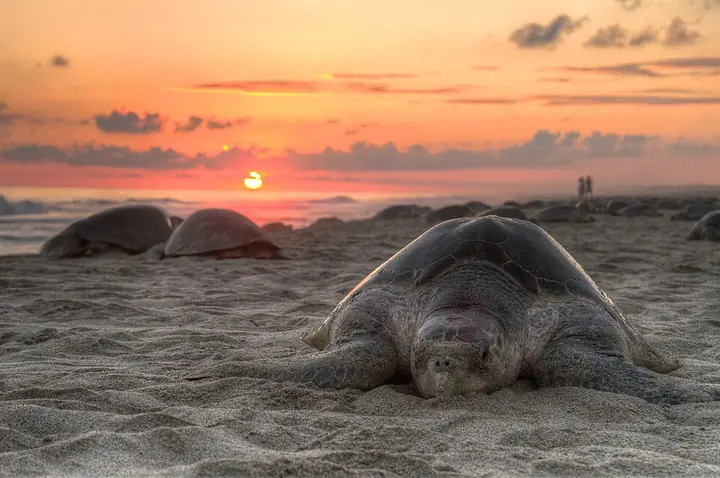
An olive ridley turtle nesting on a beach (photographed in Oaxaca, Mexico)
Photo: Claudio Giovenzana · CC BY-SA 3.0 · Wikimedia Commons
Olive Ridley Sea Turtle
Lepidochelys olivacea
Vulnerable
A small sea turtle with an olive-gray shell, and one of the turtles that nest on La Union's beaches.
Field note: Never buy turtle eggs or shells; taking them is illegal.
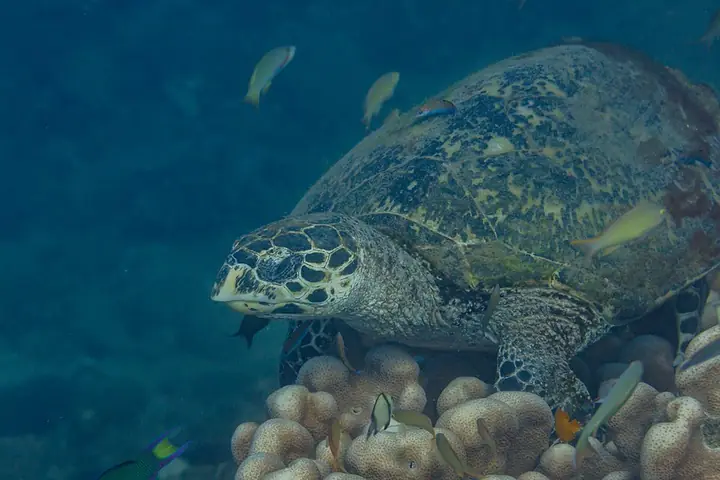
A hawksbill sea turtle at Anilao, Batangas
Photo: Diego Delso · CC BY-SA 4.0 · Wikimedia Commons
Hawksbill Sea Turtle
Eretmochelys imbricata
Critically Endangered
A reef turtle with a pointed beak and overlapping shell plates, long hunted for tortoiseshell. It also nests in La Union.
Field note: Hatchlings head for the brightest horizon; keep flashlights and phones away from them.
Meet all 65 Philippine animals in Hayop ng Pilipinas →
← All stories
Lugar · Agoo

Agoo Eco-Park

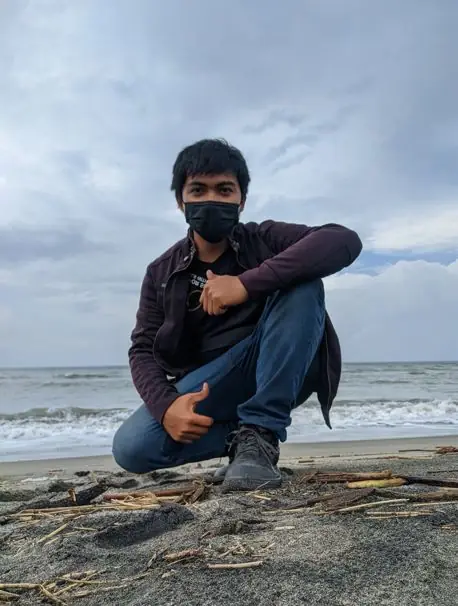
When people think of La Union, they think of the surf town of San Juan. But the province has more than beaches.

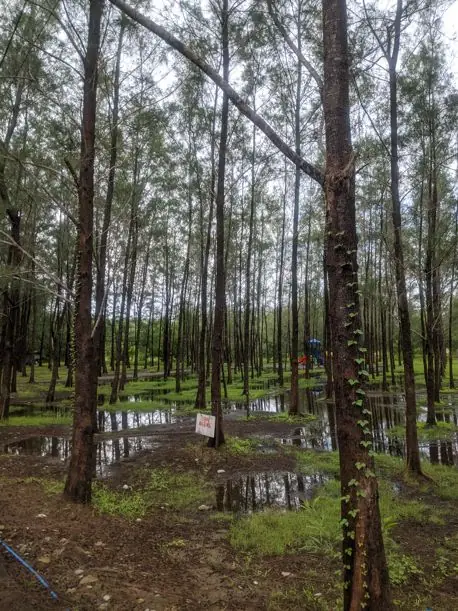
On a recent visit I found the Agoo Eco-Park, in Sta. Rita, part of the Damortis-Agoo protected landscape and seascape. There is a small entrance fee, and just past it a lovely avenue of agoho trees lines the road, cool and quiet.

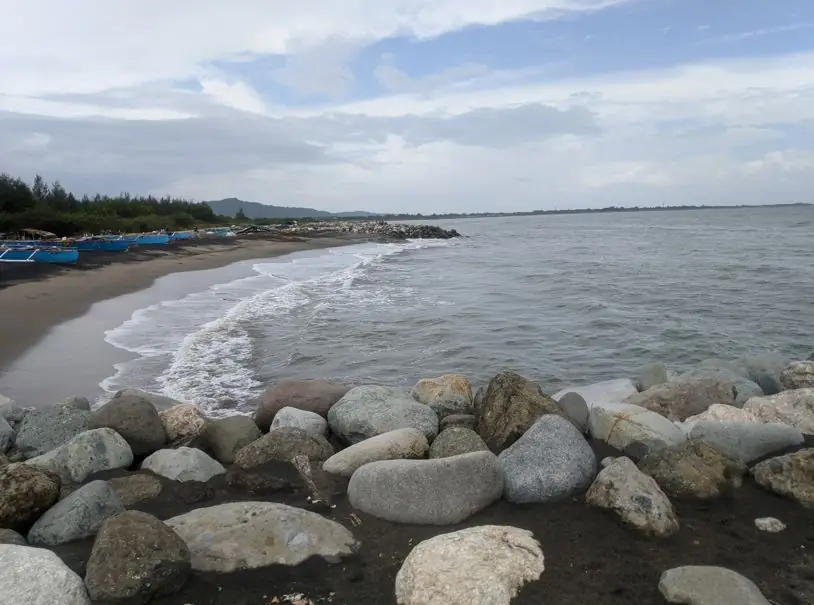
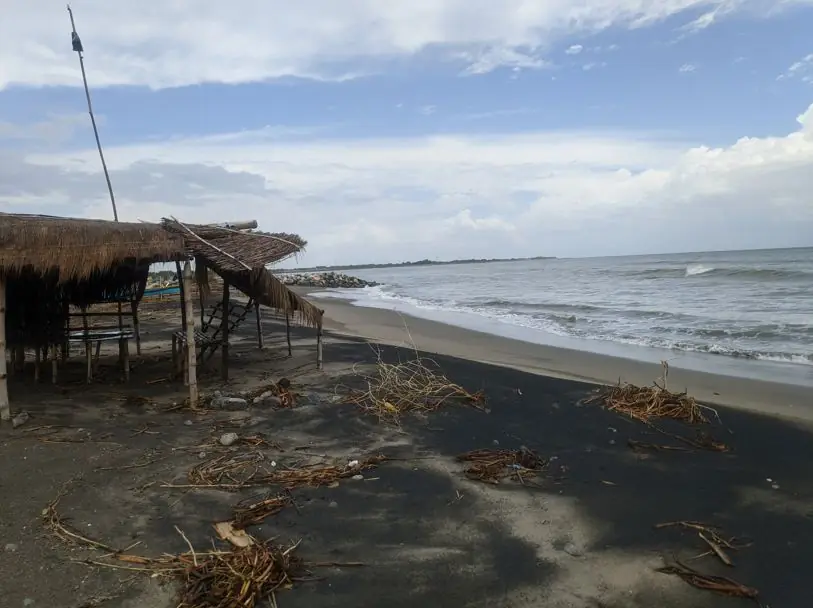
A little farther on is the beach: fine gray sand, big rounded pebbles, and a long shoreline good for swimming, kite flying, or a game with friends. There are huts and plenty of parking. Come in the afternoon, and you can watch a fine sunset with your family.

Mga Larawan

← All stories
Kultura · San Fernando

Ma-Cho Temple

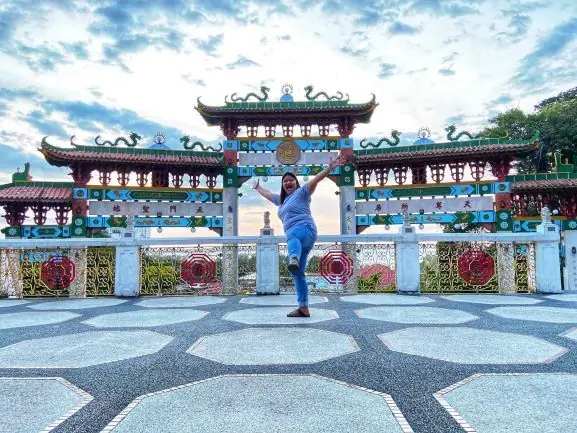
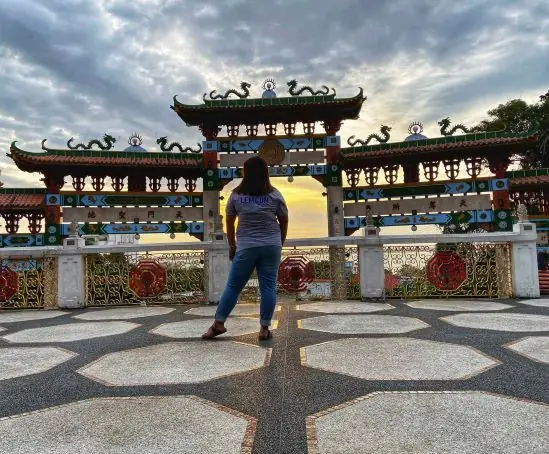
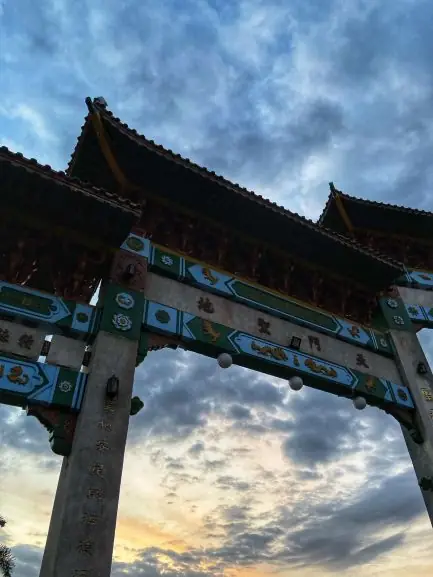
The Ma-Cho Temple stands on the sea coast of San Fernando, La Union, one of the country's grand Taoist temples. Its cornerstone was laid in 1975, and it was inaugurated in 1978.

It honors Mazu, known here as Ma-Cho, the Chinese goddess of the sea. Its bright halls and gates rise in vivid color above the water. The temple is open to everyone, Taoist or not, and it is a striking, welcoming place to visit.

Mga Larawan

Sources · updated 4 October 2026
Photo credits (4)

Photos from Wikimedia Commons, used under the licences shown; some were resized. All photo credits