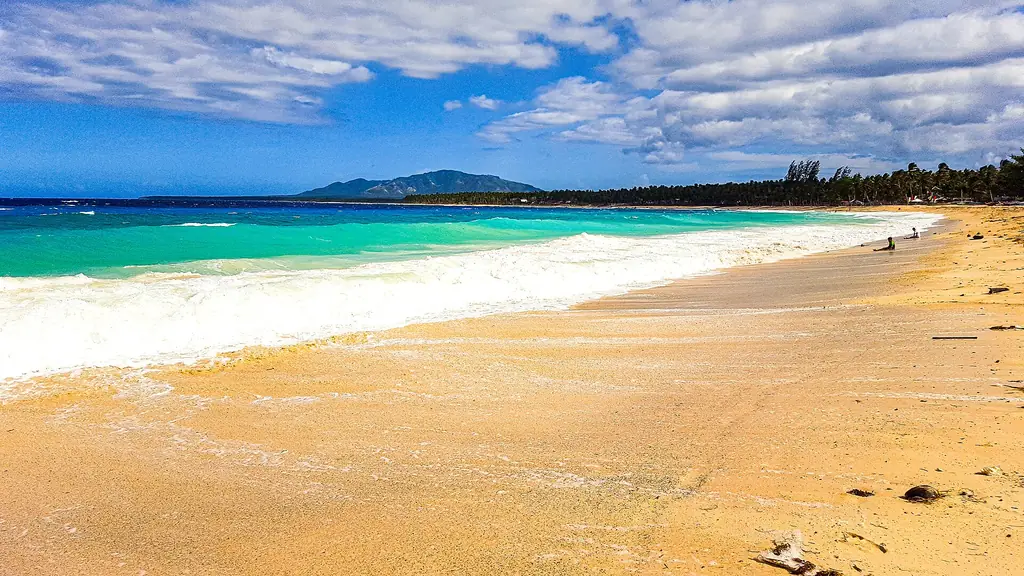
Turquoise water and a long white beach at Dahican, Mati
Photo: Joyfulwandering · CC BY-SA 4.0 · Wikimedia Commons
Map

Davao Oriental

Davao Region
Mindanao
Capital Mati City
Population (2024) 590,042
Area 5,680 km²
Municipalities 10
Cities 1
Island Group Mindanao
Languages Cebuano, Mandaya, Kalagan

Population: 2024 census (PSA). Area: land area.

Kapitbahay — Neighboring Provinces

Davao Oriental faces the Pacific Ocean along Mindanao's eastern coast. It is the province at the edge — geographically exposed, historically peripheral, and culturally distinct because of that exposure. Pusan Point, in the town of Caraga, is the easternmost point of the Philippines, facing the open Philippine Sea.

Mati CityCapital
5,680 km²Area
10 + 1 cityMunicipalities
MindanaoIsland Group

Mati City is the provincial capital and commercial hub, sitting on a sheltered bay that offers some protection from Pacific weather. The city has grown steadily, supported by agriculture, fishing, and a modest tourism sector built around the beaches and surf of the surrounding coast.

★
The Name Mandaya

The name Mandaya comes from man, "first," and daya, "upstream," so it means "the first people upstream." It refers to groups living along the mountain ranges of Davao Oriental, and to their customs, language and beliefs.

The province stretches along a Pacific coastline of considerable length, punctuated by bays, capes, and river mouths. The interior is mountainous rainforest, the domain of the Mandaya and Mansaka peoples whose communities predate the province by centuries.

The 2024 census counted 590,042 people in Davao Oriental's ten municipalities and one city, Mati, the capital and largest town with 147,547 people. It is the easternmost province of the Philippines: Pusan Point in the town of Caraga is the country's easternmost location, and the province calls itself the Sunrise and Coconut Capital of the Philippines, as the country's top producer of coconut and copra. Part of the province lies on a peninsula that encloses the Davao Gulf, and the Mount Hamiguitan Range Wildlife Sanctuary near Mati is a UNESCO World Heritage Site.
The coast was part of the historical region of Caraga, partly under the Sultanate of Maguindanao, and the Spanish settled there as early as 1591. Even so, colonial control remained thin for centuries.

1591

Spanish Settlement in Caraga

The coast was part of the historical region of Caraga, partly under the Sultanate of Maguindanao. The Spanish established a permanent settlement in the region in 1591, and in 1844 the sultanate ceded the area to Spain.

1847–1858

Nueva Guipúzcoa

An expedition under José Oyanguren took control of the gulf in 1847 and organized the province of Nueva Guipúzcoa in 1849. It lasted until 1858, when it was replaced by the military districts of Davao and Bislig.

1903–1914

Moro Province

The American colonial government made Davao a district of the Moro Province in 1903. In 1914 the districts became provinces under the Department of Mindanao and Sulu.

8 May 1967

Province Created

Republic Act No. 4867 divided Davao into three provinces, one of them Davao Oriental. On 2 June, Paciano Bangoy was appointed its first governor.

2007–2011

Mati Becomes a City

Republic Act No. 9408, ratified on 16 June 2007, made Mati a component city. The cityhood was struck down twice, in 2008 and 2010, after a challenge by the League of Cities, before the Supreme Court upheld it in February 2011.

4 December 2012

Typhoon Bopha (Pablo)

Bopha made landfall at Baganga at 4:45 a.m. as a Category 5 super typhoon. It killed 1,901 people across Mindanao, most of them in Davao Oriental and Compostela Valley, and left thousands homeless.

June 2014

A World Heritage Site

The Mount Hamiguitan Range Wildlife Sanctuary was added to the UNESCO World Heritage List, the first in Mindanao and the sixth in the Philippines.

The later twentieth century brought road connections to Davao City — a critical development that finally linked the eastern coast to the regional economy. Before these roads, communities along the Pacific shore were often more easily reached by boat than by land.

Davao Oriental's cultural life is organized around the tension between the Mandaya and Mansaka indigenous traditions of the interior and the Cebuano Christian majority concentrated in the coastal towns. The two worlds intersect at the markets, schools, and festival grounds of the provincial capital.

Mandaya Weaving

Mandaya abaca weaving is produced on a backstrap loom using fiber from the abaca plant, dyed with natural pigments derived from roots, bark, and minerals. The patterns — called dagmay — are geometric and encode cosmological meanings. Each piece is unique, taking its maker weeks to complete. The cloth is worn at significant life events and has become a marker of Mandaya identity in contemporary cultural politics.

MD

The Mandaya

Indigenous People of Davao OrientalLiving tradition

The Mandaya live along the mountain ranges of Davao Oriental, and their language is spoken in Manay, Caraga, Baganga and Cateel. Their crafts are collected abroad: the Honolulu Museum of Art holds a Mandaya hat made of palm, bamboo, feathers, cotton, fiber and beads.

The Mansaka people, concentrated in the interior municipalities of Davao de Oro adjacent to the province, share cultural practices with the Mandaya including ritual music performed on agung gong sets. Healing ceremonies called pamanhik involve specialists who communicate with ancestral spirits on behalf of the sick.

★
Pusan Point

Pusan Point, in Barangay Santiago in the town of Caraga, is the easternmost point of the Philippines. It looks out over the Philippine Sea, part of the Pacific Ocean, which is why Davao Oriental calls itself the Sunrise Capital of the country.

See the great festivals in Pista ng Pilipinas →

The Pacific coast provides Davao Oriental with abundant seafood — tuna, reef fish, squid, and shellfish from the waters around Pujada Bay. Inland, the Mandaya and Mansaka communities rely on rice, root crops, and forest products, with wild game supplementing the diet in more remote areas.

Grilled Tuna Jaw (Panga ng Tuna)

A Mindanao specialty, tuna jaw grilled over charcoal is served in Mati City and along the coast. The fatty collar meat around the jaw is considered the best cut. Served with soy sauce and calamansi, or simply with vinegar and chili.

Binagol

A sweet made from gabi (taro) cooked with coconut milk and sugar, molded into shells or wrapped in leaves. Versions of this appear across the Eastern Visayas and Mindanao Pacific coast, each with slight local variation.

Ginataang Pusit

Davao Oriental coast
15 minutesPrep
20 minutesCook
4Serves
Ingredients
  • 700gfresh squid, cleaned
  • 400mlcoconut milk
  • 4 clovesgarlic, minced
  • 1 mediumonion, sliced
  • 1 thumbginger, sliced
  • 3 pieceslong green chili
  • 2 tbspfish sauce
  • 2 tbspcooking oil
Method
  1. Slice cleaned squid into rings, keeping the tentacles whole.
  2. Sauté garlic, onion, and ginger in oil until softened.
  3. Add squid and cook briefly until it changes color, about 2 minutes.
  4. Pour in coconut milk and bring to a simmer.
  5. Add long green chili and fish sauce.
  6. Simmer for 10–12 minutes until the sauce thickens slightly.
  7. Taste and adjust seasoning. Serve with steamed rice.
Cook's note

Do not overcook the squid at the initial sauté stage — it will finish cooking in the coconut milk. Overcooked squid turns rubbery. Fresh squid from the same-day catch behaves differently from frozen; adjust cooking time accordingly.

Cebuano dominates the coastal towns of Davao Oriental, serving as the language of commerce, education, and local government. In the upland communities, Mandaya and Mansaka are the primary languages of daily life, though most speakers in these communities are also Cebuano-competent.

CebuanoPrimary Language
Mandaya, Kalagan, Mansaka, KamayoIndigenous Languages
AustronesianLanguage Family
Davao RegionRegion

Mandaya is a Mansakan language of the Central Philippine group, with about 250,000 speakers in 2010, and it may be intelligible with Mansaka. Ethnologue lists varieties including Cataelano, Karaga, Sangab and Mangaragan Mandaya. It is spoken in Manay, Caraga, Baganga and Cateel, and also in Davao del Norte.

★
Native Languages

The native languages of Davao Oriental are Kalagan, Mandaya and Davaoeño, but Cebuano is the dominant first language, brought by settlers from the Visayas in the early 20th century. Chavacano is spoken by a minority, and Tagalog and English are widely used in business and education.

Davao Oriental is reached from Davao City by road around the head of the Davao Gulf; Mati is about 165 kilometers from the city. The drive is scenic and takes three to four hours depending on road conditions.

~170 km to MatiDistance from Davao City
3–4 hours by busTravel Time
Davao–Mati Highway via CompostelaMain Route
Mati Airport (limited service) or Davao CityNearest Airport
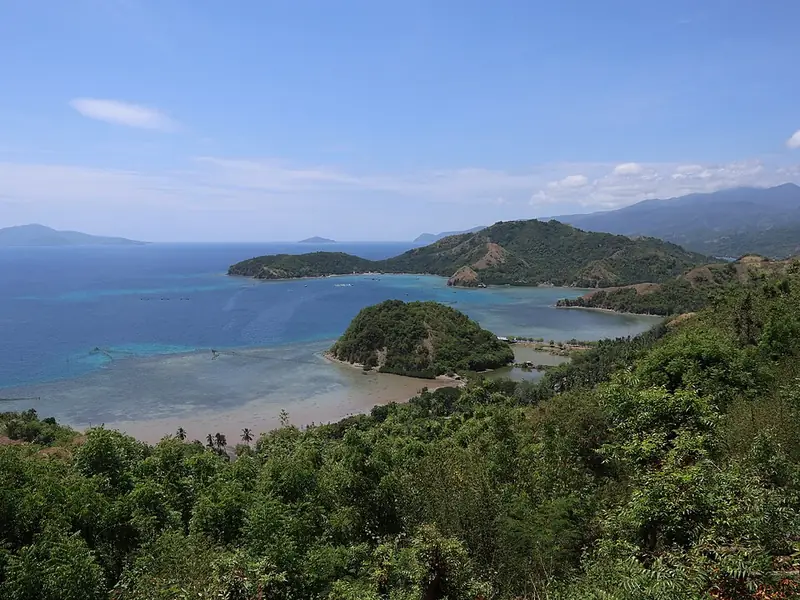
The Sleeping Dinosaur headland above Pujada Bay, Mati
Photo: Patrickroque01 · CC BY-SA 4.0 · Wikimedia Commons

Pujada Bay

A large bay south of Mati City with clear waters, coral reefs, and several small islands. The bay is a site for diving and snorkeling, with reef systems relatively intact compared to heavily fished areas elsewhere. Bangka boat rentals are available from Mati City harbor.

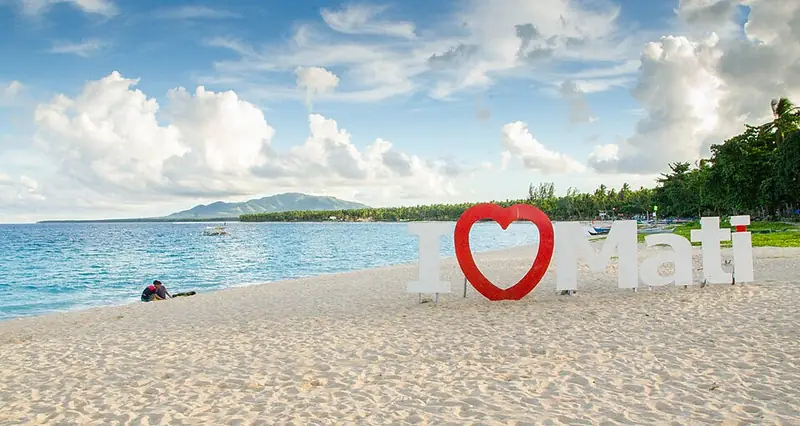
The "I love Mati" sign on Dahican Beach
Photo: I Travel Philippines · CC BY 2.0 · Wikimedia Commons

Dahican Beach

A long Pacific-facing beach in Barangay Dahican, Mati, popular with tourists and locals. Mati's festivals draw competitors from across the country for events including skimboarding, and the city launched the BAY DEEP MATI freediving festival in 2022.

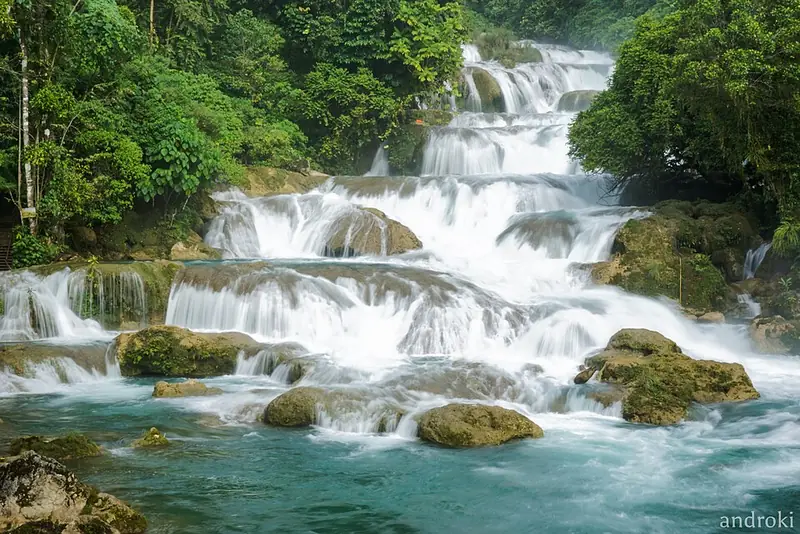
Cascades of Aliwagwag Falls in the forest, Cateel
Photo: Andrew Gil Desabelle · CC BY-SA 4.0 · Wikimedia Commons

Aliwagwag Falls

In Cateel, the Cateel River tumbles down 84 steps, each 2 to 33 meters high, for a combined drop of about 340 meters, often called the highest waterfall in the country. It lies inside the Aliwagwag Protected Landscape, set up in 2011, whose forests shelter the Philippine eagle and some of the tallest trees in the Philippines, the Philippine rosewood or toog.

✦
Typhoon Season

Davao Oriental's heaviest rains fall from November to January, especially on the coast, and powerful typhoons can strike: Typhoon Bopha made landfall at Baganga in December 2012. Check forecasts before traveling in these months.

Davao Oriental's Pacific Cordillera holds two of Mindanao's great protected forests. Mount Hamiguitan, 1,620 meters high, has a pygmy forest of century-old trees on ultramafic soil, Philippine eagles, and pitcher plants found nowhere else; the IUCN Red List counts at least 11 threatened vertebrate species there. Farther north, the Aliwagwag Protected Landscape in Cateel protects the headwaters of the Cateel River, the Philippine eagle and other threatened birds, and toog trees, the tallest in the Philippines. Mati itself has three protected areas, including Pujada Bay.

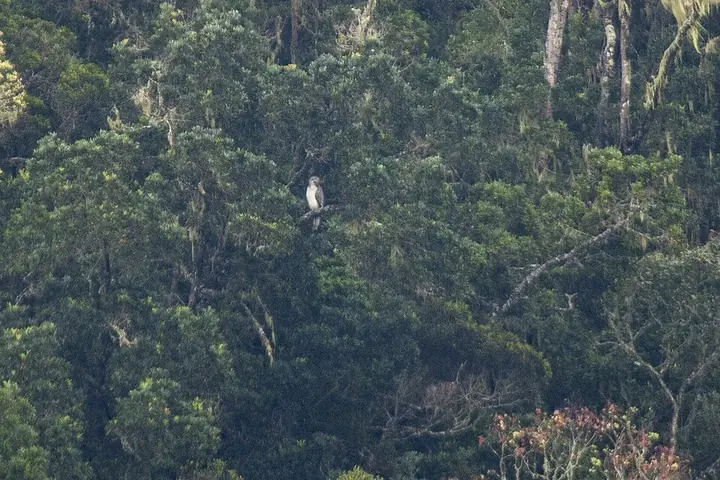
A Philippine eagle in the wild (photographed in Mindanao)
Photo: Francesco Veronesi from Italy · CC BY-SA 2.0 · Wikimedia Commons
Philippine Eagle
Pithecophaga jefferyi
Critically Endangered
The national bird and, by length and wing area, the largest living eagle. It hunts in the forests of Mount Hamiguitan and Aliwagwag, and each pair needs a very large home range, which makes it highly vulnerable to logging.
Field note: Report sightings or nests to the Philippine Eagle Foundation and keep well away.
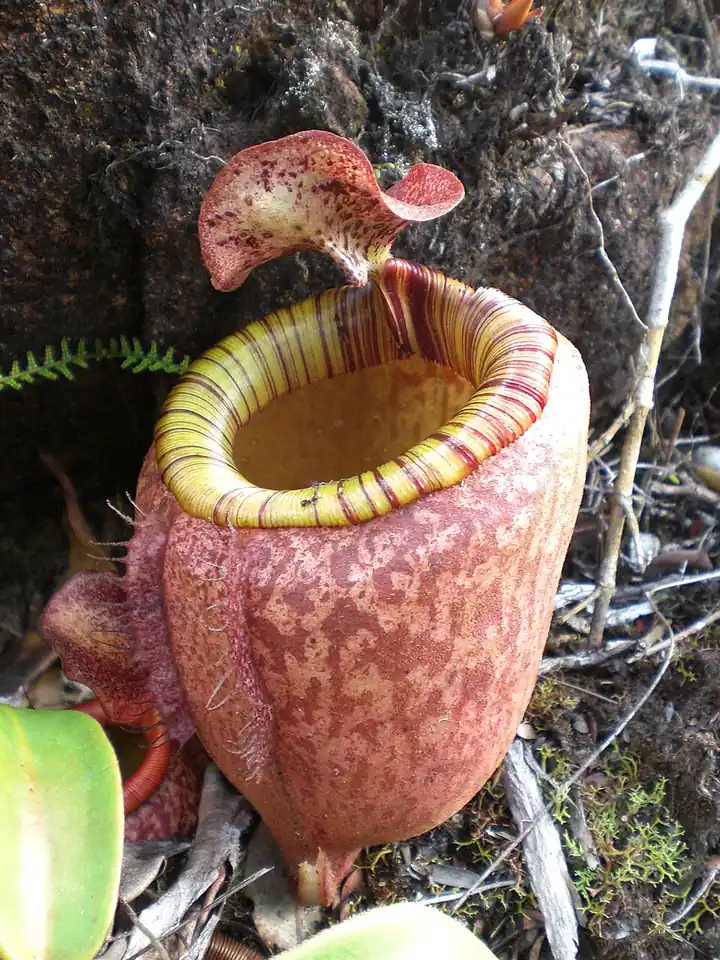
A pitcher of Nepenthes peltata (photographed on Mount Hamiguitan)
Photo: Kleo Marlo Sialongo · CC BY 2.0 · Wikimedia Commons
Hamiguitan Pitcher Plant
Nepenthes peltata
Known only from Mount Hamiguitan (not yet assessed by the IUCN)
A scrambling carnivorous plant with ovoid pitchers and hairy leaves, recorded only on the upper slopes of Mount Hamiguitan, where it grows on ultramafic soil in full sun.
Field note: Never collect pitcher plants or seeds; all Nepenthes are protected and trade is regulated.
Meet all 65 Philippine animals in Hayop ng Pilipinas →

The Bonsai Forest of Hamiguitan

On the upper slopes of Mount Hamiguitan, near Mati, the trees stop growing tall. The mountain's soil is ultramafic, and on its exposed ridges century-old trees stay small and stunted. The patch is known as the pygmy or "bonsai" forest, and it is one reason the Mount Hamiguitan Range Wildlife Sanctuary became, in June 2014, the first UNESCO World Heritage Site in Mindanao.

Plants found nowhere else grow there. Nepenthes peltata, a pitcher plant with a tendril attached under its leaf like an umbrella's handle, is known only from the upper slopes of Hamiguitan, and so is Nepenthes micramphora, which grows between 1,100 and 1,635 meters. Botanists count 462 plant species in the montane forest alone and 45 kinds of orchids.

The sanctuary was protected by law in 2004. It is managed with the provincial government, the Department of Environment and Natural Resources, local communities and indigenous peoples, who together guard the mountain's forests, its Philippine eagles and its stunted, ancient trees.

Sources · updated 4 October 2026
Photo credits (6)

Photos from Wikimedia Commons, used under the licences shown; some were resized. All photo credits