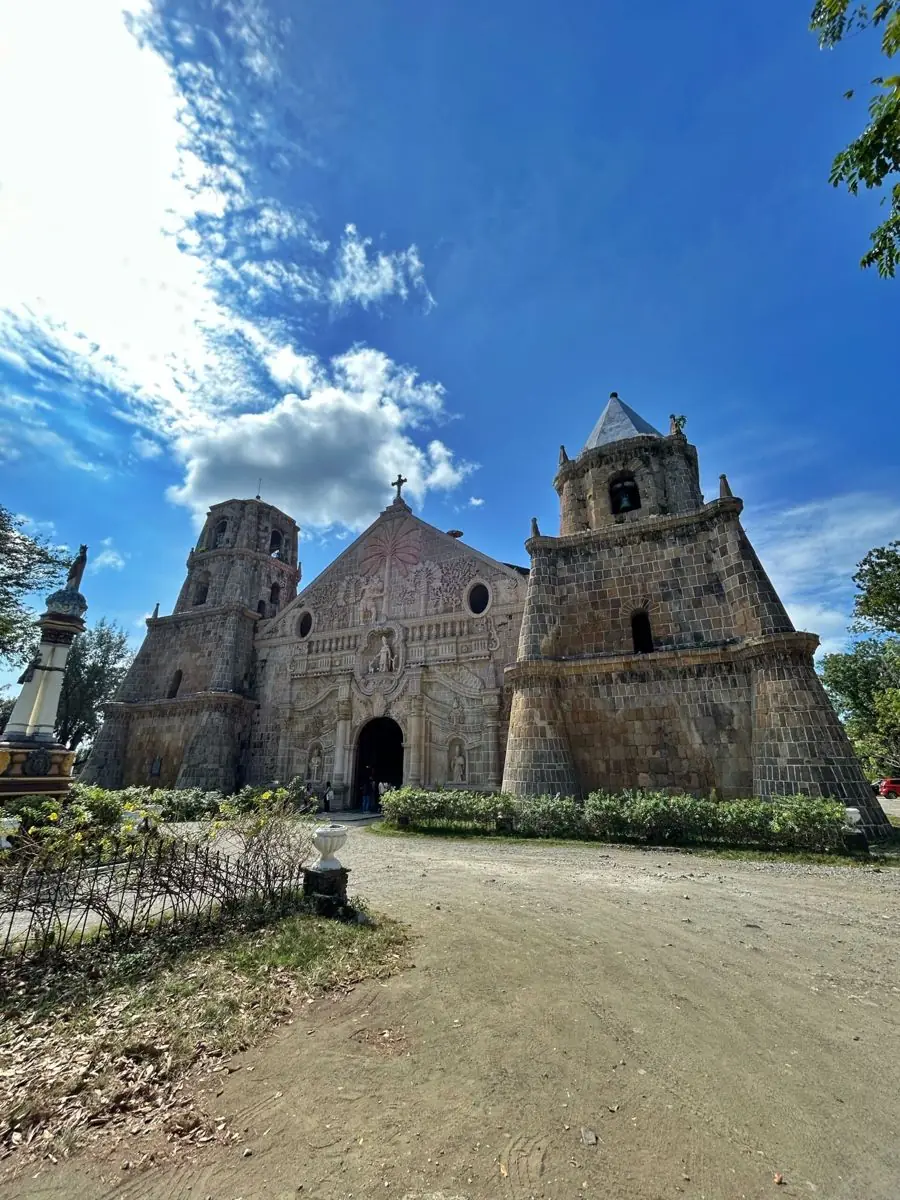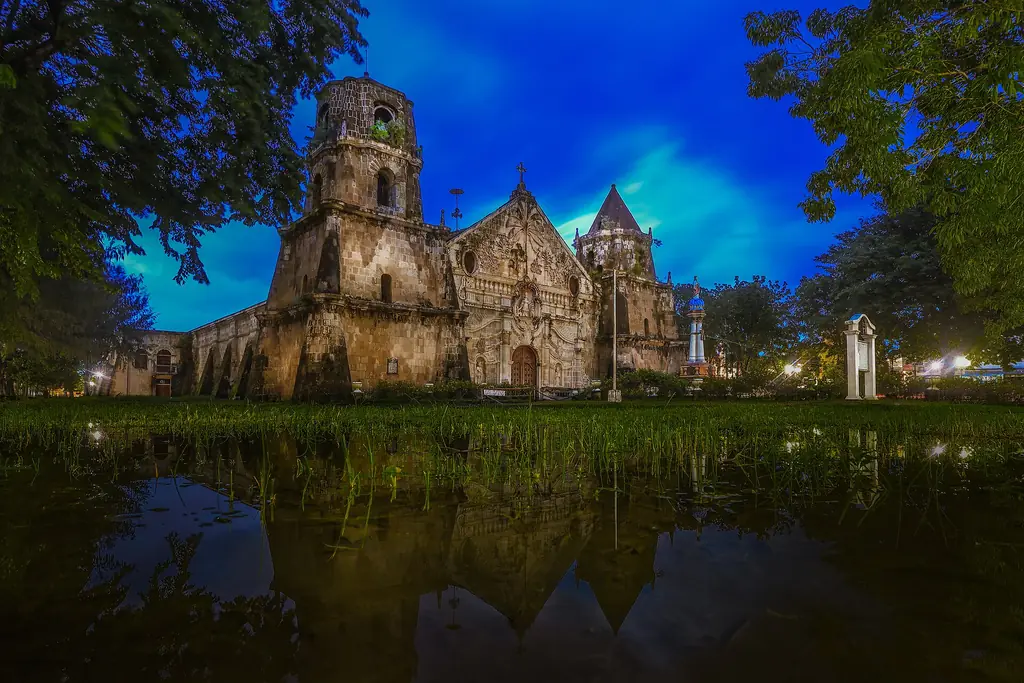
The fortress-like facade of Miagao Church, a UNESCO World Heritage Site
Photo: Christopher Andres · CC BY-SA 4.0 · Wikimedia Commons
Map

Iloilo

Western Visayas
Visayas
Capital Iloilo City
Population (2024) 2,556,344
Area 5,079 km²
Municipalities 42
Cities 2
Island Group Visayas
Languages Hiligaynon, Kinaray-a

Population: 2024 census (PSA). Area: land area. Population, area and city count include Iloilo City, which the census lists separately from the province.

Kapitbahay — Neighboring Provinces

Iloilo is the cultural and economic center of Western Visayas — a province with a long history of prominence that goes back to the Spanish colonial period, when Iloilo, the second Spanish colonial center after Cebu, became the most important port in the islands after Manila. The capital, Iloilo City, remains a significant urban center and the gateway to the Western Visayas.

Iloilo CityCapital
5,001 km² (5,079 with Iloilo City)Area
42 + 2 citiesMunicipalities
VisayasIsland Group

Iloilo City is separated from the rest of the province by its independent city status, but functions as the commercial and cultural hub for the entire province and for Guimaras, Antique, and Capiz as well. It has a reputation for food, heritage architecture, education, and a civic culture that other Philippine cities sometimes attempt to emulate.

★
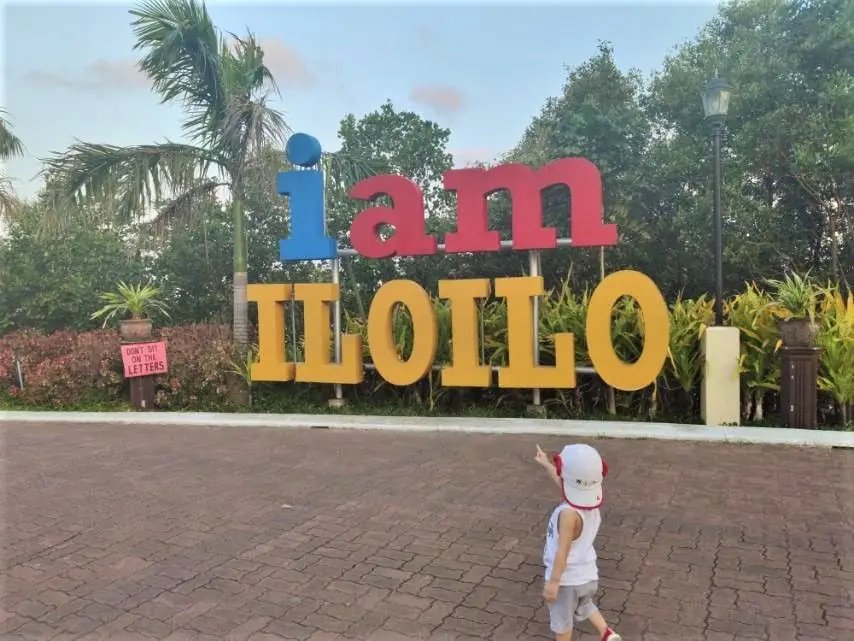
City of Love

Iloilo City is informally called the 'City of Love' — a marketing designation — but its more substantive claim to distinction is culinary. La Paz batchoy, the noodle soup originating in the La Paz district, is one of the most recognized regional dishes in the Philippines and has been exported across the country through chains and home cooks.

The province is known for hablon, its handwoven cloth: Iloilo was one of the most important weaving centers in the Spanish era, and the town of Miagao still supports its weavers' cooperatives and holds a Hablon Festival. The Dinagyang Festival, held on the fourth Sunday of January in Iloilo City, is one of the most elaborate street festivals in the Philippines.

The 2024 census counted 2,082,616 people in Iloilo's 42 municipalities and component city of Passi; counting Iloilo City (473,728), which is the provincial capital but governs itself as a highly urbanized city, the figure is 2,556,344. The province covers 5,001 square kilometers of southeastern Panay, or 5,079 with the city, and includes the Islas de Gigantes off Carles in the north. Three local languages are spoken: Hiligaynon, Kinaray-a and Capiznon. The governor has held office at the Iloilo Provincial Capitol since 2006; before that the Casa Real de Iloilo had served as the seat of government since 1869.
Iloilo's prominence in the colonial period derived from its position as a port and trade center. The Iloilo River estuary provided a natural harbor, and the city grew as a center for the sugar trade, rice processing, and eventually textile production. By the nineteenth century, it had a significant Chinese mestizo merchant class that built the houses still visible in Calle Real.

1566–1581

Ogtong and Arevalo

The Spanish set up a colonial center at Ogtong, now Oton, in 1566. In 1581 the seat moved to La Villa Rica de Arevalo, now a district of Iloilo City, which oversaw Panay, Negros, Guimaras, Romblon and the islands as far as Cuyo and Palawan.

1600–1616

Moro Raid and Fort San Pedro

A fleet of 70 ships and 4,000 warriors under Sirungan and Salikala attacked in 1600 and was repulsed at Arevalo by 1,000 Hiligaynon warriors and 70 Mexican arquebusiers under Juan García de Sierra, who died in the battle. By 1616 the center had moved to La Punta at the mouth of the Iloilo River, the present city proper, defended by Fort San Pedro.

1855

Port Opens to World Trade

The port of Iloilo was opened to international trade. The British vice-consul Nicholas Loney lent money, built warehouses and brought in modern sugar-farming methods, and the sugar boom that followed made Iloilo one of the richest places in the colony; hand-weaving, until then a leading industry, began to decline.

October–December 1898

Revolution in Panay

On 28 October Martín Delgado took the municipal building of Santa Barbara as towns across Iloilo rose against Spain. On 17 November a convention at Santa Barbara set up a revolutionary government with Roque López as president. On 24 December the Spanish forces under General Diego de los Ríos evacuated Iloilo, the last capital of the Spanish Empire in Asia, and the Filipino flag was raised on Christmas Day.

1899–1901

American Occupation

American forces under General Marcus P. Miller occupied Iloilo City on 11 February 1899 after a naval bombardment, and the revolutionary government moved inland to Cabatuan. Delgado led a guerrilla resistance until he surrendered at Jaro on 2 February 1901, and on 11 April 1901 he became the first governor of the province under the civil government.

1922–1945

La Paz Batchoy

Three La Paz shops claim to have created batchoy: Inggo's says it opened in 1922, Deco's, whose founder Federico Guillergan Sr. is often credited with the recipe, in 1938, and Ted's Oldtimer in 1945. The name probably comes from Hokkien words for minced meat, pointing to La Paz's Chinese community.

1967–1977

Dinagyang Begins

Fr. Ambrosio Galindez of the San Jose parish introduced the Santo Niño devotion in November 1967 after seeing the Ati-Atihan of Aklan, and in 1968 a replica of the Santo Niño de Cebu was brought to Iloilo and paraded through the streets. In 1977 the broadcaster Pacifico Sudario coined the name Dinagyang to set the festival apart from the Ati-Atihan.

Ilonggo culture is defined by a combination of colonial heritage and indigenous Kinaray-a and Hiligaynon traditions. The term 'Ilonggo' refers to the people of Iloilo and their language, and carries a regional identity distinct from broader Bisayan designations.

Dinagyang Festival

Dinagyang, held on the fourth Sunday of January, is a competition of costumed and choreographed dance tribes performing in honor of the Santo Niño (Holy Child), and it also commemorates the pact between the Malay settlers and the Ati people of Panay. The competing groups — called tribes — spend months preparing elaborate costumes made from natural materials and rehearsing complex choreography. The street performances are judged on costume, choreography, discipline, and showmanship. The festival has become one of the premier cultural events in the Philippines.

★
Jusi and Piña Weaving

Iloilo was historically a center of fine textile production. Piña cloth, woven from pineapple leaf fiber, and jusi, a woven silk-abaca blend, were the materials of choice for barong tagalog (the Philippine formal shirt) and women's formal wear during the colonial and post-colonial periods. Iloilo's own handwoven cloth is hablon. Weaving lost ground to the sugar trade after the port opened in 1855 and to cheap machine-made cloth after that, but it survives, above all in Miagao, which has made hablon weaving a priority cultural and livelihood program.

MD

General Martin Delgado

Revolutionary Leader1858–1918

Martín Teófilo Delgado, born in Santa Barbara, led the Ilonggo forces in the Philippine Revolution. He took Santa Barbara on 28 October 1898, and the revolutionary government of the Visayas was proclaimed there on 17 November. He then fought the Americans as a guerrilla leader until he surrendered at Jaro on 2 February 1901, and that April he was appointed the first governor of Iloilo under the civil government. He died in 1918.

See the great festivals in Pista ng Pilipinas →

Iloilo has one of the most developed regional food cultures in the Philippines. The city's food scene is anchored by batchoy and pancit, but the broader Ilonggo table includes KBL (kadios, baboy, langka), fresh seafood from the surrounding waters, and a baking tradition that produces distinctive bread and pastries.

La Paz Batchoy

A noodle soup made with pork offal, crushed chicharon (pork cracklings), fresh egg noodles, and a rich broth of pork bones. The bowl is finished with a raw egg cracked in and stirred through the hot soup. Originating in the La Paz district of Iloilo City, it has become a national staple. Several La Paz shops claim to be the original: Inggo's says it opened in 1922, Deco's in 1938 and Ted's Oldtimer in 1945.

KBL (Kadios, Baboy, Langka)

A stew of kadios beans, pork, and young jackfruit, seasoned with batwan fruit — a souring agent specific to the Visayas. The combination of legume, pork, and starchy vegetable produces a thick, earthy broth. KBL is considered a quintessential Ilonggo home dish.

La Paz Batchoy

La Paz district, Iloilo City
30 minutesPrep
2 hoursCook
4Serves
Ingredients
  • 1 kgpork bones
  • 200gpork liver, thinly sliced
  • 100gpork heart, thinly sliced
  • 400gfresh egg noodles (pancit miki)
  • 100gpork chicharon (cracklings), crushed
  • 6 clovesgarlic, minced and fried crispy
  • 3 stalksspring onion, sliced
  • 4 pieceseggs
  • 3 tbspfish sauce
  • to tastesalt and pepper
Method
  1. Simmer pork bones in 2 liters of water for at least 2 hours to produce a rich broth. Season with fish sauce and salt.
  2. Blanch pork liver and heart in boiling water for 3 minutes. Slice thin and set aside.
  3. Cook egg noodles in boiling water per package instructions. Drain.
  4. To assemble: place noodles in a bowl.
  5. Add sliced liver and heart.
  6. Ladle hot broth over the noodles.
  7. Top with crushed chicharon, crispy garlic, and spring onion.
  8. Crack one raw egg into the bowl — the heat of the soup will partially cook it.
  9. Serve immediately.
Cook's note

The quality of batchoy depends on the broth. Two hours minimum for the bone broth; serious cooks simmer it overnight. The raw egg is traditional and correct — it adds richness to the soup as it partially cooks in the hot broth. If squeamish about raw egg, omit it, but you lose something essential.

Hiligaynon — also called Ilonggo — is the primary language of Iloilo and the lingua franca of Western Visayas. It is spoken by about 9.1 million people, 8.6 million of them native speakers (2020), making it the fourth most spoken native language of the Philippines. Its distribution has been spread by Ilonggo migration to other regions.

Hiligaynon (Ilonggo)Primary Language
~9 million in PhilippinesSpeakers
Austronesian / BisayanLanguage Family
Western Visayas (Region VI)Region

Kinaray-a, the main language of Antique and of many towns in Iloilo, is a related but distinct language — not a dialect of Hiligaynon. Its speakers have a distinct regional identity. The boundary between Hiligaynon and Kinaray-a in the province reflects historical patterns of settlement and political organization.

Hiligaynon has a significant literary tradition. The awit and corrido — narrative poem forms in the colonial literary tradition — flourished in Iloilo, and the province produced notable twentieth-century writers in Hiligaynon. The Iloilo-based literary tradition is one of the richer provincial literatures in the Philippines.

Iloilo City is well-connected by air and sea. The Iloilo International Airport in Cabatuan receives daily flights from Manila, Cebu, and other major cities. Ferries connect Iloilo to Bacolod (Negros), Manila, and other Visayas ports.

~1 hourFlight from Manila
Iloilo International Airport (Cabatuan)Airport
1–1½ hours by fastcraftFerry to Bacolod
15 minutes (Ortiz Wharf–Jordan)Ferry to Guimaras

La Paz Market

The La Paz public market is where batchoy grew up, and Ted's Oldtimer has sold it there since 1945. The market is a working food market, not a tourist destination, and the batchoy served here is the benchmark against which all others are measured. Best visited at breakfast or early morning merienda.

Calle Real Heritage District

The historic commercial district of Iloilo City, centered on Calle Real (now J.M. Basa Street), contains the remnants of the city's nineteenth-century commercial grandeur — Spanish-era warehouses (bodegas), heritage buildings converted to restaurants and galleries, and the Iloilo Museum of Contemporary Art (ILOMOCA). The district is walkable and best seen on foot in the early morning.

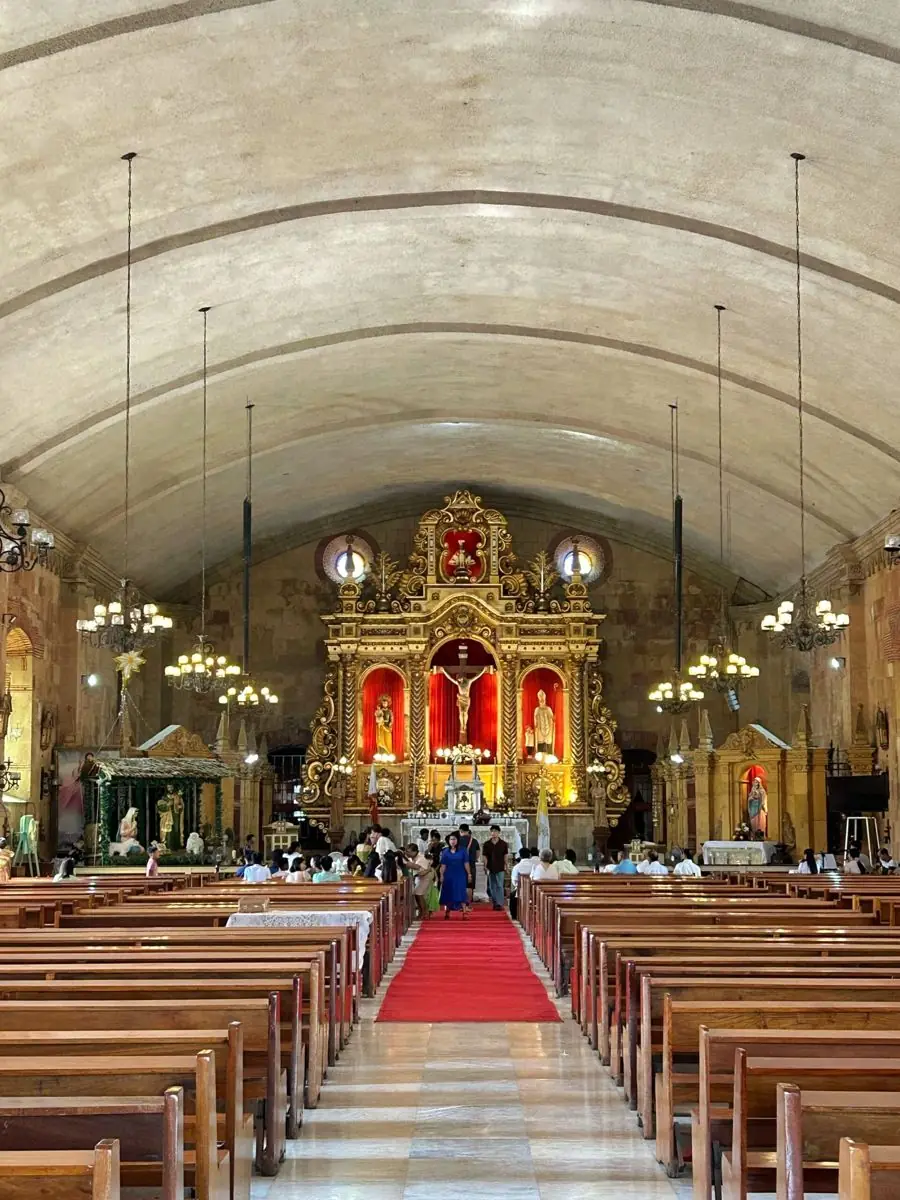
Miagao Church

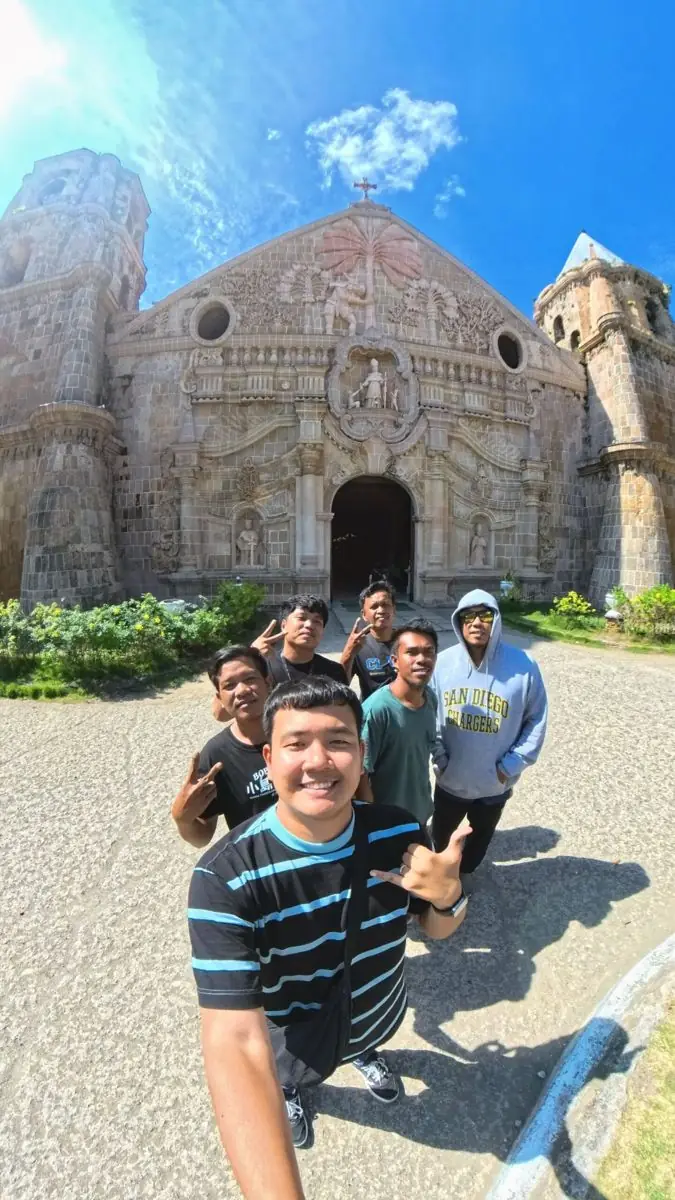
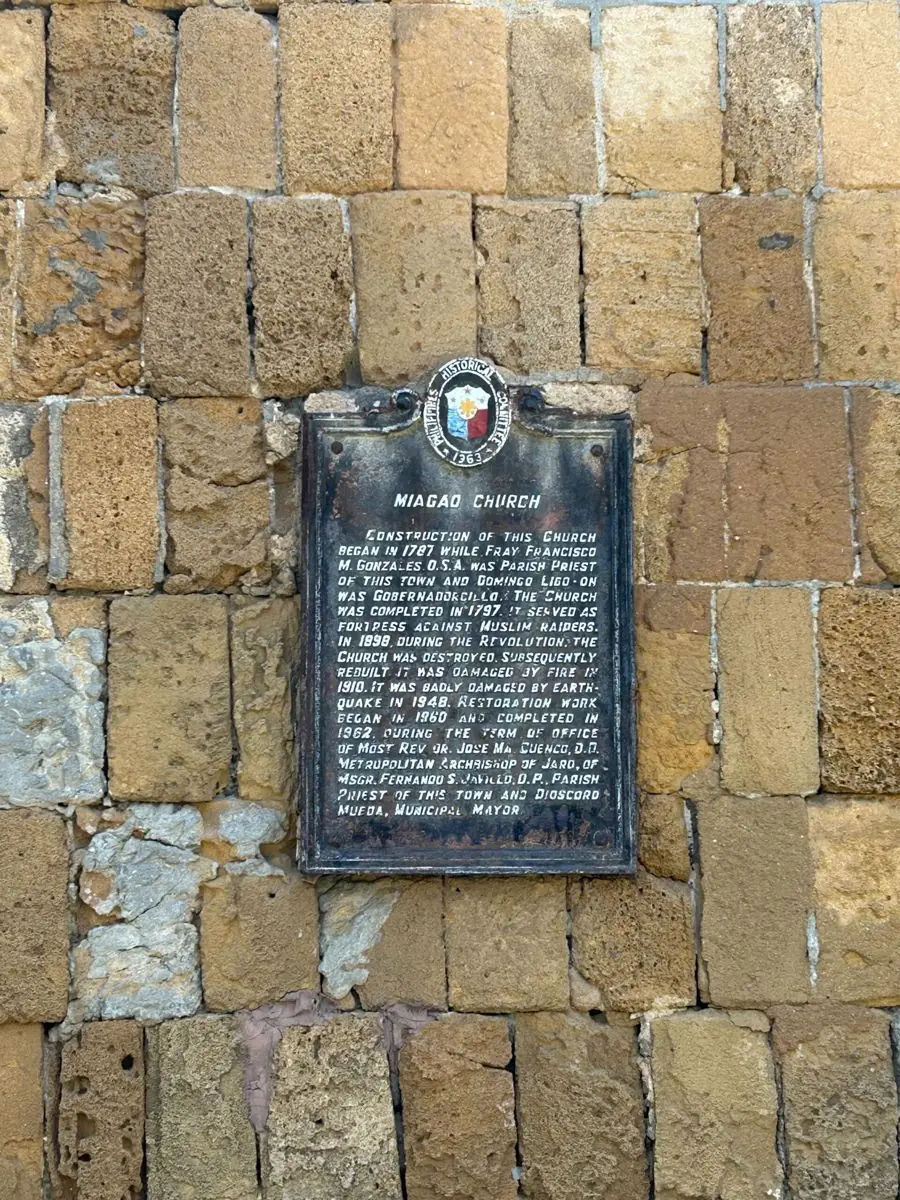
The Church of Saint Thomas of Villanova in Miagao, completed in 1797 with two massive watchtower belfries, is a UNESCO World Heritage Site — one of four Philippine Baroque churches inscribed in 1993. Its facade is extraordinary: a carved bas-relief of tropical plants — papaya trees, coconut palms, guava — surrounding the image of Saint Christopher, grafting local natural imagery onto the European baroque idiom.

✦
Dinagyang Timing

Dinagyang is held on the fourth Sunday of January, a week after the Sinulog in Cebu on the third Sunday. Both festivals draw massive crowds and book out accommodation months in advance. If attending Dinagyang, book at least two months ahead. If flexibility is possible, arrive the Thursday or Friday before the main Sunday competition for practice performances with smaller crowds.

Iloilo runs from the Central Panay Mountain Range in the west, the longest range in the Visayas, across the rice plains of the Iloilo and Jalaur rivers to the islands of the Visayan Sea. The mountains hold some of the largest remaining forests on Panay, with lowland dipterocarp forest grading into mossy forest, and they are the watershed for the farms below. In the center of the province, the Bulabog Putian National Park, established in 1961, protects 854 hectares of limestone hills in Dingle and San Enrique: Putian Peak, 322 meters high, the highest point of central Iloilo; 13 caves, including Maestranza Cave, home to an estimated 20,000 fruit bats, and Guiso Cave, with 18 species of bats; and secondary forest of dao, molave and narra. Off Carles in the north, the Islas de Gigantes are known for white-sand beaches, lagoons and rock formations.

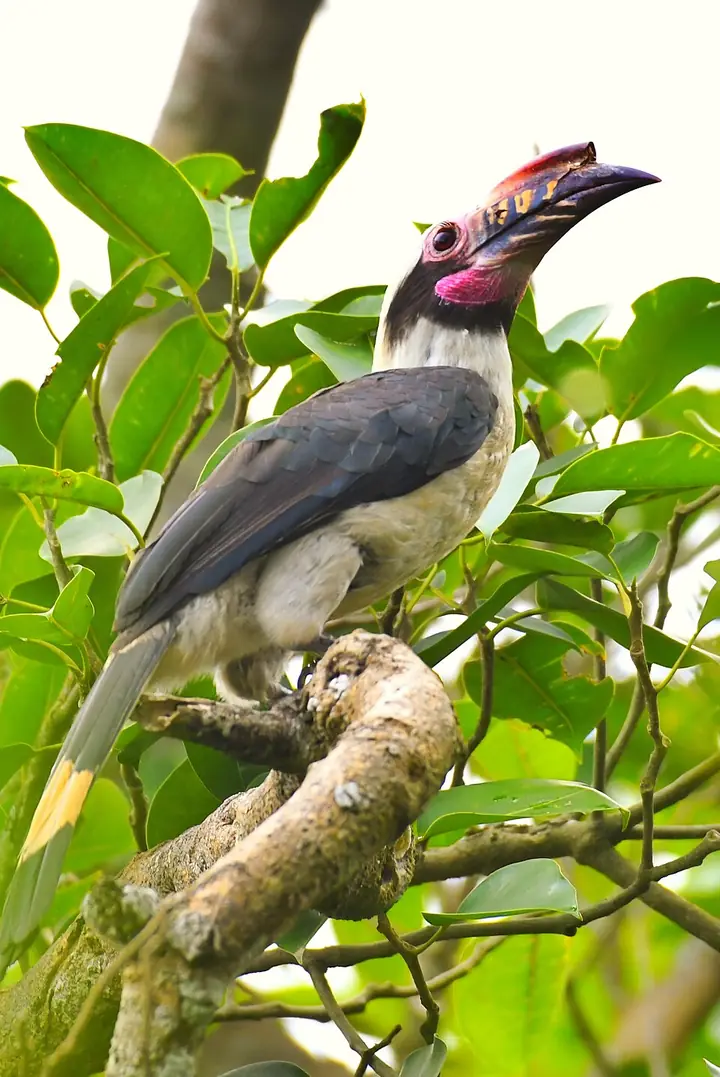
A Visayan tarictic hornbill (location not recorded)
Photo: Ranieljosecastaneda · CC BY-SA 4.0 · Wikimedia Commons
Visayan Hornbill
Penelopides panini
Endangered
A small hornbill of the lowland forests of the western Visayas, now found only on Panay and Negros, after disappearing from Masbate and Ticao. Pairs and small noisy groups feed on fruit high in the canopy, and like other hornbills they nest in holes in big old trees.
Field note: Never buy wild hornbills, and protect old forest trees.
Philippine Coucal
Centropus viridis
Least Concern
A dark, heavy-tailed cuckoo found across the Philippines, including Panay. Unlike most cuckoos it raises its own young, and it does well in farmland and scrub, so it is one of the birds visitors to Bulabog Putian are most likely to see.
Field note: Listen for its deep, hooting call from thick grass and bushes.
Meet all 65 Philippine animals in Hayop ng Pilipinas →
← All stories
Kasaysayan · Guimbal

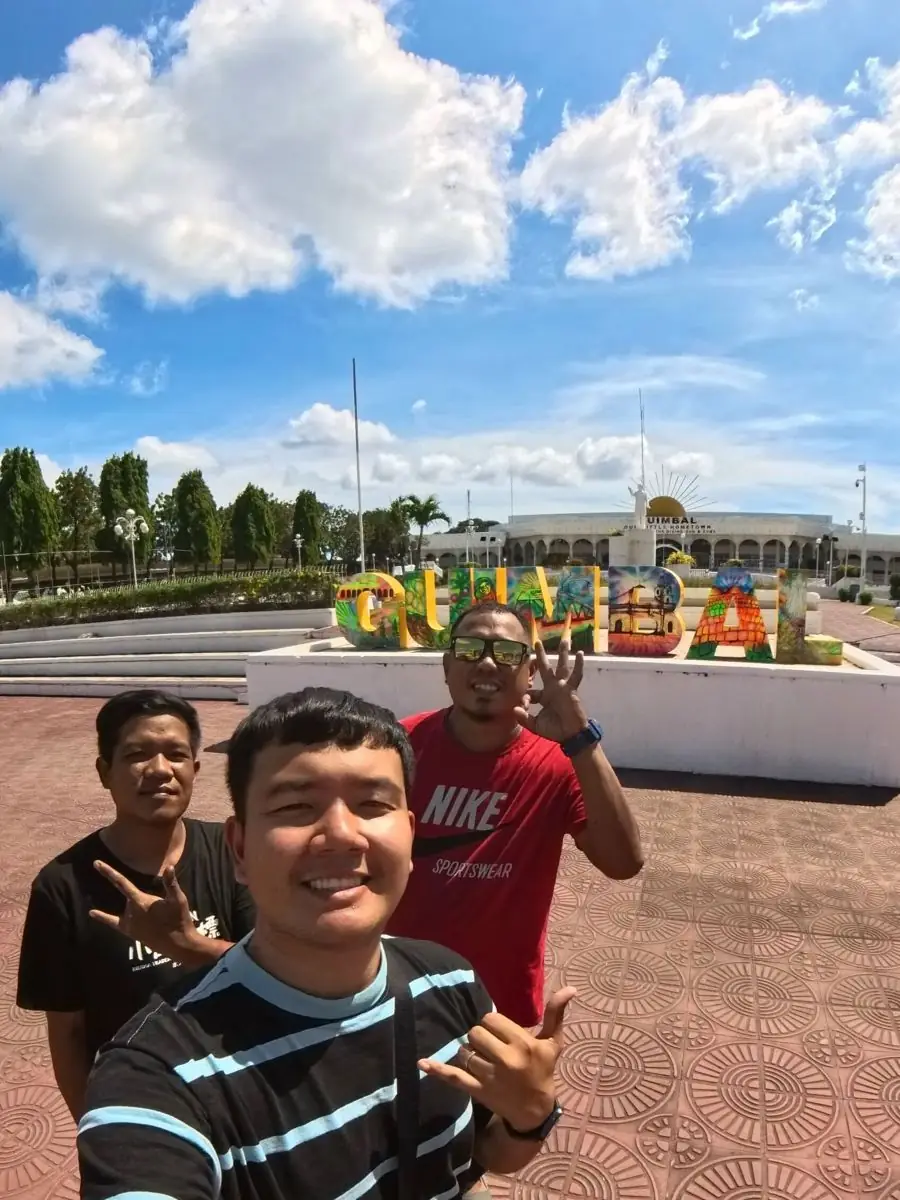
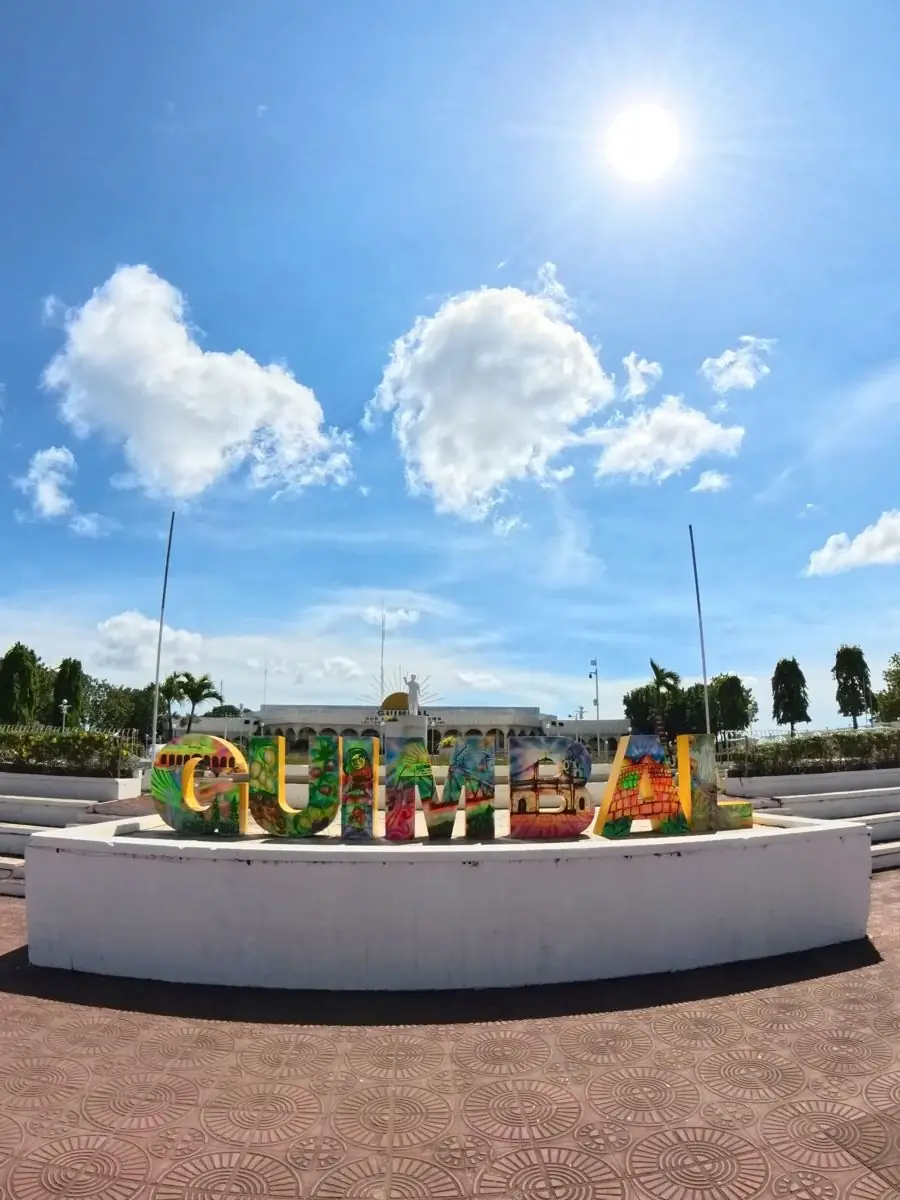
Guimbal and Its Old Church

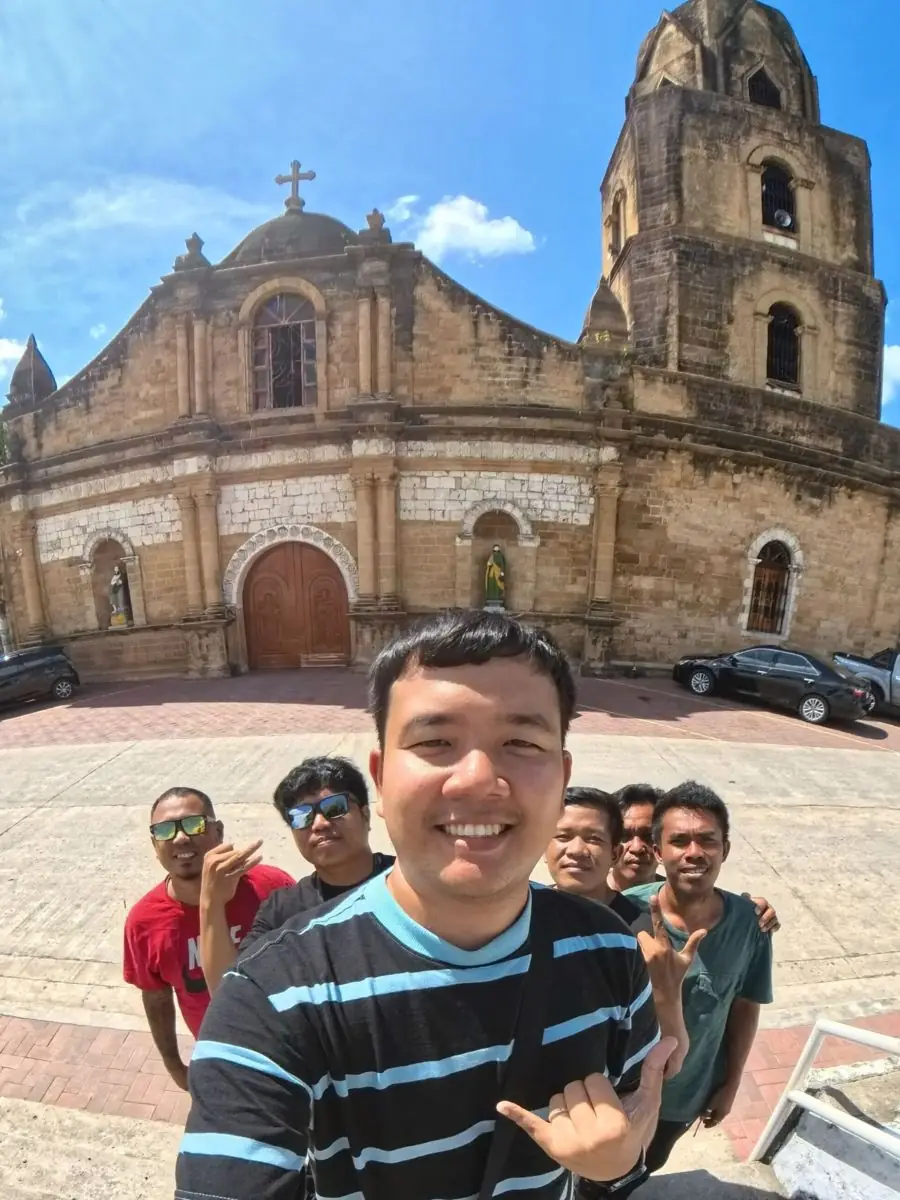
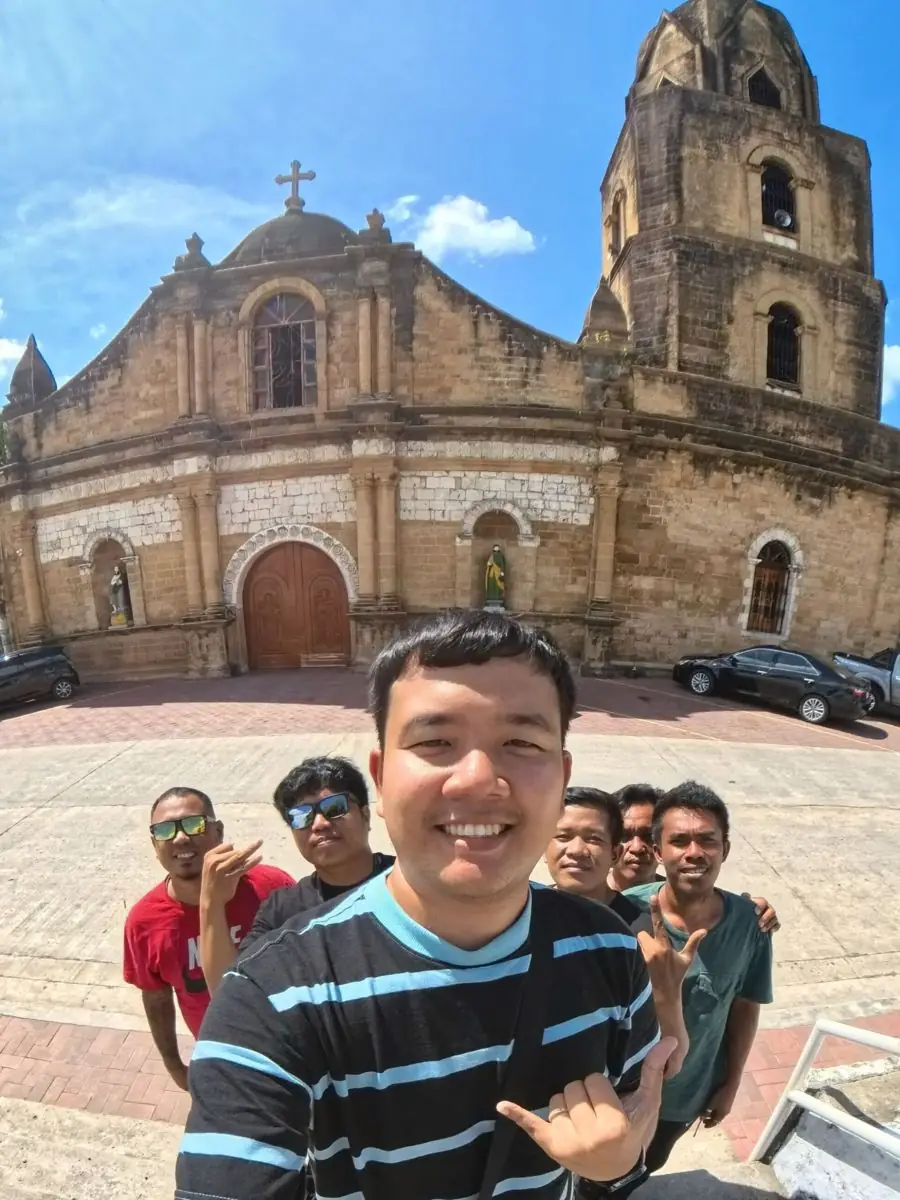
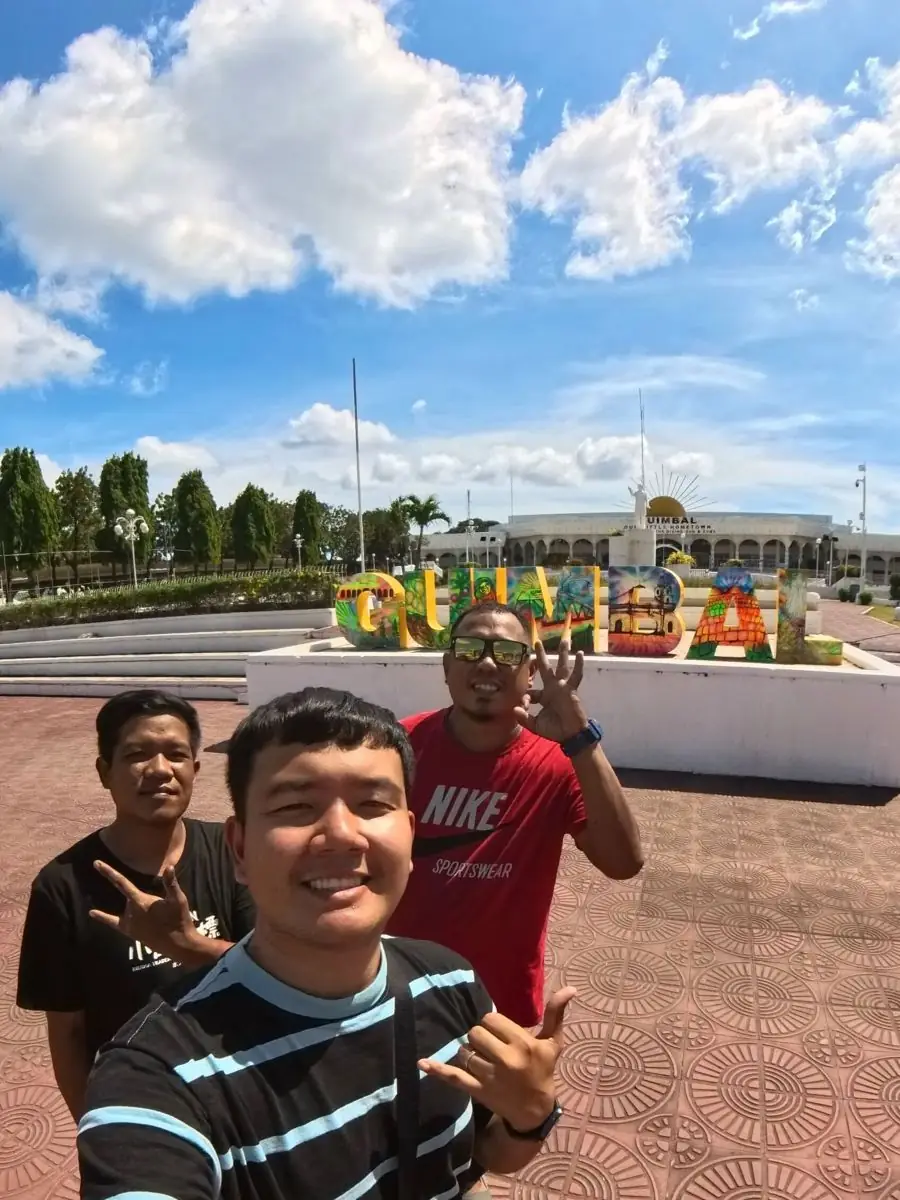
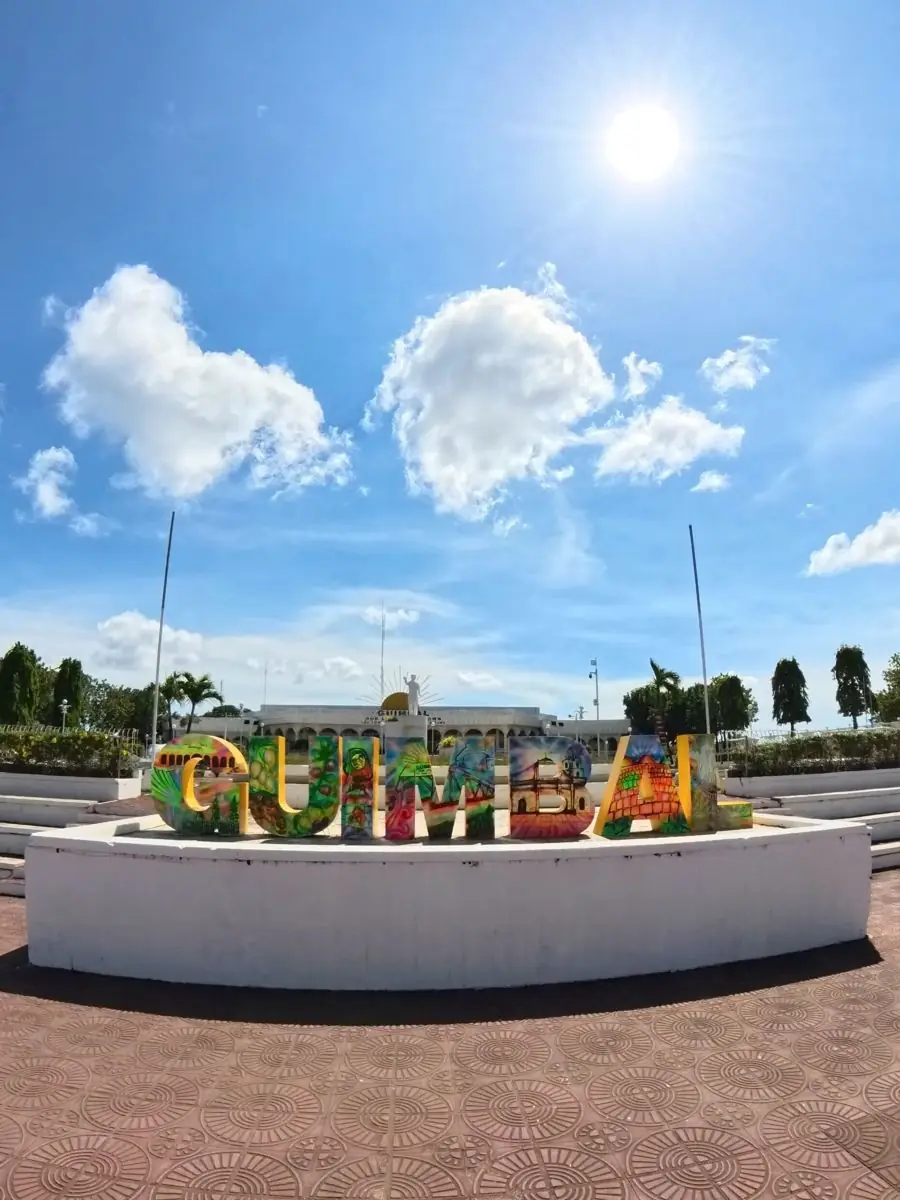
Guimbal, a coastal town in Iloilo, was founded in 1703 and is one of the oldest in the province. Its name may come from guimba, a local drum of carabao hide, or from a word for a gong.

Its church, San Nicolas de Tolentino, is built of yellow igang, the local sandstone, together with coral stone. In the Spanish era the coast was guarded by stone watchtowers, the bantayan, against Moro raids. Several were built and a few still stand, and the Bantayan Festival re-enacts those old raids in street dance each year.

Near the church is a quiet Adoration Chapel, a small and simple space for prayer, a peaceful counterpart to the grand old church at the town's heart.

Mga Larawan

← All stories
Kasaysayan · Miag-ao

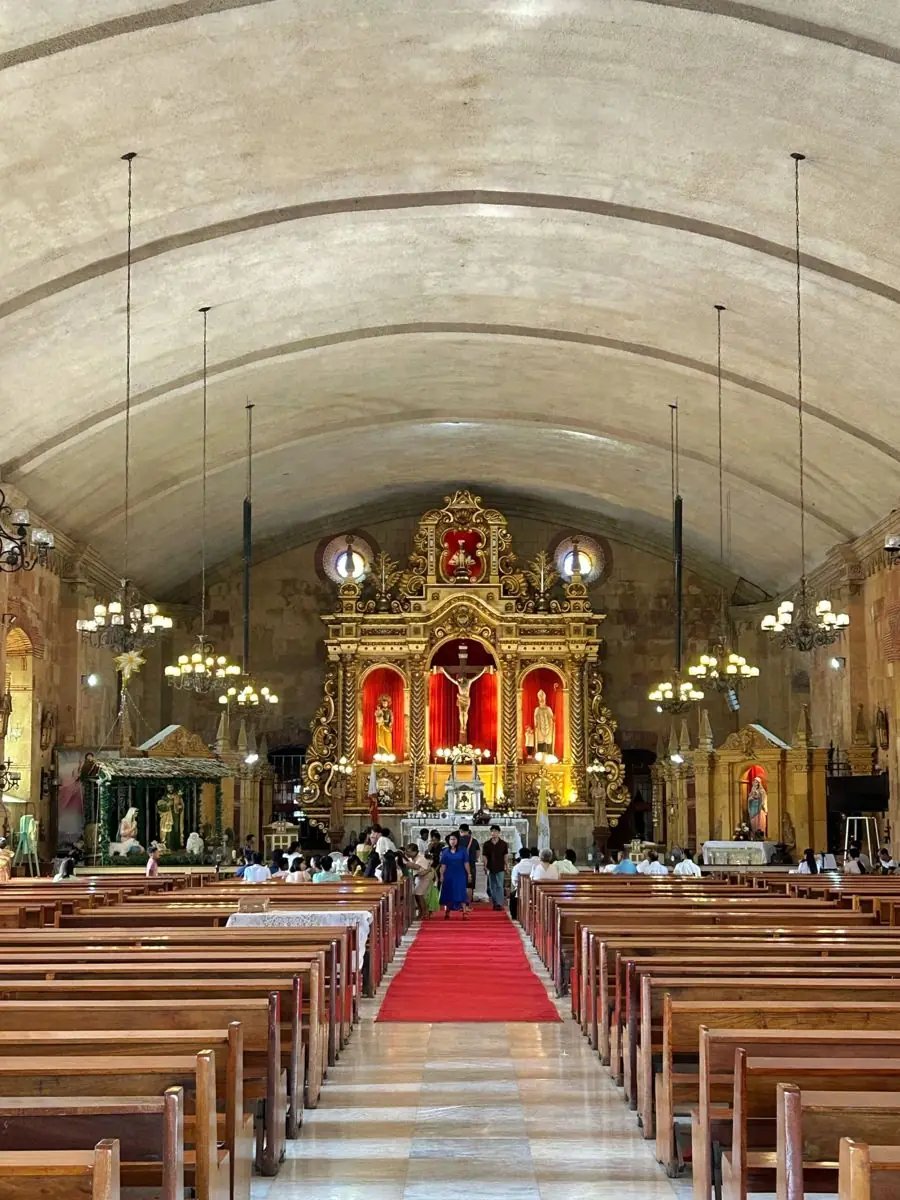
Miag-ao Church, a UNESCO Treasure

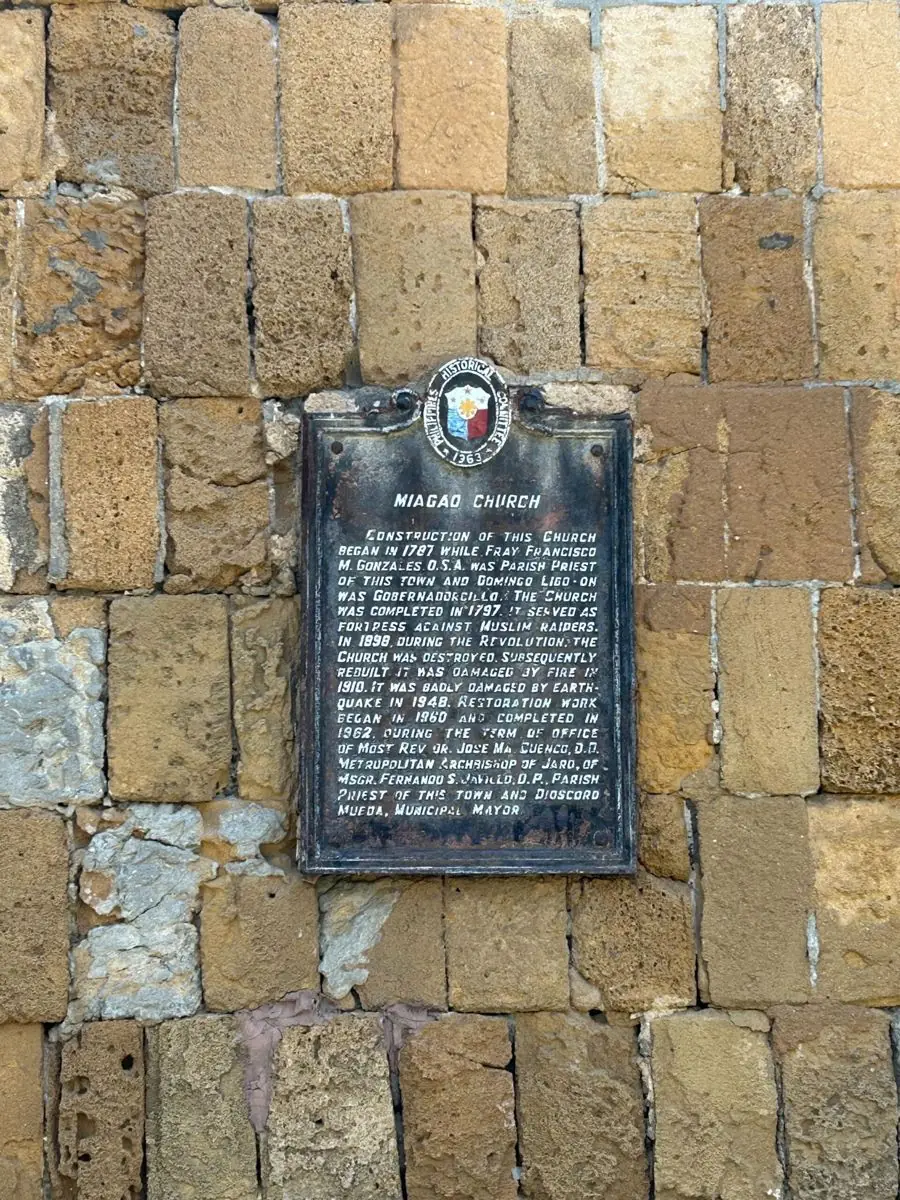
The Church of Santo Tomas de Villanueva in Miag-ao, Iloilo, is one of the four Baroque Churches of the Philippines inscribed as UNESCO World Heritage Sites. It was built by Augustinian friars between 1787 and 1797.

It is a fortress as much as a church, its thick walls and twin bell towers raised against pirate raids. Its famous facade is carved with rural and tropical life: Saint Christopher in native dress carries the Christ Child through a landscape of coconut palm, papaya, and rice, a Filipino reading of a Christian scene.

The town itself, made a pueblo in 1716, is named for a local datu and the native gao tree. It is a place of rice farms, fishing, and the University of the Philippines Visayas, where old faith and new learning stand side by side.

Mga Larawan

← All stories
Lugar · Leon

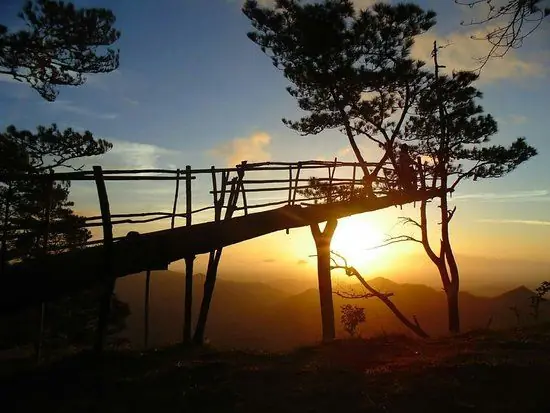
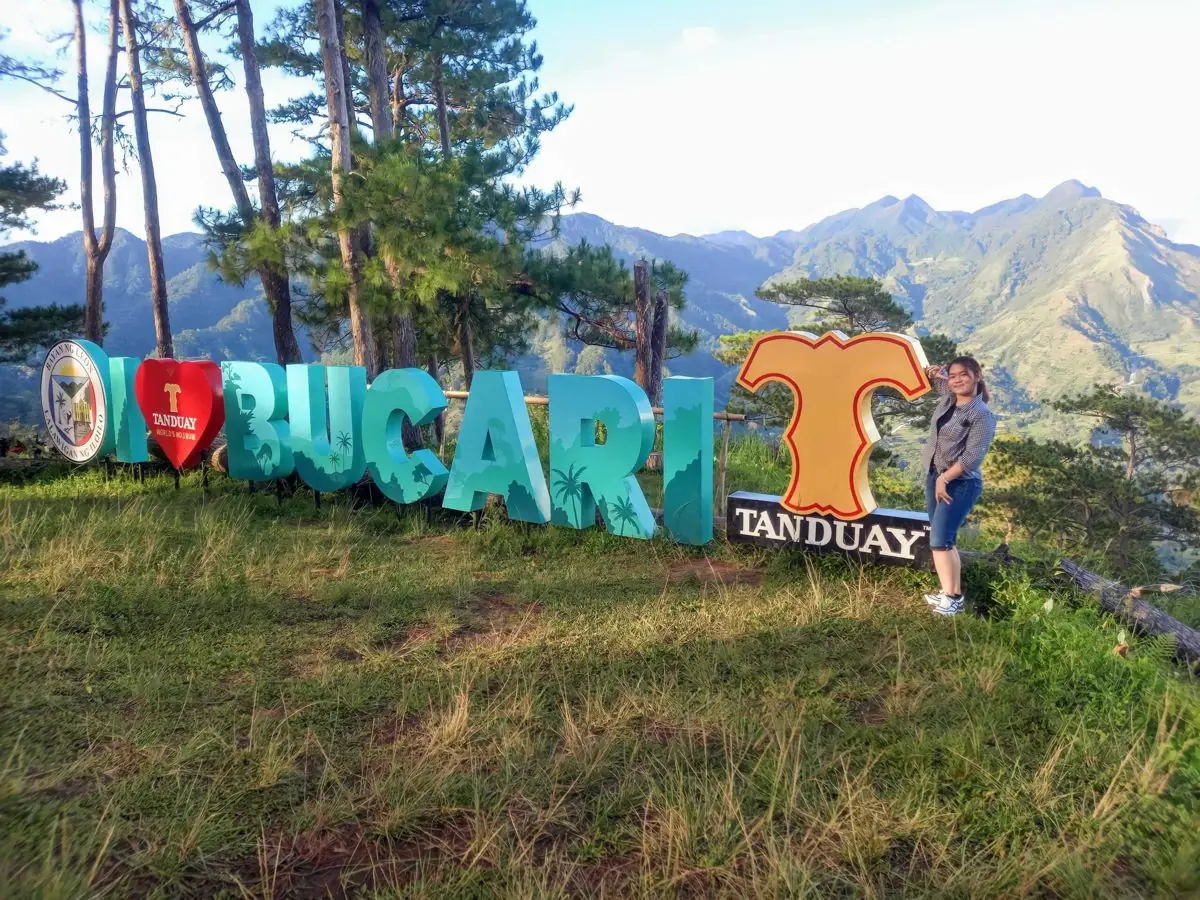
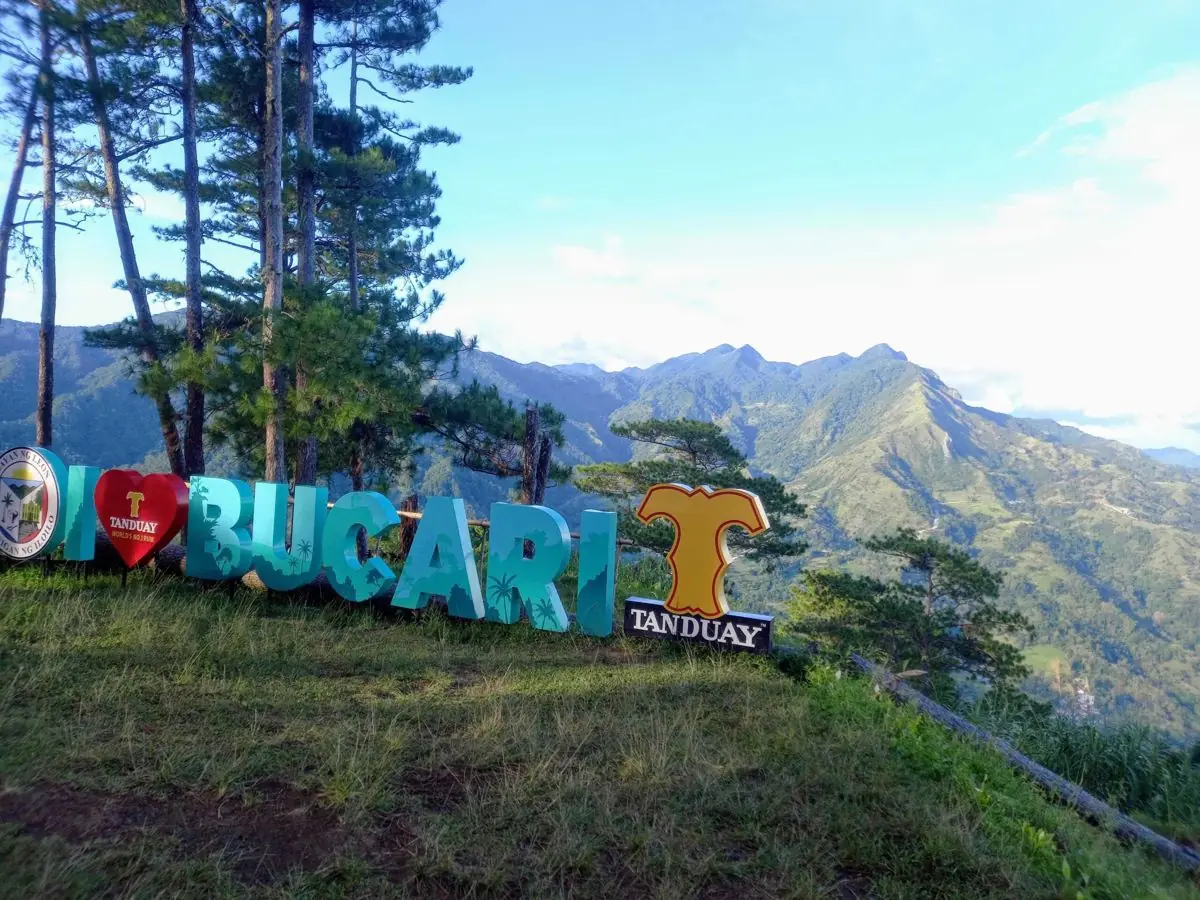
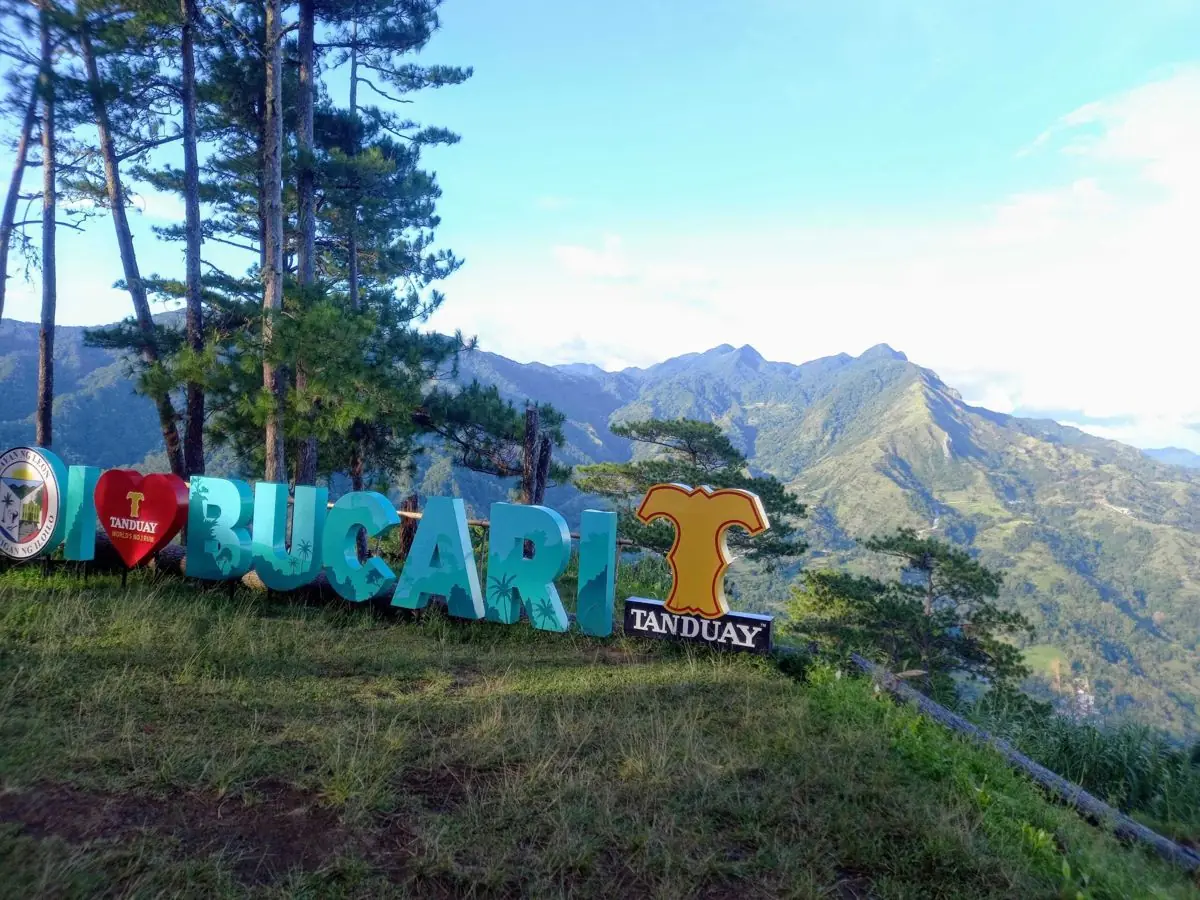
Bucari, the Little Baguio

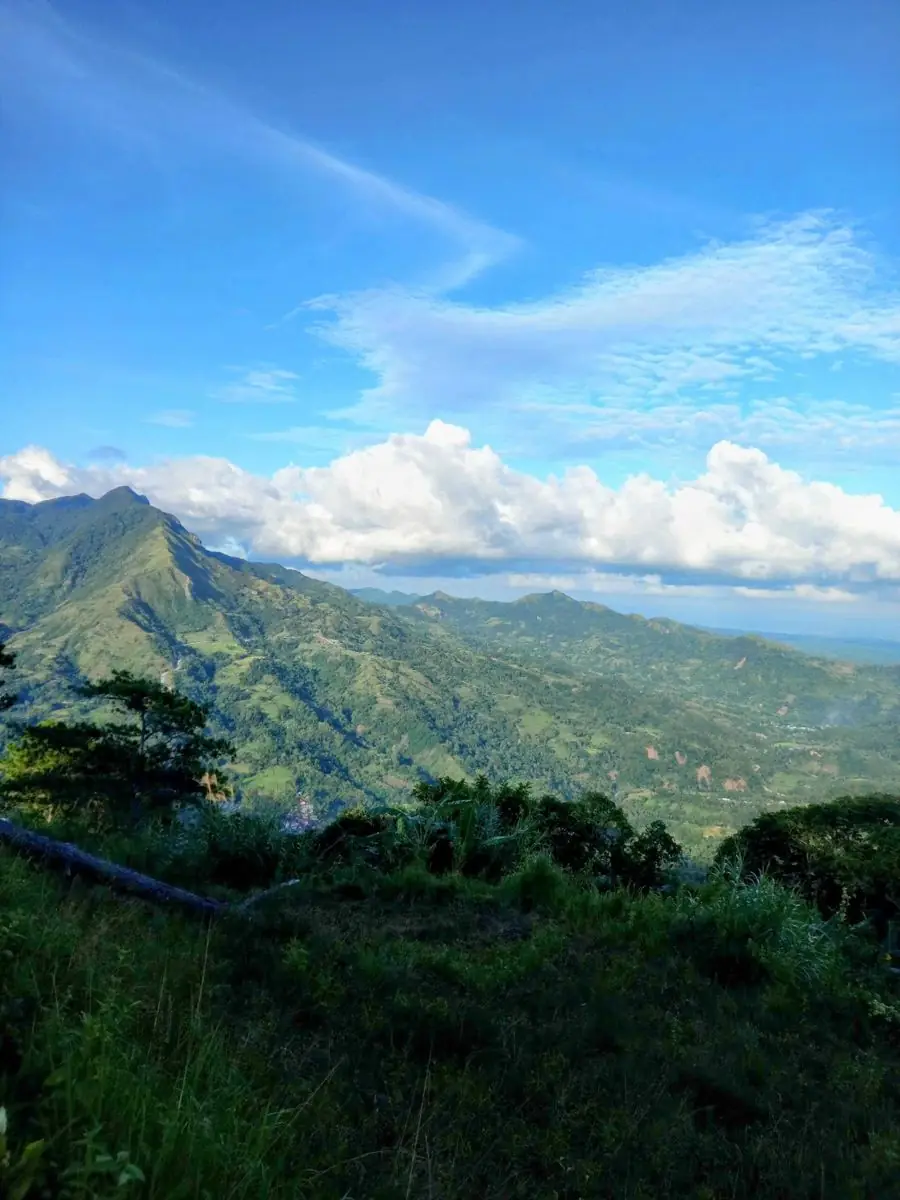
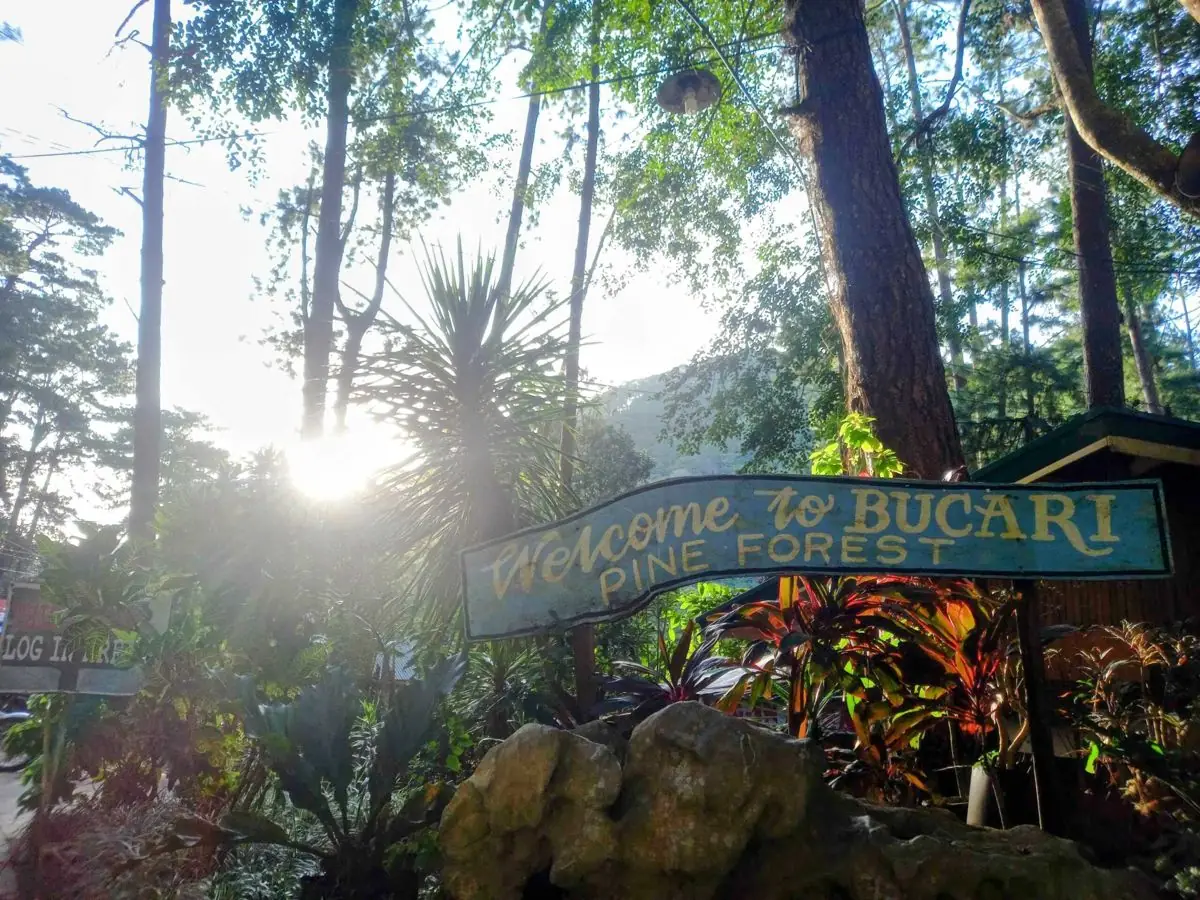
Bucari, in the town of Leon, Iloilo, is called the Little Baguio of the Visayas. High in the Bucari mountains, at around 1,200 meters, it is cool and green, with stands of pine and long views over the valleys below.

Once known only to locals, it has become a favorite for those seeking fresh air and quiet, with trails for trekking and camping and cool mornings that feel far from the tropical lowlands.

Its crisp air and towering pines make it a hidden gem, a small piece of the highlands in the heart of Panay.

Mga Larawan

← All stories
Lugar · Iloilo City

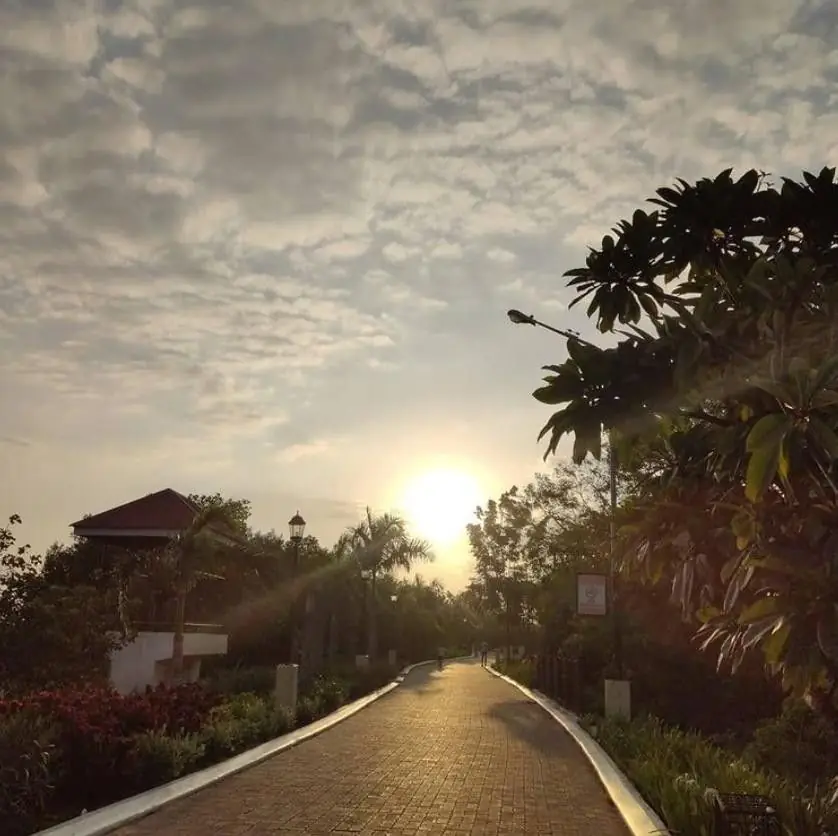
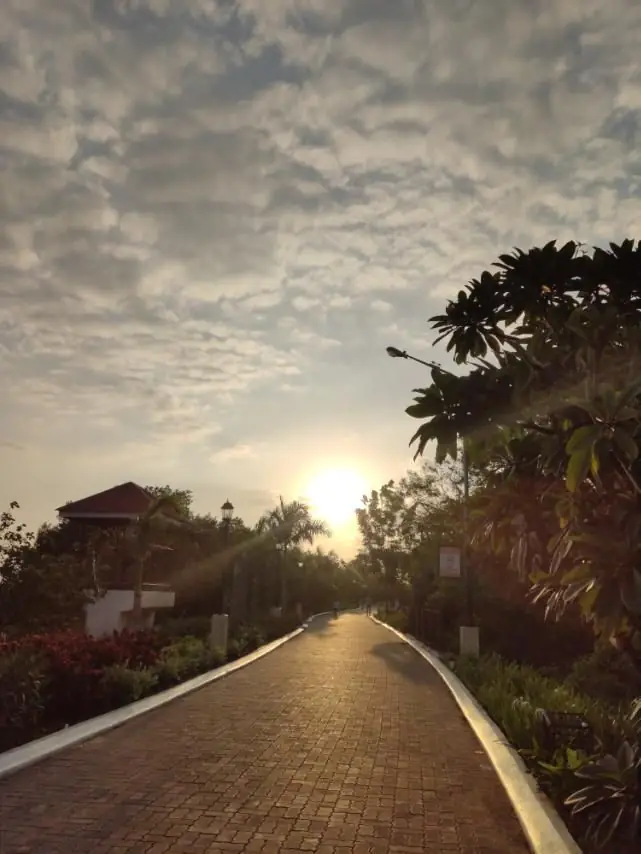
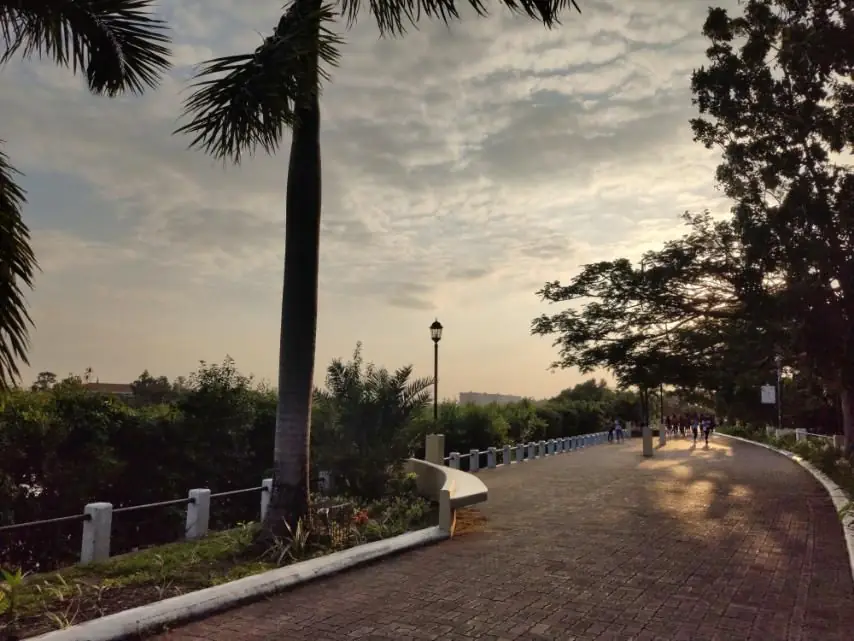
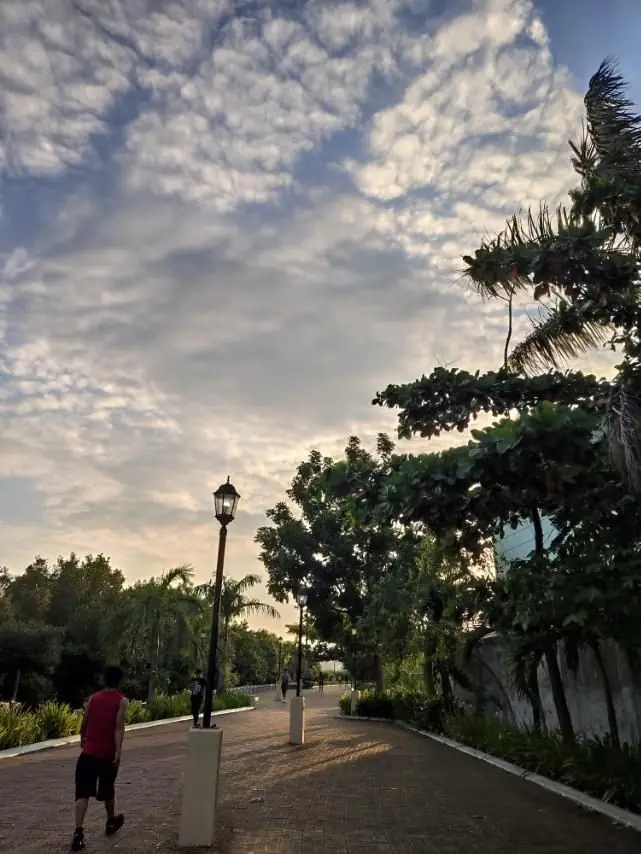
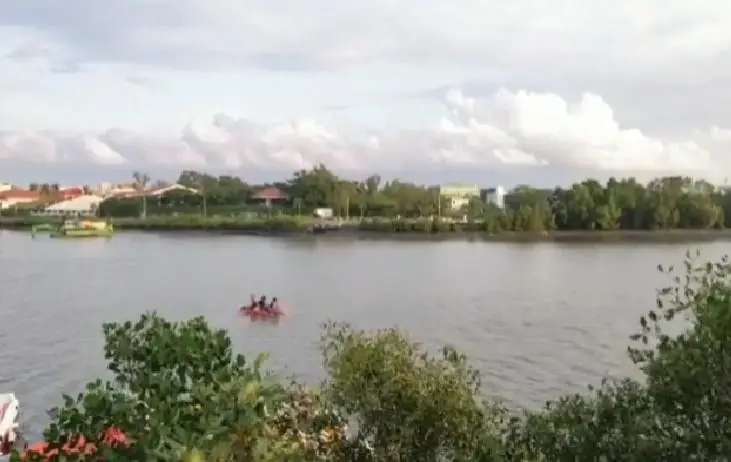
The Iloilo River Esplanade

Walking clears my head, and in Iloilo City there is one place I always go: the Iloilo River Esplanade. It is a promenade about a kilometer long that runs beside the river, where joggers, bikers, and families come out in the cool of the day.

I went in the late afternoon, in fine weather, and it was the perfect time. The park was clean and calm, lined with coconut palms and free of the tangle of wires you see on the streets. As the sky turned red over the water, I found a spot by the river and simply sat.

A good walk, a good rest, and a quiet, beautiful evening by the river.

Mga Larawan

← All stories
Kasaysayan · Iloilo City

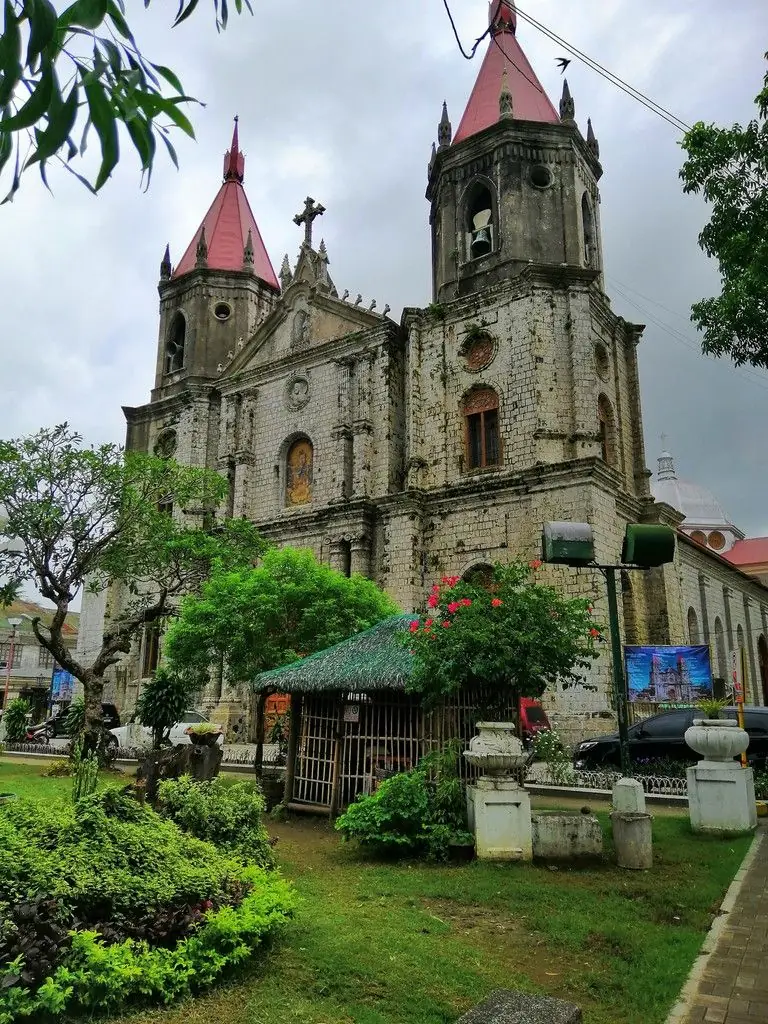
Molo Church

The Molo Church in Iloilo City, the St. Anne Parish, is the only Gothic-Renaissance church in Western Visayas. Its coral-stone walls and twin spires make it one of the city's landmarks.

It is fondly called the feminist church, because the sixteen statues of saints that line its aisles are all women. It is a rare and lovely detail in a country of grand old churches.

Standing strong through the centuries, Molo is a reminder of Iloilo's deep history and artistry, and of a people who, like their church, do not easily bend.

Mga Larawan

← All stories
Kasaysayan · Iloilo City

Jaro Cathedral

The Jaro Metropolitan Cathedral in Iloilo City enshrines Nuestra Senora de la Candelaria, Our Lady of Candles, the beloved patroness of the region.

It holds a singular honor. On 21 February 1981, Pope John Paul II crowned the image during his visit and declared her Patroness of Western Visayas. It remains the only Marian image in the Philippines personally crowned by a pope.

Devotees come to pray and to seek healing, and tradition holds that the stone image on the facade is slowly growing. Faith runs deep here, and Jaro is its heart.

Sources · updated 4 October 2026
Photo credits (2)

Photos from Wikimedia Commons, used under the licences shown; some were resized. All photo credits