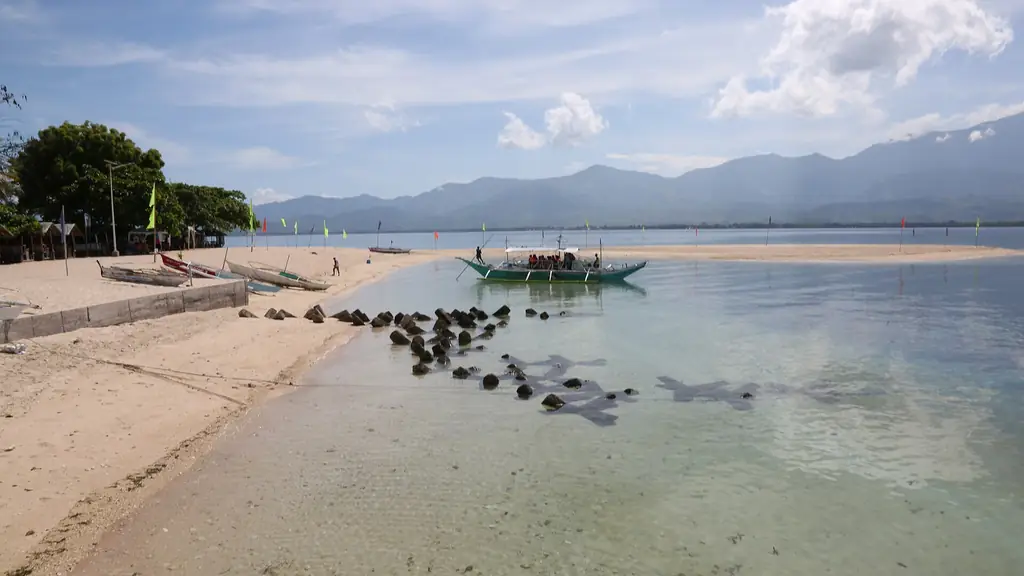
Antique occupies the western edge of Panay Island, facing the Sulu Sea. It is a long, narrow strip of land backed by the Central Panay Mountain Range — a spine of peaks that separates it from Iloilo to the east. The coast is rugged and often rough, and the towns along it are small and accustomed to being overlooked.
San Jose de BuenavistaCapital
2,729 km²Area
18Municipalities
VisayasIsland Group
San Jose de Buenavista — SJdB to residents — is the provincial capital, a coastal town with a public market, a provincial government complex, and a shoreline facing the Sulu Sea. The town is functional rather than scenic, but the province around it is not.
★
Western Panay
Antique's coastline faces the Sulu Sea, not the open Pacific. Fishing is a major livelihood, and inter-island trade with Palawan and the Visayas has connected Antique communities to wider networks for centuries. The mountains behind them served as both barrier and refuge.
The native language, Kinaray-a, is one of the Visayan languages but distinct from both Hiligaynon and Aklanon. It is spoken almost exclusively in Antique and parts of Capiz and Iloilo, and its speakers maintain a strong sense of linguistic identity.
The 2024 census counted 643,173 people in Antique, which has 18 municipalities. Fishing is the main livelihood in its 15 coastal towns.
Antique's recorded history runs through the Maragtas account of the ten datus from Borneo and their settlement of Panay. The western coast of Panay was one of the areas where these early settlers established communities. The province's history after Spanish contact is one of successive administrative reorganizations, occasional uprisings, and the persistent difficulty of governing a coastal strip backed by mountains.
c. 1212
Malay Settlement of Panay
The Maragtas tradition places the arrival of ten Bornean datus on the western coast of Panay, in territory that would become Antique. The Ati people were already present in the mountains and lowlands.
1790
A Politico-Military Province
Antique became a politico-military province in 1790. Its first capital was the town of Antique, now Hamtic; the seat later moved to Bugasong and finally to San Jose de Buenavista.
1942
Japanese Occupation
The Imperial Japanese Army landed in Antique in 1942 and occupied the province. Local guerrillas, aided by units of the Philippine Commonwealth Army, kept up the resistance.
1944–1945
Liberation
Between 1944 and 1945, Philippine Commonwealth Army and Constabulary forces, with the active support of local guerrillas, defeated the Japanese troops and liberated Antique.
2000
Sibalom Natural Park
Sibalom Natural Park, about 5,511 hectares around the Tipulu-an and Mau-it rivers, was proclaimed on 23 April 2000. It protects one of the last lowland rainforests on Panay.
The 20th century brought road construction that gradually connected the coastal towns, but the Central Panay mountains remained a barrier to integration with the Iloilo side. This isolation shaped Antique's distinct cultural and linguistic identity.
The Binirayan Festival, held in San Jose de Buenavista, commemorates the legendary landing of the Bornean datus at Malandog, in present-day Hamtic. Its name comes from biray, the Kinaray-a word for sailboat, and the festival features reenactments of the landing and street dancing.
The Ati of the Mountains
The Ati people of Antique live in the mountain communities of the Central Panay range. They maintain hunting and gathering practices alongside limited agriculture. Displacement from lowland areas over the past two centuries has pushed remaining Ati communities higher into the mountains, where contact with lowland society is limited.
★
Kinaray-a Literature
Kinaray-a has a body of oral literature including songs, riddles, and narrative poetry. Local scholars and universities in Iloilo have been working to document this material. The language's distinctiveness from Hiligaynon is a point of Antiqueno cultural pride.
Weaving and Craft
Antique is known for its handloom weaving. The best known is the Bugasong patadyong, a tube of plaid cotton cloth prized for the fineness of its weave. It is worn as a skirt or wrap and sold by weavers in Bugasong.
Antique's food follows the western Panay pattern — seafood from the Sulu Sea, root crops from the mountain foothills, coconut milk in savory dishes, and vinegar as a preservative and condiment. The province is not known for elaborate cooking, but its everyday food is solid.
Kadios Baboy Langka
A soup of pigeon peas (kadios), pork, and unripe jackfruit cooked with batwan fruit as the souring agent. This is the signature dish of Panay, found across Antique, Iloilo, and Capiz. Batwan gives it a sour note that tamarind cannot replicate.
Binukadkad na Isda
Butterflied fish — usually maya-maya or tanigue — marinated in vinegar and spices, dried in the sun, then fried. A common fish preparation along the Antique coast that preserves the catch and intensifies the flavor.
Kadios Baboy Langka (KBL)
Western Panay / Antique
20 minutesPrep
60 minutesCook
6Serves
Ingredients
2 cups, fresh or driedpigeon peas (kadios)
500g, cut into piecespork ribs or hocks
300g, cubedunripe jackfruit (langka)
6–8 pieces (or tamarind as substitute)batwan fruit
1-inch knob, slicedginger
1 medium, quarteredonion
2 tbspfish sauce
6–8 cupswater
Method
If using dried kadios, soak overnight then drain.
In a large pot, bring water to a boil. Add pork, ginger, and onion. Simmer for 20 minutes, skimming foam.
Add kadios and cook for another 20 minutes until they begin to soften.
Add jackfruit and batwan fruit. Season with fish sauce.
Continue simmering for 20 more minutes until pork is tender, jackfruit is soft, and the soup has absorbed the sour notes from the batwan.
Taste and adjust with fish sauce. Serve with rice.
Cook's note
Batwan is the authentic souring agent for this dish. If unavailable, use tamarind, but the flavor profile will differ. Fresh kadios cook faster than dried — adjust timing accordingly.
Kinaray-a is the mother tongue of most Antiquenos. It belongs to the Central Philippine branch of Austronesian but differs enough from Hiligaynon and Aklanon that mutual intelligibility is limited. The language has been documented but faces pressure from Hiligaynon, which dominates education and commerce in Western Visayas.
Kinaray-aMain
HiligaynonAlso used
InatiAti
Iraynun-Bukidnon (Kinaray-a dialect)Highlands
★
Name of the Language
The language is sometimes called Antiqueño or Kinaray-a. The latter name comes from the word 'iraya,' meaning upland or interior. It reflects the geographic and cultural position of the language's core speakers — people of the interior, set apart from the coastal Hiligaynon-speaking lowlands.
Hiligaynon is widely understood and used in commerce, especially with traders from Iloilo City. Antique borders Iloilo by land to the southeast, across the Central Panay mountains, so economic and social ties with the Hiligaynon-speaking side of Panay are strong.
The Ati speak their own language, Inati, which is distinct from Kinaray-a and Hiligaynon. In the interior, the Iraynun-Bukidnon speak a dialect of Kinaray-a. They built the rice terraces of the Antique highlands, described as the only rice terrace clusters in the Visayas.
Antique is off the main tourist path in Western Visayas, which means fewer visitors and fewer services. The province rewards travelers who arrange their own transport and are comfortable with basic accommodation. The coast is quiet, the mountains are accessible, and the Binirayan Festival in San Jose de Buenavista celebrates the province's founding legend.
Iloilo International, ~3 hrs driveNearest Airport
~3 hrs by bus via PassiFrom Iloilo City
November to AprilBest Season
Binirayan, San Jose de BuenavistaFestival
Malumpati Cold Spring
A freshwater spring in Pandan municipality, fed by mountain runoff and consistently cold even in summer. A short walk from the main road through coconut groves leads to the spring pools. Facilities are basic but the water is clear.
Tibiao River
The Tibiao River in the municipality of the same name offers kayaking and bamboo tube rides through rapids. The area is promoted as an eco-tourism destination, with community-based guides and basic lodgings available near the river.
Bugang River
A river in Pandan, northern Antique, cited by the Gawad Pangulo sa Kapaligiran as the cleanest body of water in the country. It is maintained by the community along its banks, and rafting and river boating are offered. The surrounding landscape of coconut and bamboo is typical of the Antique interior.
✦
Getting Around
Buses connect San Jose de Buenavista to Iloilo City and to the northern municipalities. Within the province, tricycles and habal-habal (motorcycle taxis) cover most routes. Arrange a habal-habal driver for a full-day tour if you want flexibility.
Antique's forests run along the Central Panay mountains. Sibalom Natural Park, about 5,511 hectares, is one of the last lowland rainforests on Panay; it links the Northwest Panay Peninsula Natural Park with the Central Panay Mountain Range and supports 76 bird species, 28 of them found only in the Philippines. The Northwest Panay Peninsula Natural Park, proclaimed in 2002, covers about 120 square kilometers in Pandan, Libertad and three Aklan towns, and supplies water to more than 100,000 people, including Boracay.
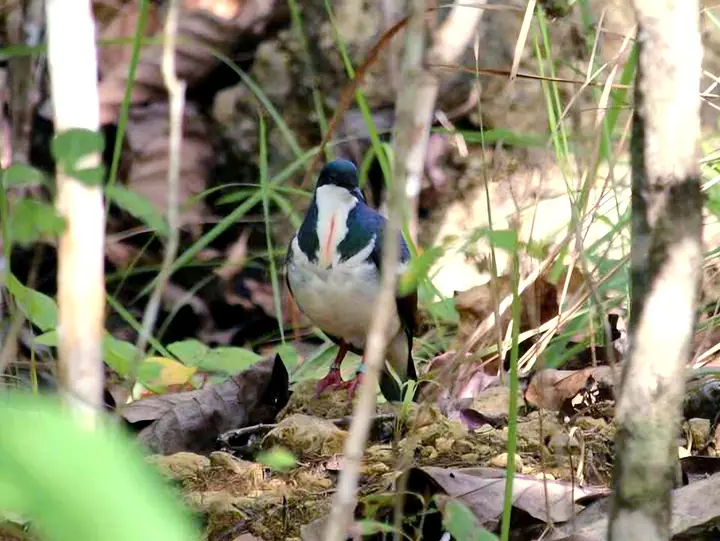
A ground dove with a red-orange patch on its white breast, found only on Negros and Panay. It is among the endemic birds recorded in Sibalom Natural Park.
Field note: Never buy wild-caught birds. Report snares to the DENR.
Visayan Spotted Deer
Rusa alfredi
Endangered
A small, dark brown deer with cream spots, found only in the western Visayas. It is among the endemic mammals known in Sibalom Natural Park.
Field note: Hunting it is illegal. Report snares or deer meat for sale to the DENR.
In Sibalom, Antique, grows one of the strangest wonders of Philippine nature: the Rafflesia, among the largest flowers in the world. Do not be fooled by the word flower, though. Its smell is so foul it is also called the corpse flower.
The species here, Rafflesia speciosa, known locally as uruy, was found in the Sibalom Natural Park, on Mount Porras, in the early 2000s. It was the third Rafflesia species recorded in the Philippines. In full bloom it can stretch about fifty centimeters across, and it flowers mostly from February to April. It is considered globally endangered.
Antique has taken the flower to heart. It is the star of the Binirayan Festival, on floats and costumes and in design contests, and the town that found it made it a symbol. A rare treasure, and a strange one, that we are lucky to have.
History (Maragtas, 1790 politico-military province, capitals Antique/Hamtic, Bugasong, San Jose; 1942 Japanese landing; 1944–1945 liberation with guerrillas), borders (Iloilo to the southeast), Iraynun-Bukidnon and rice terraces, Bugasong patadyong, Bugang River, Binirayan (biray, Malandog), fishing in coastal towns — Wikipedia: Antique (province) (rev. 1375501487)
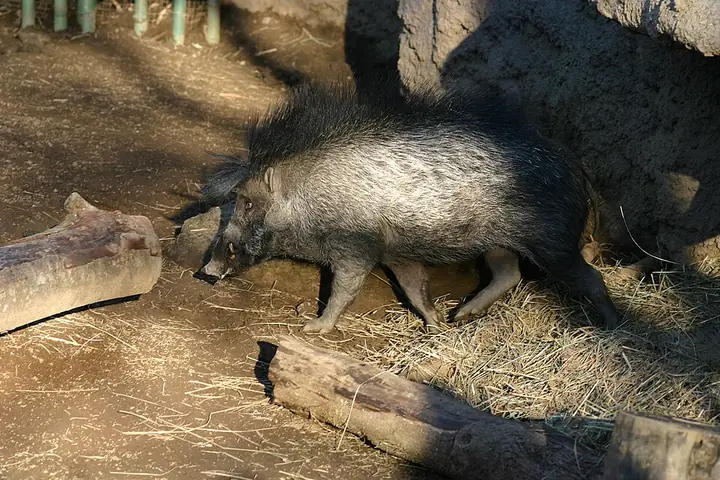
Sibalom Natural Park: 5,511.47 ha, proclaimed 23 April 2000, last lowland rainforest on Panay, 76 bird species (28 endemic to the Philippines incl. Negros bleeding-heart), Visayan spotted deer and warty pig, Rafflesia speciosa (discovered 2002, globally endangered) — Wikipedia: Sibalom Natural Park (rev. 1364423334)