Maguindanao del Sur was created in 2022 when the old Maguindanao province was divided by plebiscite. It occupies the southern, landlocked portion of the former province, with Buluan as its capital. The province is part of the Bangsamoro Autonomous Region in Muslim Mindanao (BARMM). Its river towns were the heart of the Sultanate of Buayan, the upstream rival of the Sultanate of Maguindanao.
BuluanCapital
4,973 km²Area
24Municipalities
MindanaoIsland Group
BARMMRegion
Maguindanao del Sur borders Maguindanao del Norte to the west, Cotabato to the north and east, and Sultan Kudarat to the south. Its lowlands are part of the Cotabato Basin, crossed by the Mindanao River and its tributaries, which feed Liguasan Marsh. Lake Buluan lies on the boundary with Sultan Kudarat.
★
Buluan, the Capital
Buluan is the provincial capital and seat of government under Republic Act No. 11550 (2021), the law that divided Maguindanao; Datu Odin Sinsuat became the capital of Maguindanao del Norte. The Provincial Capitol stands in Buluan, near Lake Buluan, which the province shares with Sultan Kudarat.
★
Liguasan Marsh
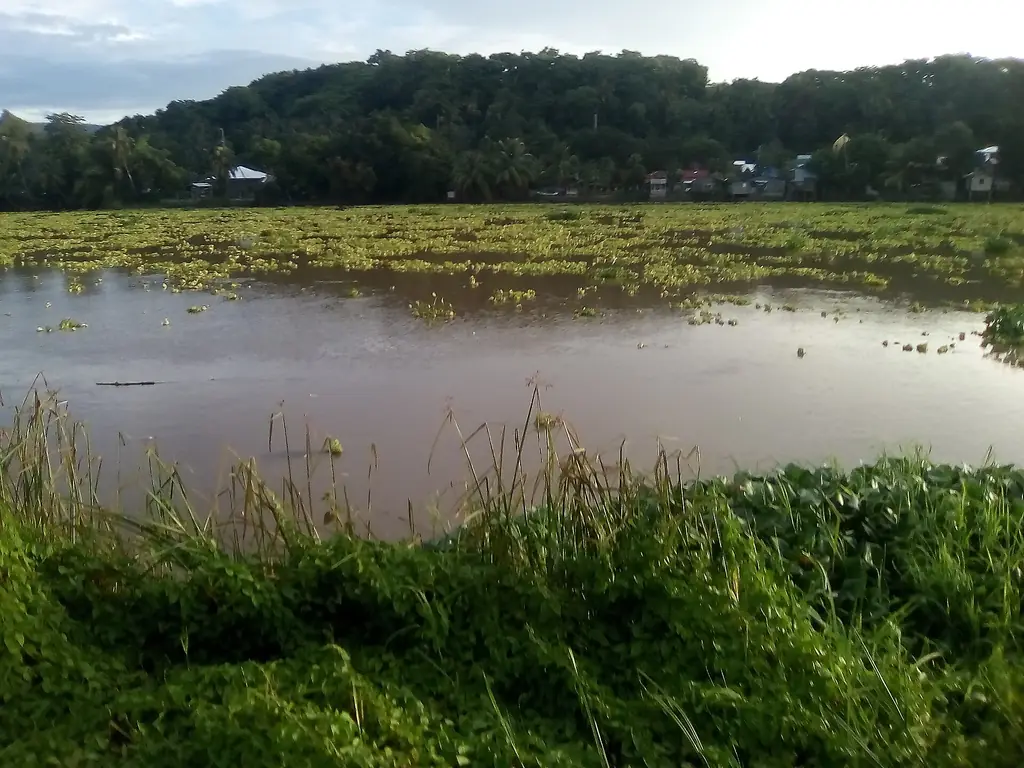
Liguasan Marsh is the largest marsh in south-central Mindanao, spreading across about 2,200 km² of Maguindanao del Sur, Cotabato, Maguindanao del Norte and Sultan Kudarat. About 300 km² is a game refuge and bird sanctuary. It is one of the few places in the country with populations of both the Philippine crocodile and the estuarine crocodile.
The population is predominantly Maguindanaon and Muslim. Rice and corn farming on the river floodplains, and fishing in the marsh and in Lake Buluan, are the main livelihoods.
The 2024 census counted 813,243 people in Maguindanao del Sur, which has 24 municipalities.
Before the colonial era, the upper Cotabato valley that is now Maguindanao del Sur belonged to the Sultanate of Buayan, centered at present-day Datu Piang, about 30 km upstream of the Sultanate of Maguindanao. Its fertile land made Buayan an agricultural power, and it carried on a long rivalry with its downstream neighbor.
Mid-14th century
Sultanate of Buayan
Buayan emerges as the main power of the upper Cotabato valley, one of the four major sultanates of Mindanao alongside Sulu, Maguindanao and the Lanao confederation.
1899
Datu Piang at Dulawan
As Spanish rule ends, Datu Piang makes Dulawan, the old Buayan capital, his headquarters and becomes the leading power in central Mindanao. The town of Datu Piang now carries his name.
1903
Moro Province Created
The United States incorporates Maguindanao territory into the Moro Province, ending the formal independence of the sultanate system, though datu authority continues informally.
2021
Republic Act No. 11550
Republic Act No. 11550, dated 27 May 2021, divided Maguindanao into Maguindanao del Norte (12 municipalities) and Maguindanao del Sur (24 municipalities), with Buluan as the capital of the south.
2022
Province Formally Created
In a plebiscite on 17 September 2022, voters approved the division of Maguindanao into two provinces. Maguindanao del Sur becomes a separate administrative unit with Buluan as capital.
Maguindanaon culture revolves around kulintang, a gong-chime music shared by Muslim and non-Muslim groups of the southern Philippines. Its master musicians are widely respected. Kulintang performances mark weddings, births, royal ceremonies, and community celebrations. The music is improvisational within established modal frameworks, and a skilled player's style is recognizable.
Datu Lineages
Families descended from the Buayan and Maguindanao sultanates and their datu lineages remain prominent in community life and ceremony in Maguindanao del Sur.
DP
Datu Piang
Datu of Dulawan, upper Cotabato valley1846–1933
Born Piang Tan, of Maguindanaon and Chinese descent, he rose to become the leading power in the upper Cotabato valley. In 1899 he made the old Buayan capital, Dulawan, his headquarters, and in later years he was called the Grand Old Man of Cotabato. The town of Datu Piang is named after him.
★
Upstream and Downstream
Maguindanaon tradition divided the river country into sa ilud (downstream, toward the coast) and sa raya (upstream). The downstream principalities were trading ports; the upstream region, where Buayan ruled, was the breadbasket.
The food of Maguindanao del Sur follows the halal traditions of the Maguindanaon kitchen, drawing on Malay and Islamic culinary influences. The Mindanao River, Liguasan Marsh and Lake Buluan supply freshwater fish, and rice in multiple preparations — boiled, fried, wrapped in leaves — is the staple at every meal.
Tiula Itum (Black Soup)
The emblematic Maguindanaon celebration dish: broth blackened with charred coconut, containing beef, chicken, or fish. The char gives the soup its distinctive color and a deep, smoky flavor unlike anything in the lowland Philippine kitchen. Served at weddings and major gatherings.
Tiyula Itum sa Isda
A fish version of the black soup, made with large freshwater fish from the Mindanao River. The fish is added whole or in large pieces and the charred coconut broth is spiced with ginger, lemongrass, and bird's eye chili.
Ginataang Hipon sa Gata (Maguindanaon Prawn Curry)
Maguindanao del Sur
15 minutesPrep
20 minutesCook
4Serves
Ingredients
500g, cleanedLarge prawns
2 cupsCoconut milk
1 tsp, groundTurmeric
1-inch piece, slicedGinger
2 stalks, bruisedLemongrass
4–6 wholeBird's eye chili
4, slicedShallots
4 cloves, crushedGarlic
to tasteSalt
Method
Heat 1 cup of coconut milk in a pan over medium heat. Add ginger, lemongrass, shallots, garlic, and turmeric. Cook until fragrant, about 5 minutes.
Add prawns and remaining coconut milk. Bring to a gentle simmer.
Add whole chilies. Cook for 8–10 minutes until prawns are pink and sauce has thickened slightly.
Season with salt. Remove lemongrass before serving.
Serve with plain rice.
Cook's note
The turmeric gives this dish its golden color. In Maguindanaon cooking, the coconut milk is often allowed to separate slightly into oil and solids — this is not a mistake but part of the cooking style.
Maguindanaon is the primary language of Maguindanao del Sur — the native tongue of the province's Maguindanaon population. It is an Austronesian language related to Maranao and Iranun, with significant Arabic borrowings in its religious and formal vocabulary.
MaguindanaonMain
TedurayHighlands
Tagalog / FilipinoWidely used
ArabicReligious study
The language has a literary tradition in both Arabic script (Jawi) and a romanized orthography. Islamic schools (madrassas) teach Classical Arabic for Quranic recitation alongside Maguindanaon and Filipino. Many community leaders and educated elders can read Jawi texts.
★
Upstream People
The Sultanate of Buayan ruled the upper Cotabato valley, with its center at present-day Datu Piang, about 30 kilometers upstream from the Sultanate of Maguindanao. Its people were known in earlier times as the Kiliman.
Teduray is spoken in South Upi and in neighboring Upi and Datu Blah T. Sinsuat in Maguindanao del Norte, where the Teduray people live among the larger Maguindanaon population. Tagalog has become a common language among younger people and in schools.
Maguindanao del Sur is landlocked and reached by road: from Cotabato City, whose airport is in neighboring Maguindanao del Norte, or from Tacurong City in Sultan Kudarat, next to the capital, Buluan.
Cotabato (Awang) AirportEntry Airport
~1 hr 45 minFlight from Manila
Consult current advisoriesTravel Note
Liguasan Marsh, Lake BuluanMain Draw
Buluan (Capital)
The provincial capital and home of the Maguindanao del Sur Provincial Capitol, next to Tacurong City in Sultan Kudarat and reached by road from Cotabato City. The town sits near Lake Buluan and serves as the administrative center for the province.
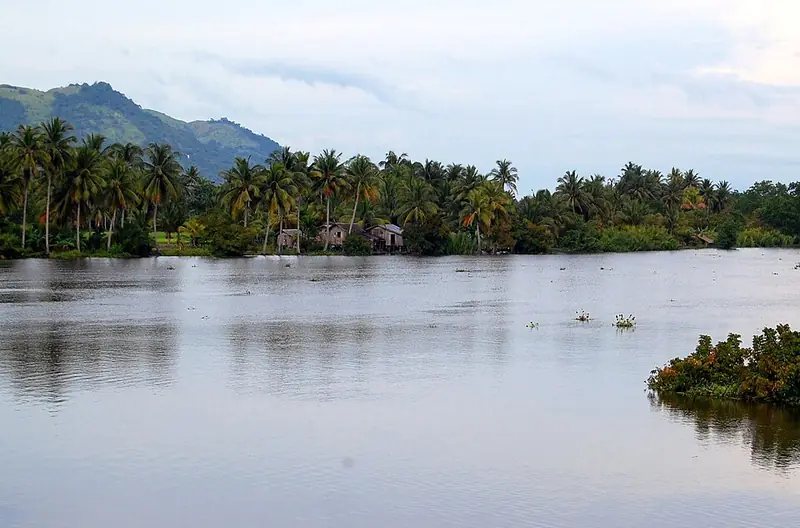
The Mindanao River, the second-largest river system in the Philippines, crosses the province on its way to Liguasan Marsh and the sea. Datu Piang, on its banks, was the seat of the Sultanate of Buayan. River communities live from fishing and rice farming.
Liguasan Marsh
A vast freshwater marsh in the Mindanao River basin, shared with Cotabato, Maguindanao del Norte and Sultan Kudarat. At least 92 bird species have been recorded here, along with Philippine and estuarine crocodiles. Visit only with a local guide.
Lake Buluan
The third-largest lake in Mindanao, shared by Buluan and Mangudadatu with the Sultan Kudarat towns of President Quirino and Lutayan. It is fed by the marshy basins of the Pulangi, Maanoy, Buluan and Alah rivers, and its fishing communities catch snakehead, catfish and tilapia.
◆
Travel Advisory
Travel advisories for Maguindanao del Sur vary by municipality. Always check current official advisories before travel and travel with local guidance.
Liguasan Marsh, about 2,200 square kilometers in the Mindanao River basin, is the province's great wild place. At least 92 bird species, dozens of fish species, six reptiles and five amphibians have been recorded there. About 300 square kilometers is a game refuge and bird sanctuary, and about 5,000 hectares of old-growth forest remain inside the marsh, where the Philippine eagle has been seen. The marsh also absorbs floodwater from the Cotabato basin and supports the fishing of more than 112,000 people.
Philippine Crocodile
Crocodylus mindorensis
Critically Endangered
A small freshwater crocodile found only in the Philippines. Liguasan Marsh is one of the few places in the country with a population.
Field note: Never kill or capture crocodiles. Report sightings to the DENR or the BARMM environment ministry.
Saltwater Crocodile
Crocodylus porosus
Least Concern
The world's largest living reptile, also called the estuarine crocodile. It shares Liguasan Marsh with the Philippine crocodile.
Field note: Keep away from riverbanks at dusk and follow local guides on the marsh.
When conflict came to the Maguindanao lowlands — and it came in the 1970s, the 1990s, the 2000s — the Liguasan Marsh was where people went. Families loaded their belongings into bancas and pushed out into the reeds, into the labyrinthine channels where outsiders could not easily follow. The marsh had been a refuge before written memory began. It was a refuge again.
Fishermen who grew up on the marsh can navigate it without landmarks, reading the current, the smell of the water, the direction of bird flight. The marsh does not look the same from two visits. Channels shift with the flood season. Islands of floating vegetation move. The ecosystem is alive in a way that makes fixed maps useless.
The same quality that made the marsh a refuge — its shifting, trackless, living geography — makes it difficult to protect. Farmers drain its edges for rice paddies. Dynamite fishing depletes its stocks. Surveys record habitat loss from drainage, illegal fishing and land conversion. What the marsh holds in its dark water — the crocodiles, the herons, the fish — is diminishing. The people who know it best are the ones who may not be able to stop what is happening to it.
Division of Maguindanao, 27 May 2021; 24 municipalities of Maguindanao del Sur incl. South Upi — Republic Act No. 11550 (2021)
Former province: languages (Maguindanaon, Iranun, Teduray in Upi, South Upi and Datu Blah T. Sinsuat; Tagalog among younger generations; Arabic in Islamic schools); kulintang — Wikipedia: Maguindanao (rev. 1375349030)
Buayan: mid-14th century to 20th century, one of four major Mindanao sultanates, center at present Datu Piang 30 km upstream of Maguindanao, Kiliman — Wikipedia: Sultanate of Buayan (rev. 1346104392)
Liguasan Marsh: 2,200 km², 300 km² game refuge, 92 bird species, Philippine and estuarine crocodiles, Philippine eagle, 5,000 ha old-growth forest, 112,000 livelihoods — Wikipedia: Liguasan Marsh (rev. 1362887232)