Sunrise over Claveria with Mount Sumagaya, Misamis Oriental
Photo: Theglennpalacio · CC BY-SA 4.0 · Wikimedia Commons
Map

Misamis Oriental

Northern Mindanao
Mindanao
Capital Cagayan de Oro City
Population (2024) 1,729,682
Area 3,544 km²
Municipalities 23
Cities 3
Island Group Mindanao
Languages Cebuano, Higaonon

Population: 2024 census (PSA). Area: land area. Population, area and city count include Cagayan de Oro, which the census lists separately from the province.

Kapitbahay — Neighboring Provinces

Misamis Oriental is a province in Northern Mindanao, notable as the location of Cagayan de Oro City — the commercial hub and regional center of Northern Mindanao and a major urban center in Mindanao overall. Cagayan de Oro is the provincial capital, but as a highly urbanized city it is governed independently of the province. The province wraps around CDO, extending eastward along the Macajalar Bay coast and inland into the mountains bordering Bukidnon.

Cagayan de Oro CityCapital
3,544 km²Area
23 + 3 citiesMunicipalities
MindanaoIsland Group
Northern Mindanao (X)Region

The Cagayan de Oro River flows through the provincial landscape and the city before emptying into Macajalar Bay. This river — known locally as the CDO River — is the source of the province's most recognized tourism activity: white water rafting. The river's upper course through the mountains and foothills provides rapids ranging from Class II to Class IV, accessible within day-trip distance of the city.

★
Adventure Capital of the South

Cagayan de Oro has built a reputation as the 'adventure capital of Mindanao' on the strength of its white water rafting industry. The CDO River rafting scene developed in the 1990s and is now one of the most accessible adventure tourism activities in the Philippines, drawing visitors from across the country and abroad.

Beyond the city and the river, Misamis Oriental is an agricultural province. Its inland municipalities produce corn, rice, pineapple, and rubber. Del Monte Philippines, which exports pineapples across the Asia-Pacific, has a processing plant in Cagayan de Oro.

The 2024 census counted 1,729,682 people in Misamis Oriental including Cagayan de Oro, which has more than 700,000 of them. The province has 23 municipalities and two component cities, Gingoog and El Salvador. Its coast is dominated by two bays, Macajalar Bay and Gingoog Bay. Most residents descend from Visayan settlers from Cebu, Bohol, Negros Oriental, Siquijor and Camiguin, while the Higaonon, Binukid and Manobo are the native peoples of the uplands.
Before the Spanish came, the main settlement of the area was Himologan, at today's Huluga, whose people the first missionaries described as a mix of Lumad and seafaring Visayans. Augustinian Recollect friars arrived in 1622, and by 1674 they had set up chapel-villages at Iponan, Agusan, Bayug, Gompot (Balingasag) and Tagoloan.

Before 1622

Himologan

The main pre-colonial settlement of the area was Himologan, at what is now Huluga. Skulls from the Huluga caves show that the early people of Cagayan shaped their children's skulls as a mark of status, as was also done in Butuan.

1622–1626

Recollect Mission

Two Augustinian Recollect missionaries reached Himologan in 1622. In 1626 Fray Agustín de San Pedro persuaded its chief, Datu Salangsang, to move the settlement down the Cagayan River to the site of today's Gaston Park.

1929–1930

Province Divided

Act No. 3537, approved on 2 November 1929, divided the old province of Misamis in two because its parts were not contiguous, creating Misamis Oriental and Misamis Occidental from 1930.

1945

Liberation

American forces landed at Cagayan in May 1945, after Filipino and American guerrillas based in Opol, Gingoog and Tagoloan cleared the beaches of Japanese defenders.

1950

Cagayan de Oro Becomes a City

Republic Act No. 521, signed on 15 June 1950, made the municipality of Cagayan de Misamis the chartered City of Cagayan de Oro. The same year Opol was separated from it as a town; El Salvador had become a municipality in 1948.

December 2011

Tropical Storm Sendong (Washi)

Tropical Storm Sendong set off massive flash floods on the Cagayan de Oro and Iligan rivers, killing more than a thousand people, most of them in Cagayan de Oro and Iligan.

Cagayan de Oro is one of the most cosmopolitan cities in Mindanao — a melting pot of Visayan settlers, Maranao traders, Higaonon indigenous peoples, and more recent migrants from across the country. The city's university population (it has several large universities including Xavier University) gives it a distinctly youthful, educated character.

Higaonon People

The Higaonon are the indigenous inhabitants of the upland areas of Misamis Oriental and several neighboring provinces. They and the neighboring Bukidnon peoples are counted among the Lumad, the indigenous peoples of Mindanao. Higaonon communities maintain traditional rituals, agricultural practices centered on kaingin (swidden) farming, and a social system led by the datu. On Mount Sumagaya, a study by Mindanao State University credited Higaonon land management and farming practices with protecting the mountain's biodiversity. Their ancestral lands are threatened by land grabbing and clearing.

★
CDO as a University City

Cagayan de Oro hosts Xavier University (Ateneo de Cagayan) and several other universities and colleges; the Mindanao State University–Iligan Institute of Technology is in nearby Iligan. The city's large student population has shaped its restaurant scene, entertainment industry, and social culture.

The Kagay-an Festival culminates on 28 August, the feast of the city's patron, St. Augustine, with street parties and cultural presentations. The festival has grown into one of the larger city festivals in Northern Mindanao.

See the great festivals in Pista ng Pilipinas →

Cagayan de Oro's food scene reflects the city's diversity and its function as a regional commercial hub. The market serves as the food distribution center for much of Northern Mindanao. Cebuano cooking is the baseline, but Maranao, Higaonon, and Manila-influenced dishes appear throughout the city's restaurants and street food stalls.

Sinuglaw CDO Style

The CDO version of sinuglaw combines grilled pork belly (lechon kawali or inihaw na baboy) with kinilaw na isda (raw fish cured in vinegar). The contrasting textures and temperatures — hot and crispy pork against cold and acid-bright fish — make it a popular bar food and shared starter throughout Northern Mindanao.

Pork Adobo sa Gata

Standard Philippine adobo — pork simmered in vinegar, soy sauce, and garlic — finished with coconut cream in the Mindanao style. The coconut milk is added at the end and the adobo is not dried off as in the Manila version, resulting in a richer, slightly sweet sauce.

Kinilaw na Tanigue

Misamis Oriental / Northern Mindanao
20 minutesPrep
0 minutesCook
4–6 (as appetizer)Serves
Ingredients
  • 500g, skin removed, diced into 1cm cubesTanigue (Spanish mackerel) fillet
  • 1/2 cupWhite cane vinegar
  • 2 tbspCalamansi juice
  • 2 tbsp, finely mincedGinger
  • 1 medium, finely dicedRed onion
  • 3–5, sliced thinBird's eye chili
  • 4 tbspCoconut cream
  • 1/2 tspSalt
Method
  1. Place fish in a bowl. Pour vinegar over and mix. Let rest 5 minutes — the fish should turn opaque on the surface.
  2. Drain vinegar completely.
  3. Add calamansi juice, ginger, red onion, and chili. Mix gently.
  4. Add coconut cream and fold through.
  5. Season with salt. Taste — adjust vinegar, salt, or chili as needed.
  6. Serve immediately, chilled if possible, with taro chips or plain crackers.
Cook's note

Tanigue (Spanish mackerel) is the preferred fish for kinilaw in Northern Mindanao — firm enough to hold its shape and mild enough not to overpower the marinade. Use only the freshest fish; do not make kinilaw with fish that has been frozen.

Cebuano is the primary language of Cagayan de Oro and the lowland municipalities of Misamis Oriental. Many people in the province speak the Bohol dialect of Cebuano, and around Jasaan there is a distinct local dialect called Jasaanon.

Cebuano (incl. Bohol dialect)Primary
JasaanonLocal dialect
Higaonon, BinukidIndigenous
Filipino, EnglishOfficial

Maranao is the second most commonly heard language in CDO markets, brought by Maranao traders and residents who have settled in the city from the lake region to the south. Maranao traders have long connected the Lanao lake region with the coast.

★
The CDO Language Mix

Because CDO is a major university city and regional hub, it receives migrants from across Mindanao and the Visayas. The result is a city where Cebuano, Maranao, Maguindanaon, Hiligaynon, Ilocano, and Tagalog-based Filipino are all heard in daily life, making it one of the more linguistically diverse urban environments in Mindanao outside of Davao City.

Higaonon is spoken in the upland communities of the province's interior municipalities. It is an indigenous Manobo language of the Philippine family, distinct from Cebuano, and its survival depends on the vitality of Higaonon communities in the increasingly pressured upland areas.

Cagayan de Oro is well-connected by air, sea, and road. Laguindingan Airport serves the city with multiple daily flights from Manila and Cebu. The port at Cagayan de Oro handles RoRo ferries from Cebu, Manila, and other major ports. The city is the main road hub for Northern Mindanao, with highways extending to Davao, Zamboanga, and Lanao.

Laguindingan Airport (CDO)Airport
~1.5 hoursFlight from Manila
~45 minutesFlight from Cebu
Year-round (best: June–November)Rafting Season

CDO River White Water Rafting

The Cagayan de Oro River offers rapids ranging from Class II to Class IV depending on water level and section chosen. Multiple commercial rafting operators run day trips from staging areas outside the city. Trips range from beginner runs to advanced sections, and operators provide guides and safety gear.

Macajalar Bay

The large bay facing CDO, part of the Bohol Sea. The city waterfront along the bay has been developed with a promenade and recreational areas. The bay is also the departure point for island-hopping to smaller islands along the coast of Misamis Oriental.

Mapawa Nature Park

A forest recreation area in the hills above CDO, with trekking trails, a canyon, natural pools, and ziplines. The park sits where the city's urban edge meets the forested highlands of the Bukidnon border zone. Accessible as a day trip from CDO.

Dahilayan Adventure Park, Bukidnon

Though technically in Bukidnon province, Dahilayan is a standard day trip from CDO. The park, in the highlands of Manolo Fortich, features long ziplines, ATV trails and mountain views, and the drive from CDO passes through pineapple plantation country.

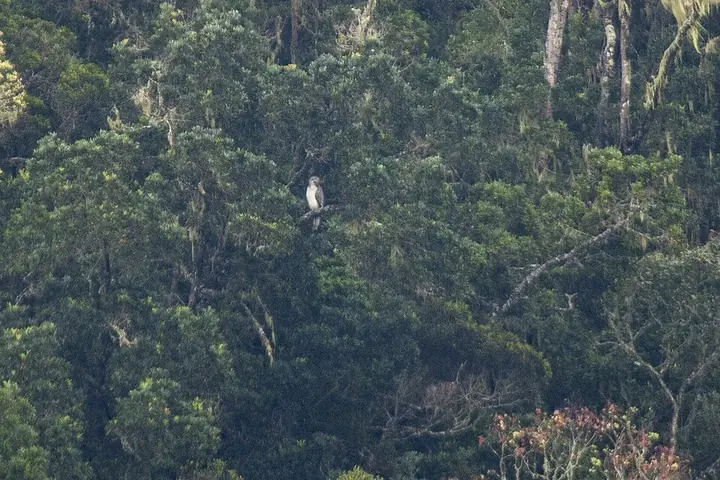
Misamis Oriental faces two bays, Macajalar and Gingoog, and rises inland to forested peaks such as Mount Balatukan and Mount Sumagaya. Mount Sumagaya has at least 52 plant species from 19 families, many of them important to the Higaonon, and 22 endemic bird species, including the Philippine eagle. Researchers credit Higaonon land management for protecting the mountain. Macajalar Bay supports fishing communities but has been hit by illegal logging, destructive fishing and mining, and industrial pollution. Higaonon communities help protect the forests of Misamis Oriental and neighboring Bukidnon.

A Philippine eagle in the wild (photographed in Mindanao)
Photo: Francesco Veronesi from Italy · CC BY-SA 2.0 · Wikimedia Commons
Philippine Eagle
Pithecophaga jefferyi
Critically Endangered
The national bird is one of the 22 endemic bird species recorded on Mount Sumagaya.
Field note: Report sightings and never disturb nests; killing the eagle is punishable by law.
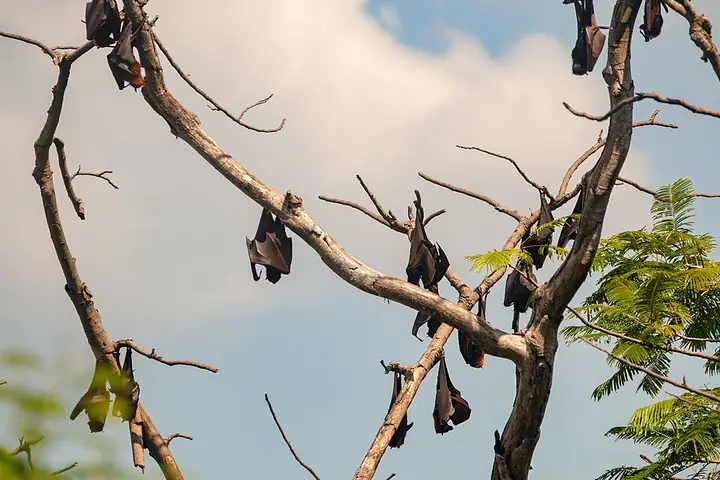
Giant golden-crowned flying foxes at a roost in the Philippines
Photo: Luke Marcos Imbong · CC BY-SA 4.0 · Wikimedia Commons
Golden-crowned Flying Fox
Acerodon jubatus
Endangered
One of the largest bats in the world, found only in the Philippines, including Mindanao. It roosts in forest and feeds on fruit, helping spread seeds.
Field note: Never disturb roosts; hunting flying foxes is illegal.
Meet all 65 Philippine animals in Hayop ng Pilipinas →
← All stories
Kasaysayan · Cagayan de Oro

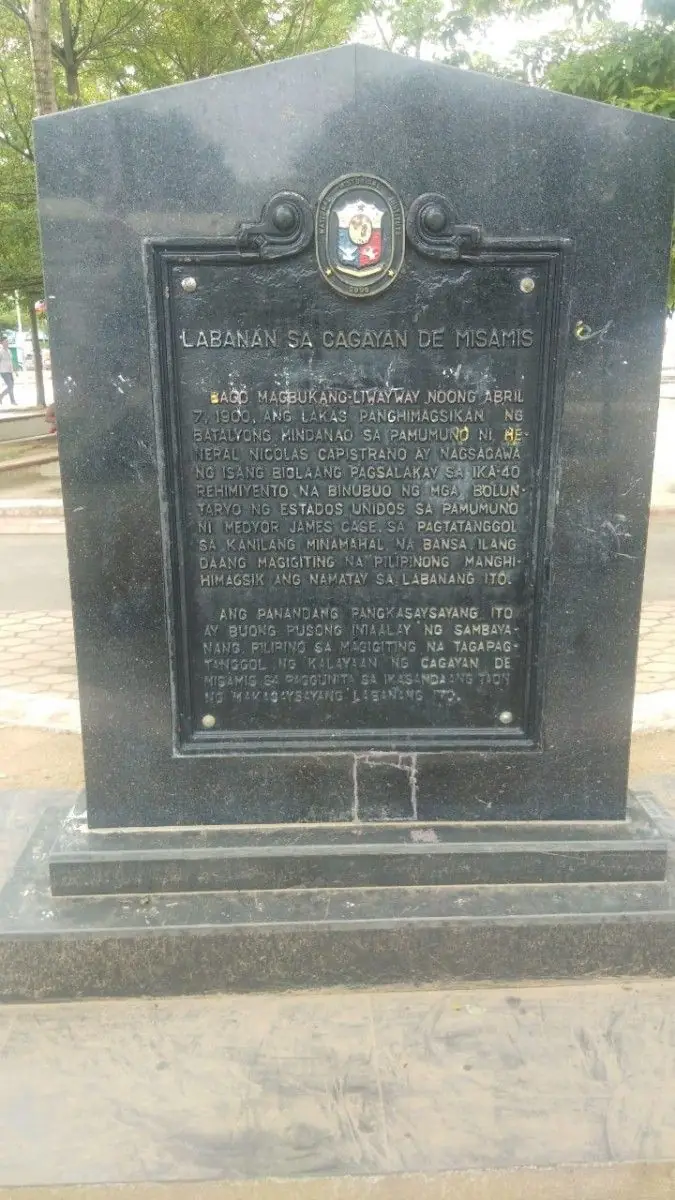
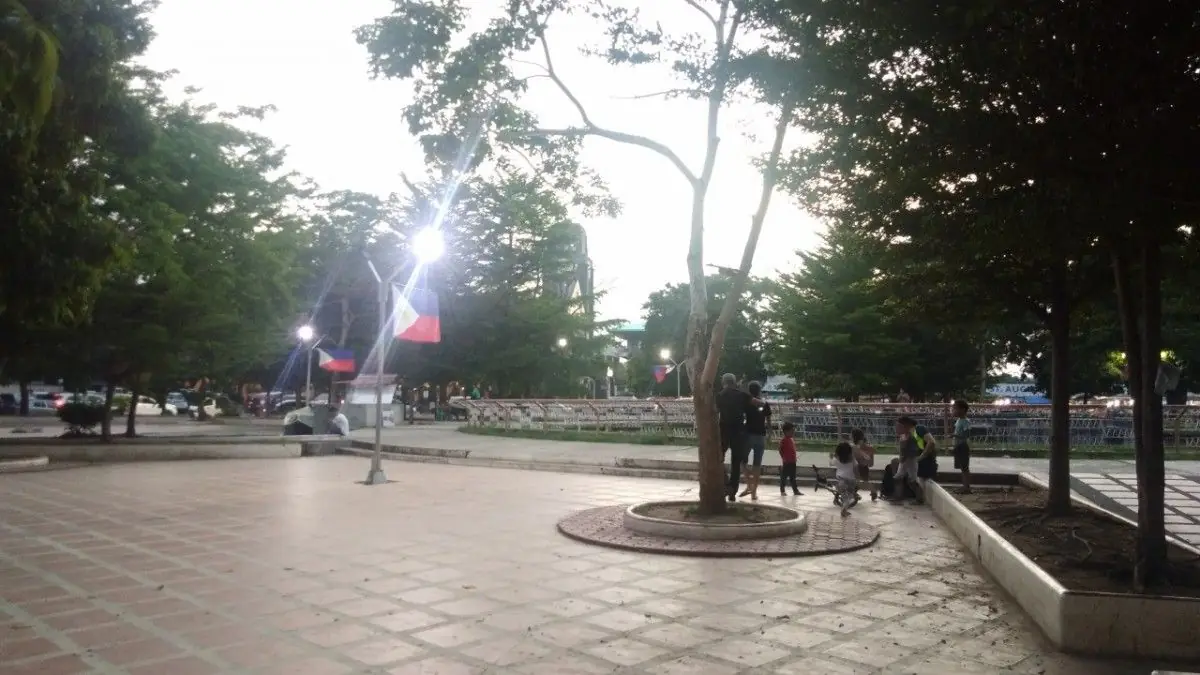
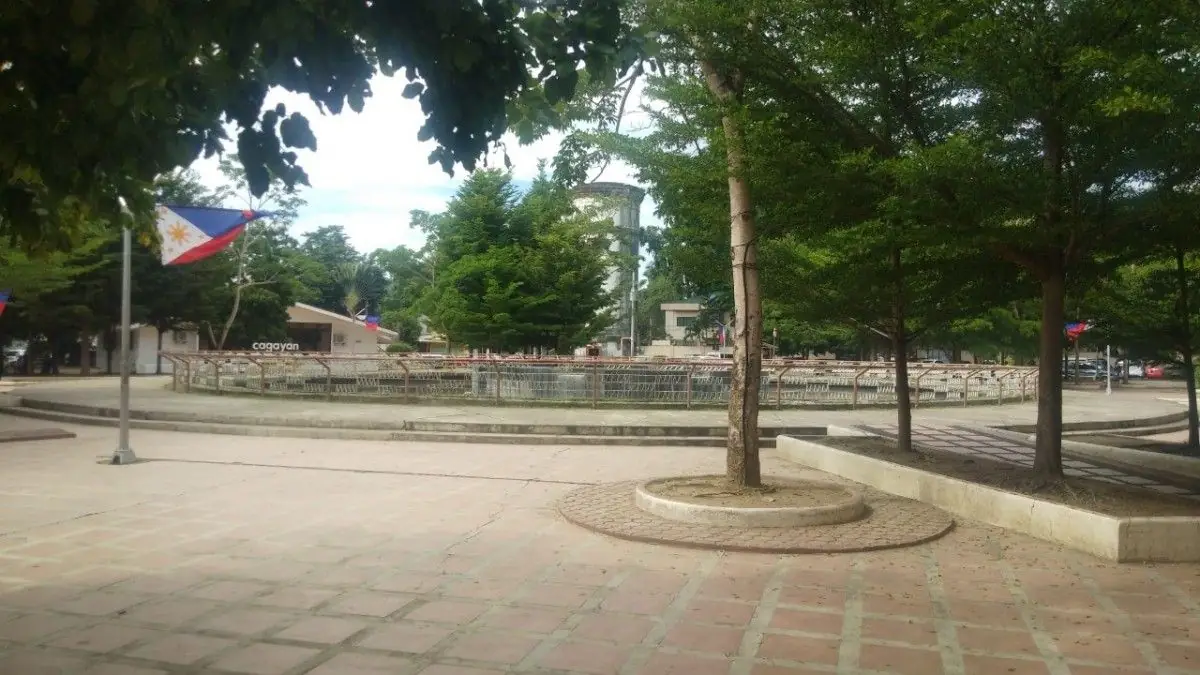
Gaston Park

Gaston Park is a historic plaza in Cagayan de Oro, in Misamis Oriental, named after a former mayor, Segundo Gaston. It sits beside the St. Augustine Metropolitan Cathedral and the city museum, a green and restful spot to spend an afternoon with family or friends.

The park carries a long history. In Spanish times it was the main plaza, and it served as an execution ground. Later, during the Philippine-American War around 1900, it became a training ground for local revolutionaries. A National Historical marker was placed here in 2000.

I missed the park's famous dancing fountain on my visit, but as they say here, there is always a next time.

Mga Larawan

Gaston Park stands where the history of Cagayan de Oro begins. In 1626 the Recollect friar Agustín de San Pedro persuaded Datu Salangsang, chief of the hilltop settlement of Himologan, to move his people down the Cagayan River to this spot. The town that grew around it became, in 1950, the City of Cagayan de Oro.

Sources · updated 4 October 2026
Photo credits (3)

Photos from Wikimedia Commons, used under the licences shown; some were resized. All photo credits