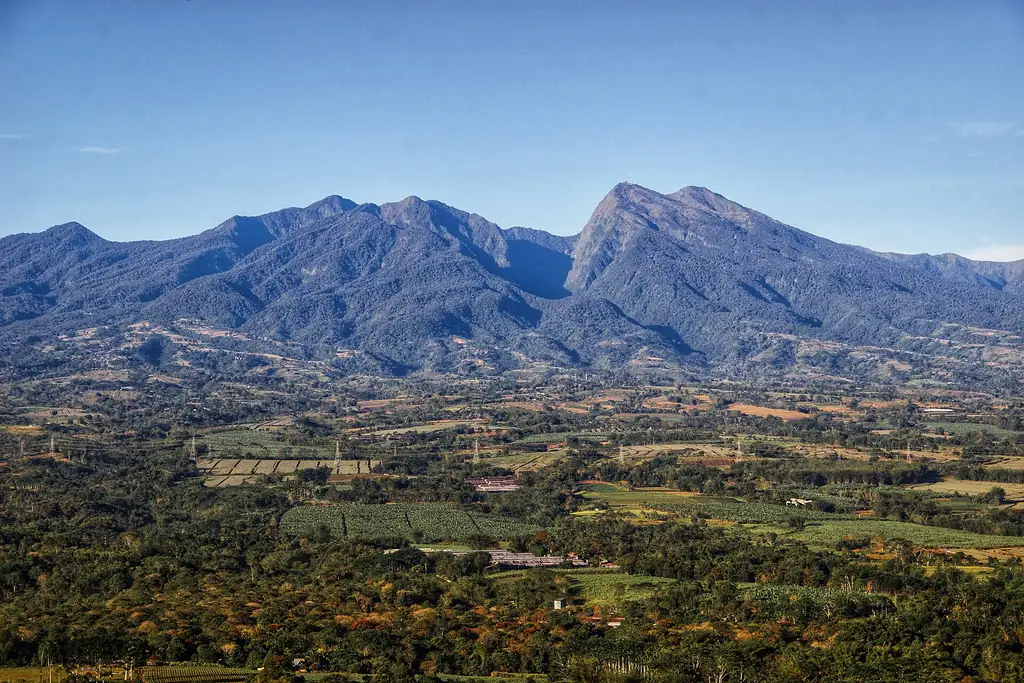
Mount Kitanglad Range seen from Panimahawa Ridge, Bukidnon
Photo: Aichiarchive · CC BY 4.0 · Wikimedia Commons
Map

Bukidnon

Northern Mindanao
Mindanao
Capital Malaybalay City
Population (2024) 1,601,902
Area 10,499 km²
Municipalities 20
Cities 2
Island Group Mindanao
Languages Binukid, Cebuano, Higaonon, Talaandig

Population: 2024 census (PSA). Area: land area.

Kapitbahay — Neighboring Provinces

Bukidnon is a landlocked plateau province in Northern Mindanao, sitting at an average elevation of 600 to 1,000 meters above sea level. Its cool climate and fertile volcanic soil support large-scale agriculture — pineapple and sugarcane plantations dominate the landscape, with Del Monte Philippines operating one of its largest facilities here. The province is home to seven indigenous tribal groups honored at the Kaamulan Festival: the Bukidnon, Higaonon, Talaandig, Manobo, Matigsalug, Tigwahanon and Umayamnon.

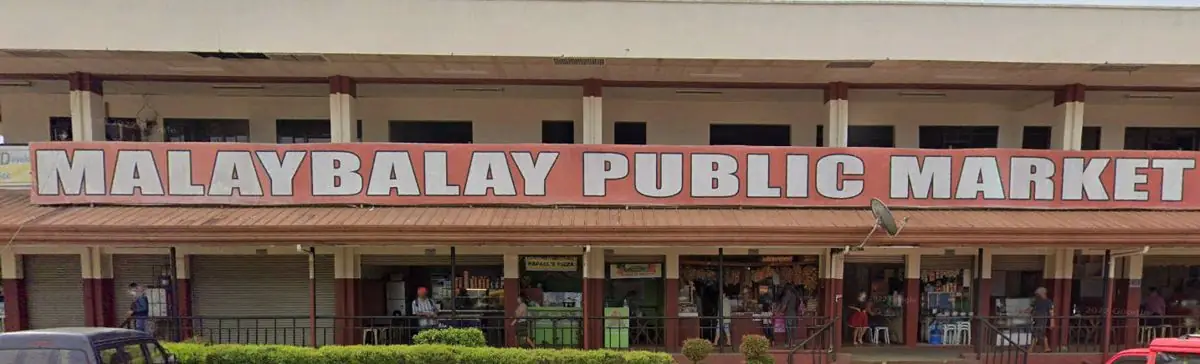
Malaybalay CityCapital
10,499 km²Area
20 + 2 citiesMunicipalities
MindanaoIsland Group
Northern Mindanao (X)Region

A Province of Highlands and Harvests

The province is the largest in Northern Mindanao and one of the largest in the country by land area. Its geography — a broad interior plateau ringed by mountain ranges — made it difficult to access for centuries, which allowed indigenous communities to maintain distinct cultural traditions. Today the same plateau feeds much of the country's canned pineapple supply and fuels a sugar refining industry centered in the towns of Quezon and Maramag.

★
Did You Know?

Del Monte Philippines began as the Philippine Packing Corporation, founded on 11 January 1926; its pineapple plantations in Bukidnon and neighboring Misamis Oriental now cover about 26,000 hectares.

Malaybalay, the capital, became a city in 1998 and serves as the administrative center of the province. The city is also the site of the Kaamulan Festival, a celebration of Bukidnon's indigenous peoples held from the second half of February to 10 March, the anniversary of the province's founding in 1917.

The 2024 census counted 1,601,902 people in Bukidnon's 20 municipalities and two cities, Malaybalay, the capital, and Valencia, the most populous local government. Its name means "highlander" or "mountain dweller". The province covers 10,499 square kilometers of the north-central Mindanao plateau at an average elevation of 915 meters, and it is the food basket of the region: a major producer of rice and corn, the country's second-largest corn producer, and a grower of sugar, coffee, rubber, pineapple, bananas, tomatoes and cut flowers. About 41 percent of the people are Cebuano by ethnicity and about 24 percent belong to the Bukidnon Lumad peoples, with Hiligaynon, Maranao and Boholano communities among the rest. The Visayan settlers who came down from the coast are still called dumagat, "sea people", by the Lumad.
The interior plateau of Bukidnon was long dominated by indigenous communities who resisted lowland and colonial intrusion. Spanish colonizers made only limited inroads into the highlands, and the province's formal administrative history begins relatively late compared to coastal areas of the Philippines.

Late 1850

Part of Misamis

Bukidnon became part of the Spanish province of Misamis. The whole interior was then called Malaybalay, and its people were known as Bukidnons, the highlanders, among them the Talaandig and the Manobo.

20 August 1907

Sub-province of Agusan

On the proposal of Commissioner Dean C. Worcester, Act No. 1693 created the province of Agusan with Bukidnon as its sub-province, and a month later, on 23 September, the rancheria of Malaybalay was named the sub-province's capital.

10 March 1917

Regular Province

Bukidnon became a regular province under Act No. 2711, which created the Department of Mindanao and Sulu. The anniversary is the closing day of the Kaamulan Festival.

1926–1928

Pineapple Arrives

The Philippine Packing Corporation, a subsidiary of the California Packing Corporation and later Del Monte Philippines, was founded on 11 January 1926 and tested pineapple on an experimental plot at Diklum. Commercial planting began in 1928 on about 4,300 hectares leased in Libona and Sumilao.

1942–1945

War and Liberation

Japanese troops entered Bukidnon in 1942, and Mount Capistrano became an evacuation area for civilians. In 1945 Filipino and American troops, aided by Bukidnon guerrillas, liberated the province.

15 May 1974

First Kaamulan

Malaybalay's vice mayor invited indigenous dancers to the town fiesta, the start of the Kaamulan Festival.

13 April 1981

Martial Law Years

Fr. Godofredo Alingal, S.J., an advocate for Bukidnon's poor, was assassinated in the convent of Kibawe. Bishop Francisco Claver of Malaybalay (1969–1984) was among the most prominent voices against martial law under Ferdinand Marcos, a period that also saw heavy logging of Bukidnon's forests.

Post-war migration from the Visayas and other parts of Luzon transformed the lowland portions of Bukidnon, while indigenous communities increasingly found themselves marginalized on ancestral lands. Recognition of indigenous land rights through the IPRA law in 1997 gave Bukidnon's seven IP groups formal legal standing to pursue ancestral domain claims.

Bukidnon's cultural life is shaped by its seven indigenous groups, each with distinct languages, rituals, and material traditions. The Talaandig are known for their music — particularly the agung gong ensemble — and for their beadwork and woven textiles. The oral literature of the Bukidnon peoples includes antoka (riddles), basahan (proverbs), kaliga (ceremonial songs), limbay (lyric poems), sala (love songs), idangdang (ballads), ulaging (epics) and nanangon (folktales); their supreme deity, Magbabaya, the ruler of all, commands lesser gods of the rivers, the earth, night and day.

Kaamulan Festival

Kaamulan began on 15 May 1974, when Malaybalay's vice mayor, Edilberto Mamawag, invited indigenous Bukidnon people to dance at Plaza Rizal during the town fiesta for San Isidro Labrador. The performances proved so popular that the festival grew into a province-wide celebration of the seven tribes, held in Malaybalay from the second half of February to 10 March, with rituals, dances and indigenous games.

★
Woven Traditions

Talaandig weavers produce the hinabol, a traditional backstrap loom textile distinguished by geometric patterns that encode clan identity and cosmological meaning. Each piece can take weeks to complete.

WS

Waway Saway

Talaandig Artist and Cultural Ambassadorb. 1965

Waway Saway is a Talaandig visual artist, musician, and cultural advocate from Lantapan, Bukidnon. He has worked to document and revitalize Talaandig musical traditions and has exhibited internationally. He is one of the most prominent indigenous voices from Bukidnon.

The seven indigenous groups of Bukidnon share certain cultural elements — the primacy of the datu system, the importance of the pamaas ceremonial gathering, and the use of traditional instruments including the kubing jaw harp and various gong ensembles — while maintaining distinct linguistic and ritual identities.

See the great festivals in Pista ng Pilipinas →

Bukidnon's food culture reflects its indigenous heritage and its role as an agricultural province. Corn is a staple in highland communities rather than rice, and it appears in everyday meals in forms ranging from boiled ears to ground cornmeal porridge. The province's cooler climate supports vegetables less common in coastal areas — carrots, lettuce, and highland greens are grown here for supply to Mindanao markets.

Sinuglaw

A combination of sinugba (grilled pork) and kinilaw (raw fish cured in vinegar and citrus), sinuglaw is popular across Mindanao. In Bukidnon, it often uses freshwater fish from local rivers alongside grilled pork belly, dressed with native vinegar, ginger, and red onion.

Corn Gruel (Lugaw sa Mais)

Ground white corn cooked to a porridge consistency, eaten with salted fish or dried meat. A staple in indigenous highland communities, it is heavier and more filling than rice-based lugaw and carries a slightly nutty flavor from the corn.

Kinilaw na Tilapia

Bukidnon / Mindanao
20 minutesPrep
0 minutes (cured)Cook
4Serves
Ingredients
  • 500g, dicedFresh tilapia fillets
  • ½ cupNative cane vinegar
  • 3 tablespoonsCalamansi juice
  • 2 tablespoons, finely juliennedGinger
  • 1 medium, thinly slicedRed onion
  • 2, slicedRed chili
  • to tasteSalt
  • 2 stalks, choppedSpring onion
Method
  1. Dice tilapia fillets into 2cm cubes. Rinse briefly in cold water and pat dry.
  2. Combine fish with vinegar and calamansi juice. Toss to coat. Let sit for 10 minutes — the acid will begin to cure the fish, turning the flesh opaque.
  3. Drain most of the liquid. Add ginger, red onion, and chili. Toss well.
  4. Season with salt. Let sit another 5 minutes.
  5. Garnish with spring onion and serve immediately with warm rice or as a standalone dish.
Cook's note

Use the freshest possible fish. Native cane vinegar from Bukidnon gives a milder, slightly sweet cure compared to coconut or sugarcane vinegar from other regions.

✦
Pineapple Country

Fresh pineapple in Bukidnon is far superior to anything canned. Local varieties grown outside the Del Monte plantation — particularly smaller native types — have a more complex flavor. Buy them from roadside sellers along the Sayre Highway.

Bukidnon is linguistically complex. The province has seven indigenous languages corresponding to its seven IP groups, with Binukid (also called Bukidnon) being the most widely spoken. Cebuano, brought by Visayan migrants, is now the dominant everyday language in most lowland towns and markets. Filipino and English are used in government and schools.

Indigenous Languages of Bukidnon

Widest IP languageBinukid
Northern highlandsHigaonon
Talakag areaTalaandig
Several dialectsManobo
CebuanoLingua franca

Binukid belongs to the Manoboic branch of the Austronesian language family. It has a rich oral literature tradition — epic poems called ulaging are chanted at ceremonial occasions. These epics can run for hours or days and encode the cosmology, history, and laws of Binukid communities.

★
Who Lives Here

About 41 percent of Bukidnon's people are Cebuano by ethnicity, 24 percent belong to the Bukidnon Lumad peoples, 12.7 percent are Hiligaynon, about 8 percent Maranao and 7.4 percent Boholano. Cebuano is the lingua franca; minority languages include Higaonon, Binukid, Ilianen, Matigsalug, Hiligaynon, Maranao, Maguindanao, Iranun, Ilocano and Waray.

Language shift toward Cebuano has accelerated in recent decades. Many younger members of indigenous communities in lowland Bukidnon speak Cebuano as their primary language, with indigenous languages increasingly confined to ritual contexts or elder speakers in more remote highland areas.

Bukidnon is accessible from Cagayan de Oro, the regional center of Northern Mindanao, about 90 kilometers to the north. The Sayre Highway, the main artery through the province, crosses pine-scented highlands before descending into the Cotabato Basin. Travel within the province requires planning — distances between attractions are significant and public transport is limited outside main routes.

~2 hours by busFrom CDO
~4 hours via Sayre HwyFrom Davao
Laguindingan (CDO), 90kmAirport
March–May (dry season)Best months

Dahilayan Adventure Park

Located in Manolo Fortich at 1,500 meters elevation, Dahilayan has a dual zipline more than a kilometer long. The surrounding pine forest and cool temperatures make it feel unlike anywhere else in Mindanao. Pine forests, a small ski-like park, and mountain cabins draw large numbers of visitors on weekends.

Del Monte Pineapple Plantation

The scale of Del Monte's plantation becomes apparent when driving the Sayre Highway — kilometers of pineapple fields stretch to the horizon. Guided tours of the plantation are available and offer a look at industrial-scale tropical agriculture. The company town of Manolo Fortich has retained an old-fashioned order uncommon in Philippine provinces.

Lake Apo and Matigsalog Communities

Lake Apo is a green crater lake of about 24 hectares and up to 26 meters deep, at about 640 meters elevation in Barangay Guinoyoran, Valencia City, some 11 kilometers from the city center. In the late 1990s it was named the cleanest inland body of water in Northern Mindanao. Local guides can arrange visits.

Monastery of Transfiguration

A Benedictine monastery in Malaybalay built into a hillside with a commanding view of the Bukidnon plateau. Its pyramid-shaped church was designed by the National Artist Leandro Locsin. It is open to visitors and offers retreat facilities. The architecture is simple and the grounds are quiet — an unusual find in Mindanao.

✦
Getting Around

Renting a vehicle in Cagayan de Oro is the most practical way to explore Bukidnon. Buses run regularly along the Sayre Highway between CDO and Malaybalay, but reaching most attractions requires a motorcycle or private car.

Bukidnon holds some of the highest mountains in the Philippines. Mount Dulang-dulang in the Kitanglad range, at 2,938 meters, is the second highest in the country, and Mount Kitanglad (2,899 m), an inactive volcano, and Mount Kalatungan (2,860 m) are the fourth and fifth. The Kitanglad range was proclaimed a natural park in 1996 and became a full protected area under Republic Act 8978 in 2000; it shelters more than 600 rare and endemic species, including Rafflesia schadenbergiana, the world's second-largest flower, and is a nesting place of the Philippine eagle. The province has the largest concentration of watersheds in Mindanao, with six major rivers, the Pulangi, Tagoloan, Cagayan, Manupali, Muleta and Bobonawan, whose canyons cut the plateau; the Pulangi, the longest, flows on to the Rio Grande de Mindanao. In the east, the Pantaron range is home to the Philippine eagle, the Philippine deer, the Philippine flying lemur and the Mindanao gymnure. Heavy logging during the Marcos years stripped much of the old forest.

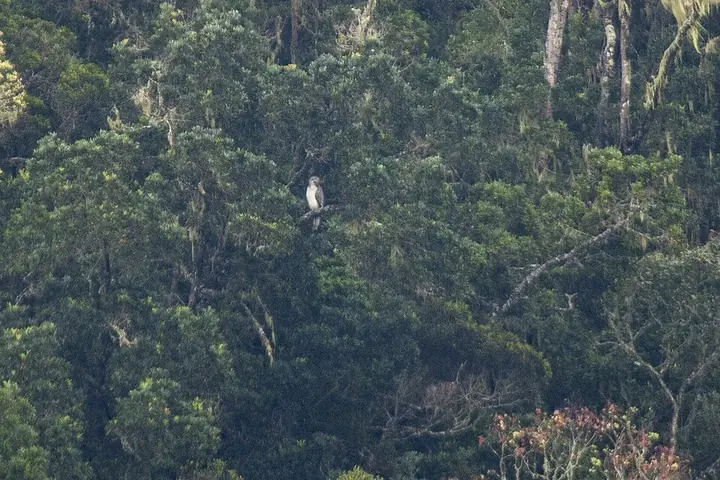
A Philippine eagle in the wild (photographed in Mindanao)
Photo: Francesco Veronesi from Italy · CC BY-SA 2.0 · Wikimedia Commons
Philippine Eagle
Pithecophaga jefferyi
Critically Endangered
The national bird and one of the largest eagles in the world, found only in the Philippines. Mount Kitanglad is one of its nesting places, and it is also found on Mount Kalatungan and Mount Musuan and in the Pantaron range.
Field note: Report sightings to the park office or the Philippine Eagle Foundation and never disturb nests. Killing one is punishable by up to 12 years in prison.
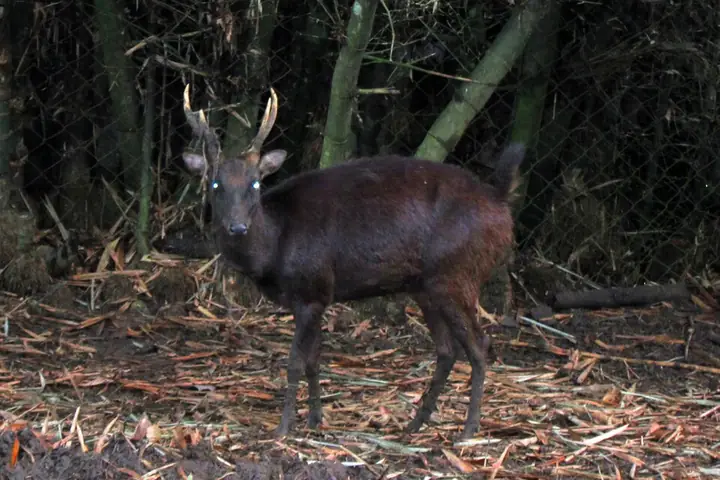
A male Philippine deer (photographed near Davao)
Photo: Gregg Yan · CC BY-SA 3.0 · Wikimedia Commons
Philippine Deer
Rusa marianna
Vulnerable
A small brown deer found only in the Philippines, living in forests from the lowlands to the mountains. In Bukidnon it survives in the Pantaron range, but hunting and forest loss have made it Vulnerable.
Meet all 65 Philippine animals in Hayop ng Pilipinas →
← All stories
Kasaysayan · Malaybalay

Malaybalay, Heart of Bukidnon

Malaybalay, the capital of Bukidnon, sits in the heart of Mindanao, a meeting place of many peoples. Long before the Spanish came, it was home to indigenous groups, among them the Talaandig, Higaonon, Manobo, and Matigsalug, part of the seven tribes the province honors today.

The Spanish named the settlement Malabalay, said to mean the floodplain of the great river, later softened to Malaybalay. It became a municipality in 1907 and a city on 11 February 1998. During the Second World War it served as a headquarters of the Commonwealth Army and a stronghold of the resistance.

Above the city, on a hill, stands the Monastery of the Transfiguration, a Benedictine community whose pyramid church was designed by the National Artist Leandro Locsin. And each year the city fills for the Kaamulan Festival, a gathering that showcases the music, dance, and rituals of Bukidnon's tribes.

Mga Larawan

Sources · updated 4 October 2026
Photo credits (3)

Photos from Wikimedia Commons, used under the licences shown; some were resized. All photo credits