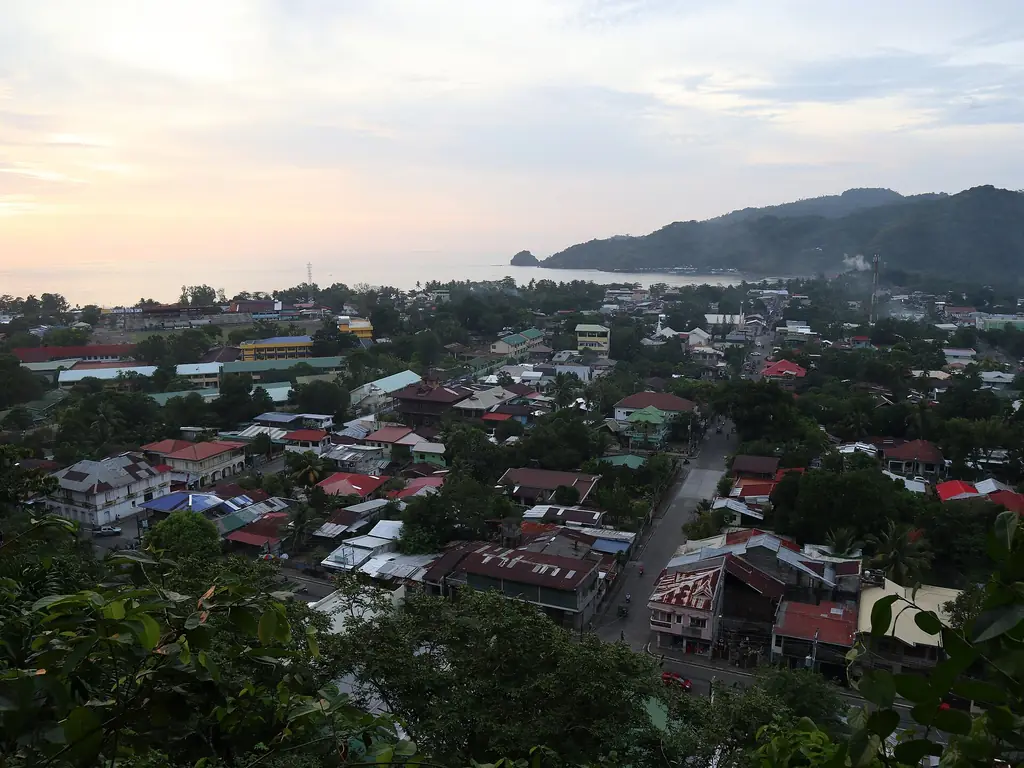
Rooftops of Dapitan City and the bay seen from Ilihan Hill
Photo: Patrickroque01 · CC BY-SA 4.0 · Wikimedia Commons
Map

Zamboanga del Norte

Zamboanga Peninsula
Mindanao
Capital Dipolog City
Population (2024) 1,067,067
Area 7,301 km²
Municipalities 25
Cities 2
Island Group Mindanao
Languages Cebuano, Subanon, Chavacano

Population: 2024 census (PSA). Area: land area.

Kapitbahay — Neighboring Provinces

Zamboanga del Norte occupies the northern portion of the Zamboanga Peninsula — the long arm of Mindanao that extends westward into the Sulu Sea. Its capital, Dipolog City, sits on the Mindanao Sea coast facing the Visayas, while the peninsula's interior rises to forested mountain ranges that form the spine between the north and south coasts.

Dipolog CityCapital
7,301 km²Area
25 + 2 citiesMunicipalities
MindanaoIsland Group

The province is the largest in the Zamboanga Peninsula region and one of the most geographically diverse in Mindanao — from the coastal lowlands of Dipolog and Dapitan facing the Visayan islands across the Bohol Sea, to the interior mountain forests of the Zamboanga range, to the western coast on the Sulu Sea. Dapitan City, in the province's northern zone, is the site of Jose Rizal's exile.

★
Rizal's Exile at Dapitan

Jose Rizal was exiled to Dapitan from 1892 to 1896 — four years during which he practised medicine, conducted scientific research, taught local children, and built infrastructure for the town. He documented specimens that were later named after him by European naturalists, oversaw the construction of a water system, and began the romance with Josephine Bracken that he would never complete before his execution.

The 2024 census counted 1,067,067 people in Zamboanga del Norte, in 25 towns and two cities, Dipolog and Dapitan. The province is bordered by the Sulu Sea to the north and west, Misamis Occidental to the northeast and Zamboanga del Sur to the south. Cebuano is the main language, and Chavacano, Subanon, Tausug and Sama are also spoken.
The Peninsula and the Sea

The Zamboanga Peninsula's northern coast — facing the Bohol and Mindanao Seas — was part of the wider Visayan maritime world before Spanish colonization. The communities at Dipolog, Dapitan, and the other river-mouth settlements traded with Cebu, Bohol, and the islands of the Visayas. The Subanen people occupied the interior highlands, and their communities predated the coastal settlements by centuries.

1565

Legazpi at Dapitan

Dapitan was already a thriving settlement, led by Pagbuaya, when the Legazpi expedition arrived in 1565. Pagbuaya's people had moved there from Bohol a year earlier. Pagbuaya's son Pedro Manooc was among the first converts to Christianity.

1892–1896

Rizal's Exile at Dapitan

Jose Rizal was exiled to Dapitan by the Spanish colonial government following the publication of his novels and his perceived involvement with the reform movement. During four years of supervised exile, he practised medicine serving thousands of patients, conducted natural history research, built a water system for the town, established a school, and corresponded extensively with scientists in Europe.

1952

Province Established

Republic Act No. 711 of 6 June 1952 divided the old Zamboanga province into two, Zamboanga del Norte and Zamboanga del Sur, with Dipolog as the northern capital.

2000

Rizal Memorial Protected Landscape

The old Rizal farm at Talisay, Dapitan, where Rizal lived during his exile, was declared the José Rizal Memorial Protected Landscape in 2000.

2019

Buklog on the UNESCO List

UNESCO inscribed the Buklog, the thanksgiving ritual system of the Subanen of the Zamboanga Peninsula, on its List of Intangible Cultural Heritage in Need of Urgent Safeguarding at the end of 2019. The ritual is now rarely performed.

Zamboanga del Norte's culture is predominantly Christian and Visayan in orientation — the northern coast's proximity to the Visayan islands, and the historical Jesuit mission tradition, produced communities that are culturally closer to Cebu and Bohol than to the Muslim communities of the southern peninsula. The interior mountains are home to the Subanen people, who maintain their own traditions separate from both the coastal Christian and the southern Muslim worlds.

Subanen People

The Subanen — whose name means 'river people' — are the indigenous inhabitants of the Zamboanga Peninsula interior. They are one of the largest indigenous groups in Mindanao, with communities across all three Zamboanga provinces. The Subanen maintain slash-and-burn agriculture, ritual practices, and oral traditions centred on the upland forest environment. Their resistance to both Spanish missionary activity and Maguindanao raiding kept the mountain interior outside colonial control throughout the Spanish period.

Dapitan Festival

Dapitan City celebrates its Jesuit heritage and the Rizal connection through the annual Dapitan Festival, which includes cultural presentations, a re-enactment of historical events, and activities centred on the Rizal Shrine. The festival draws visitors from across the Visayas and Mindanao who come specifically for the Rizal heritage site.

★
Rizal the Scientist

During his exile in Dapitan, Jose Rizal collected natural history specimens — insects, plants, reptiles — and sent them to European naturalists. Several species were subsequently named after him, including Draco rizali (a flying lizard), Apogonia rizali (a beetle), and Nycteris rizali (a bat). Rizal the nationalist is the one remembered; Rizal the scientist is mostly forgotten.

See the great festivals in Pista ng Pilipinas →

Zamboanga del Norte's cuisine shares the Cebuano and northern Mindanao tradition — fresh seafood from the Bohol Sea, coconut milk preparations, and the kinilaw technique dominant across the province's coastal restaurants. Dipolog City has developed a food culture befitting its status as the peninsula's commercial hub.

Kinilaw na Tuna (Dipolog Style)

The Dipolog kinilaw uses freshly caught yellowfin or skipjack tuna from the Bohol Sea, cut thick and dressed with local coconut vinegar, ginger, red onion, and the small, intensely flavoured bird's eye chilli grown in the interior municipalities. The coconut vinegar of the northern peninsula has a character distinct from the cane vinegar used further east — lighter, more aromatic.

Sinugba na Baboy (Charcoal Grilled Pork)

Pork ribs or belly marinated in a mixture of calamansi juice, soy sauce, garlic, and brown sugar, then grilled over coconut shell charcoal until the surface is caramelised. The preparation is Cebuano in origin and ubiquitous across northern Zamboanga peninsula. Served with rice and a dipping sauce of local vinegar and chilli.

✦
Dipolog City Food

The commercial district of Dipolog City has a range of restaurants and carinderias along the main street near the public market. The morning market is active from before dawn — fresh fish from the overnight catch is available by 6am. The city's position as the peninsula hub means the food variety is broader than in most provincial capitals of comparable size.

Cebuano is the dominant language of Zamboanga del Norte's coastal communities — a reflection of the longstanding connections between the northern peninsula and the Visayan world. Subanon — the language of the Subanen people — is spoken across the interior highland communities of all three Zamboanga provinces. Filipino and English are used in government and education.

CebuanoMain language
SubanonIndigenous
Chavacano, Tausug, SamaAlso spoken
Filipino, EnglishSecond languages

Subanon Language

Subanon is spoken across the Zamboanga Peninsula interior by one of the larger indigenous communities in Mindanao. It has several dialects corresponding to geographic distribution across the mountain range. The language is a member of the Subanic branch of the Philippine language family, separate from both the Visayan languages of the coast and the Maguindanaon of the south.

★
The Buklog Ritual

The Subanen buklog is a thanksgiving ritual led by a timuay (village head) and a balyan (ritual specialist), linking people, nature and the spirit world through prayer, offerings, music and dance. UNESCO listed it in 2019 as heritage in need of urgent safeguarding.

Zamboanga del Norte is reached by air to Dipolog City's airport — with connections from Cebu and Manila — or by overnight ferry from Cebu. The Rizal Shrine at Dapitan is the primary heritage destination and easily combined with Dipolog City. The interior mountain areas require four-wheel drive vehicles and local knowledge.

~1 hr (air) or overnight ferryFrom Cebu
~1.5 hrs (air)From Manila
Dapitan City (30 min from Dipolog)Rizal Shrine
Nov–MayBest season
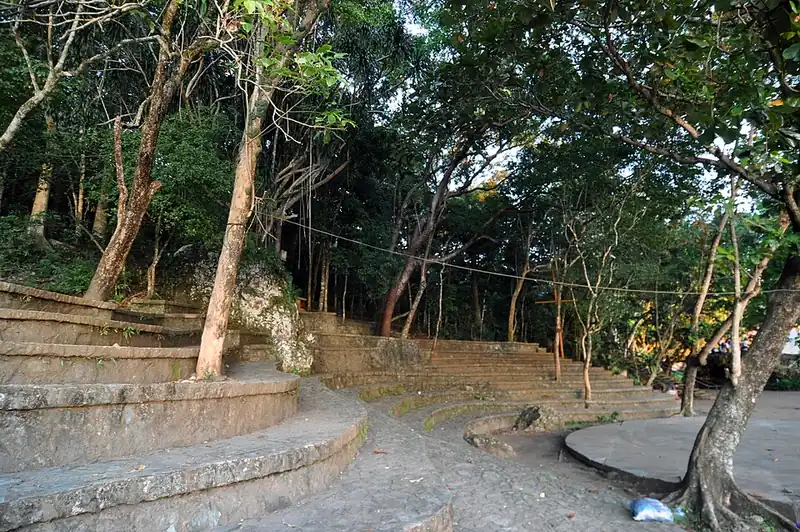
Shaded paths and trees at the Rizal Shrine in Dapitan
Photo: Iamjepoi · CC BY-SA 4.0 · Wikimedia Commons

Rizal Shrine, Dapitan

The compound where Jose Rizal lived during his exile from 1892 to 1896 — his house, the clinic where he practised medicine, the school he built for local children, and the relief map of Mindanao he created from memory in the garden. The shrine is one of the most significant Rizal heritage sites in the Philippines and a place of pilgrimage for Filipino students and historians.

Dapitan City Waterfront

The historic waterfront of Dapitan — the same shoreline Rizal saw from his exile compound — is now a public promenade with views across the Bohol Sea toward the Visayan islands. The town retains some of its colonial-era street pattern and the old church on the plaza.

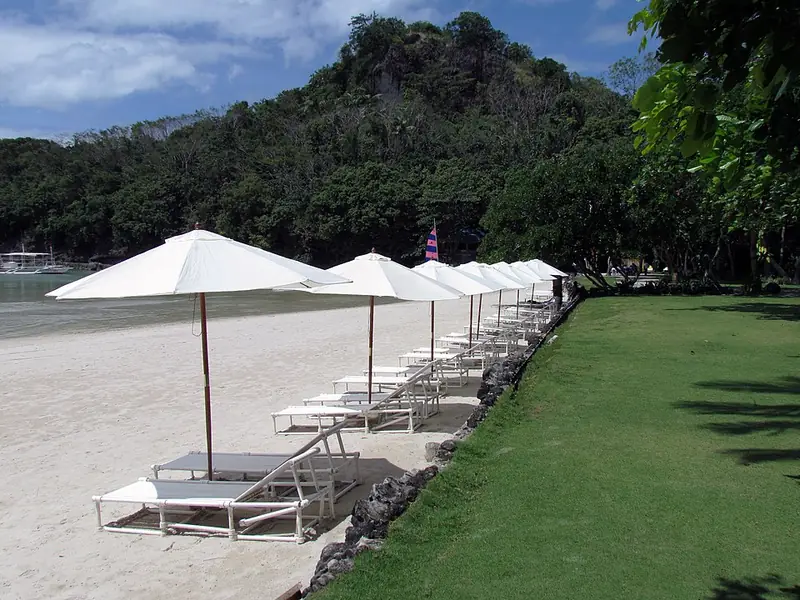
Beach umbrellas and lawn at Dakak Beach Resort
Photo: Cabajar · CC BY-SA 3.0 · Wikimedia Commons

Dakak Beach Resort

A resort development on the coast of Dapitan City — one of the better-known beach destinations in the Zamboanga Peninsula, with clear water and white sand in a cove below the coastal hills. The resort has been operating since the 1990s and is the standard leisure destination for visitors to the province.

✦
Dapitan from Dipolog

Dipolog City is the transport hub; Dapitan is 30 minutes east by road. The two cities are connected by frequent jeepney and van service throughout the day. The Rizal Shrine is best visited in the morning before the heat builds. Allow two to three hours for the shrine complex, including the garden and the replica of the map.

Rizal spent much of his exile in Dapitan collecting shells, insects, frogs and lizards with his students, and sent specimens to the museum in Dresden. European scientists named several of them after him. Today the old Rizal farm at Talisay is a protected landscape, and the forests of the peninsula's interior are home of the Subanen.

Günther's Flying Lizard
Draco guentheri
Endemic to the southern Philippines
A gliding lizard that spreads rib-supported "wings" to sail between trees. Rizal collected it in Dapitan in 1893 and sent it to Europe, where it was named Draco rizali; it is now known as Draco guentheri.
Field note: Watch for it on tree trunks in forest edges. Never capture wild lizards.
Rizal's Beetle
Apogonia rizali
Named after Rizal
A small beetle, about an inch long, described from specimens Rizal sent from Dapitan. It is the only species he collected whose name in his honor is still in use.
Meet all 65 Philippine animals in Hayop ng Pilipinas →

Four Years in Dapitan

In July 1892 the Spanish colonial government deported José Rizal to Dapitan, a town on the northern coast of the Zamboanga Peninsula, far from Manila and the reform movement he had helped to start. The Jesuits there tried, and failed, to win him back to the Church.

Rizal made the town his project. He built a school, a hospital and a water supply system, and he taught, farmed and practiced medicine. He collected insects, reptiles and plants and sent specimens to scientists in Europe, who named several species after him. His friend Ferdinand Blumentritt kept him in touch with them through a stream of letters. In Dapitan he also met Josephine Bracken, and the two lived together in Talisay.

Rizal had volunteered to serve as a doctor in Cuba, and on 1 August 1896 he left Dapitan with the governor-general's permission. The Philippine Revolution broke out while he was on his way, and he was arrested at a stop in Barcelona on 6 October 1896, sent back to Manila and put on trial. He left behind a school, a water supply and a town that had had a doctor. His old farm at Talisay is now the José Rizal Memorial Protected Landscape.

Sources · updated 4 October 2026
Photo credits (3)

Photos from Wikimedia Commons, used under the licences shown; some were resized. All photo credits