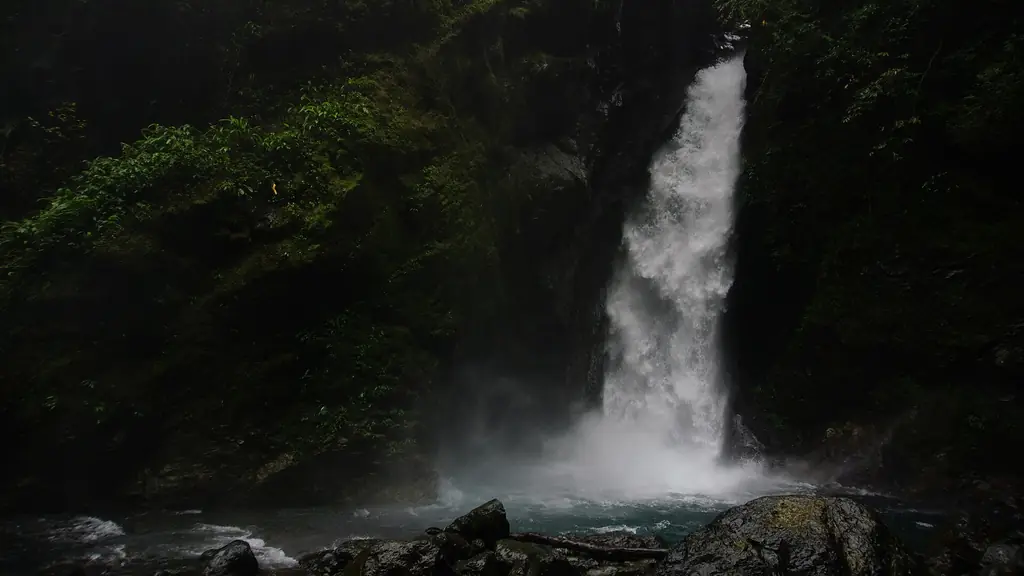
Ditumabo Mother Falls in the forest of San Luis, Aurora
Photo: Kleervyu · CC BY-SA 4.0 · Wikimedia Commons
Map

Aurora

Central Luzon
Luzon
Capital Baler
Population (2024) 240,824
Area 3,147 km²
Municipalities 8
Cities 0
Island Group Luzon
Languages Tagalog, Ilocano, Kasiguranin

Population: 2024 census (PSA). Area: land area.

Kapitbahay — Neighboring Provinces

Aurora lies on the eastern coast of Luzon, between the Sierra Madre and the Philippine Sea of the Pacific Ocean. Mountains cover most of the province, and its towns sit on a narrow strip of coast that is often hit by typhoons.

8Municipalities
3,147 km²Area
1979Province since
BalerCapital

Baler, the capital, sits between mountains and sea — a town that has survived sieges, typhoons, and the slow discovery of its own beauty by the outside world. The Sierra Madre, the longest mountain range in the Philippines, forms the western spine, sheltering communities that have kept their own languages, practices, and understanding of the land for centuries.

★
Did you know

Aurora province takes its name from Aurora Aragon Quezon, wife of President Manuel L. Quezon. Born in Baler, she was killed in an ambush on the Baler–Bongabon road in 1949.

It is a province that rewards the traveler willing to make the drive through the mountains — and punishes no one who stays.

The 2024 census counted 240,824 people in Aurora's 8 municipalities. Most people are Tagalog or Ilocano, and Kasiguranin is spoken around Casiguran. Baler is the birthplace of both Aurora Aragon Quezon and her husband, President Manuel L. Quezon. Only about 14 percent of the province is flat; the rest is the steep eastern side of the Sierra Madre.

Before the Spanish

Long before the Spanish arrived, the Agta, among the oldest inhabitants of Luzon, lived in the forests and along the rivers, and the coast was settled by people trading by boat with Tayabas and Palanan. The Bugkalot (Ilongot) lived in the mountains to the west.

1609

Franciscan Missions at Baler and Casiguran

Juan de Salcedo passed along this coast in 1572. Franciscan missionaries founded missions at Baler and Casiguran in 1609. For most of the colonial period the area stayed a remote outpost, governed in turn from Pampanga, Nueva Ecija and Tayabas.

The Siege of Baler — 337 Days

337 daysDuration
About 50 menGarrison
About 30Survived
2 June 1899Ended
1 July 1898

The Siege Begins

Filipino revolutionaries attacked Baler on the night of 30 June 1898, and its Spanish garrison of about 50 men fell back into the stone church of San Luis Obispo de Tolosa. Their commander, Captain Enrique de las Morenas, later died of illness, and command passed to Lieutenant Saturnino Martín Cerezo.

November 1898

Cerezo Refuses to Believe It

Newspapers left on the church steps reported that Spain was leaving the Philippines. Martín Cerezo thought they were a trick and refused to surrender. In December the Treaty of Paris ended the Spanish–American War.

April 1899

The USS Yorktown

The American gunboat USS Yorktown anchored in Baler Bay on 11 April 1899 to try to relieve the garrison. Filipino forces killed several of the landing party and captured Lieutenant James Gilmore and nine others, who were held until December.

2 June 1899

The Garrison Marches Out

Martín Cerezo finally accepted that the war was over, and the survivors marched out of the church. President Emilio Aguinaldo decreed that they were to be treated "not as prisoners of war but as friends", and they reached Barcelona on 1 September 1899.

MC

Saturnino Martín Cerezo

Spanish Commander, Siege of Baler1866 — 1945

The lieutenant who held the Baler church for 337 days. He later compiled El sitio de Baler, his account and documents of the siege. The siege is the subject of the Spanish films of 1945 and 2016 and of the 2008 Filipino film Baler. Since 2003, 30 June has been Philippine–Spanish Friendship Day in its memory.

A Province Named After a Woman

28 April 1949

Aurora Aragon Quezon Killed

The widow of President Manuel L. Quezon, born in Baler in 1888, was traveling on the Baler–Bongabon road to open a hospital in Baler named after her husband. Armed men ambushed her party at Bongabon, Nueva Ecija, killing her, her daughter María Aurora and others. The Hukbalahap were widely blamed, though their leader denied it.

1951

Sub-province of Quezon

Republic Act No. 648 made Aurora, named in her memory, a sub-province of Quezon on 14 June 1951.

1968

Casiguran Earthquake

On 2 August 1968 a magnitude 7.6 earthquake struck with its epicenter at Casiguran.

1979

Province of Aurora

Batas Pambansa Blg. 7 of 21 November 1978 made Aurora a regular province, confirmed by a plebiscite in May 1979; the province dates its founding to 13 August 1979. It was moved from Southern Tagalog to Central Luzon in 2002.

AA

Aurora Aragon Quezon

First Lady of the Philippines1888 — 1949

Born in Baler, she was First Lady from 1935 to 1944 and went into exile in the United States with her husband during the war. She was killed on the Baler–Bongabon road on her way to open a hospital. The province and the Aurora Memorial National Park bear her name.

Aurora's cultural life sits at the intersection of several worlds. The Catholic faith, planted by Franciscans four centuries ago, still anchors the lowland calendar — fiestas, processions, and the rhythm of the parish year define community life in Baler and the coastal municipalities.

The Agta — Oldest Inhabitants

The Agta, a Negrito people who have lived in the Sierra Madre for thousands of years, maintain traditions tied to forest and river. Anthropologists studying the Casiguran Dumagat Agta describe 1965 to 1980 as a transition from a hunter-gatherer life to farming and wage work, as logging and settlers reached the forest.

★
Living Heritage

Several Agta (Dumagat) communities still live in the hills and along the rivers of the interior, fishing, hunting and trading with lowland neighbors.

The Ilongot — Storytellers of the Interior

The Bugkalot (Ilongot), about 18,000 people in 2020, live in the southern Sierra Madre and Caraballo Mountains, mainly in Nueva Vizcaya and Nueva Ecija, with communities along the mountain border in Aurora. They usually live close to rivers.

RR

Renato Rosaldo

American Anthropologist1941 — present

Rosaldo's book Ilongot Headhunting, 1883–1974 (1980) and his essay "Grief and a Headhunter's Rage" are widely read works of cultural anthropology based on his fieldwork among the Ilongot.

Surf Culture

Surfing came to Baler with Hollywood: the helicopter-attack and surfing scenes of Apocalypse Now were filmed here in 1976–77, and the locals' first contact with surfing during the filming is credited with starting the surf culture of Aurora and of the Philippines.

✦
Baler Surfing Festival

The northeast monsoon (amihan), from about October to March, brings the most consistent swells to Sabang Beach,.

See the great festivals in Pista ng Pilipinas →

Aurora eats from the Pacific. The eastern seaboard delivers daily catches of lapu-lapu, tanigue, blue marlin, and yellowfin tuna. In Baler's public market, fish arrives early and sells fast. There is no mystery about freshness here — the ocean is visible from the market stalls.

✦
Market tip

Go to the Baler public market before 7am. The best Pacific catch — blue marlin, tanigue, yellowfin — is gone by mid-morning.

Pako Salad

Aurora Province — Sierra Madre foothills
15 minPrep
2 minCook
4Serves
Ingredients
  • 200gYoung pako fern fronds (tips only)
  • 3 tbspCane vinegar
  • 1 mediumRed onion, thinly sliced
  • 2 mediumTomato, chopped
  • 2Salted egg, quartered
  • to tasteSalt and pepper
Method
  1. Wash the pako fronds thoroughly under cold running water. Use only the tender young tips.
  2. Blanch briefly in boiling water for 30 to 45 seconds. Drain immediately and cool under cold water to preserve color.
  3. Arrange on a plate with sliced red onion, chopped tomato, and quartered salted egg.
  4. Dress with cane vinegar and season with salt and pepper.
  5. Serve immediately — pako loses its texture within 20 minutes of dressing.
Cook's note

Use only the young unfurling tips — the older fronds are tough and bitter. Wild pako from the forest edge is often preferred to farmed fern. If pako is unavailable, young watercress is the closest substitute.

Sinubukan

Aurora Province — traditional kakanin
20 minPrep
45 minCook
8–10Serves
Ingredients
  • 2 cupsGlutinous rice flour (galapong)
  • 1 cupCoconut milk (gata), thick
  • 3/4 cupBrown sugar (muscovado)
  • 1/2 cupCoconut cream (kakang gata)
  • for wrappingBanana leaves, cleaned
  • 1/4 tspSalt
Method
  1. Mix glutinous rice flour, coconut milk, brown sugar, and salt into a smooth, thick batter.
  2. Cut banana leaves into 20cm squares. Pass briefly over an open flame to soften and sterilise.
  3. Place 3 tablespoons of batter in the center of each banana leaf square.
  4. Fold the leaf to enclose the batter, tucking the ends underneath.
  5. Steam over high heat for 40 to 45 minutes until the rice cake is fully set and pulls away from the leaf.
  6. Top with a spoon of coconut cream before serving.
Cook's note

Muscovado sugar gives sinubukan its characteristic deep, slightly smoky sweetness. Refined sugar produces a flat result. Each maker in Aurora has a slightly different ratio — locals will tell you whose version is worth the detour.

Pacific Seafood — Three Ways

Grilled blue marlin over wood coals. Kinilaw na tanigue dressed in local cane vinegar with fresh ginger, onion, and siling labuyo. Sinigang na lapu-lapu with fresh sampaloc from the market. The cuisine of Aurora is the cuisine of abundance from the sea, cooked simply because the ingredients need no assistance.

Coconut palms line every coastal road. Buko juice, coconut cream, and coconut-based kakanin appear at every celebration and most ordinary mornings. The cassava grown in the highland barangays produces chips, cakes, and a starchy staple that supplements rice in the interior communities.

Tagalog and Ilocano are the main languages of Aurora. The local Tagalog is close to the Tayabas Tagalog of Quezon; in Baler it is called Balereño and has its own words, such as akkaw, an exclamation of surprise. Ilocano is spoken mostly in the north and in towns such as Maria Aurora, Dipaculao and Dinalungan, settled by Ilocano migrants from the 1890s on. Manuel L. Quezon, born in Baler, is called the Father of the National Language.

53% (2000)Tagalog
31% (2000)Ilocano
Casiguran, about 5%Kasiguranin
Bikol, Kankanaey, DumagatAlso

Casiguranin

Kasiguranin (Casiguranin) is spoken in Casiguran in the north of the province. It descends from an early Tagalog dialect that borrowed heavily from the Agta languages of the area and, to a lesser extent, from Ilocano and other languages.

★
A Language of Its Own

Linguists list Kasiguranin as a language of its own, with about 10,000 speakers counted in 1975. Its speakers also use Tagalog and Ilocano, the dominant languages of Aurora.

Ilongot (Bugkalot)

Bugkalot (Ilongot) is spoken by about 6,000 people in the mountains along Aurora's western border with Nueva Vizcaya, Nueva Ecija and Quirino.

Agta

The Agta (Dumagat) communities speak their own languages, such as Casiguran Dumagat Agta in the north.

★
Who Speaks What

In the 2000 census, 53 percent of the people were Tagalog, 31 percent Ilocano and 5 percent Kasiguranin, with smaller Bikolano, Kankanaey and Dumagat groups.

Baler is a five-to-six hour drive from Manila, the last stretch on the winding Baler–Bongabon road over the Sierra Madre. The road itself is part of the arrival: the moment the descent begins and the Pacific opens below, the distance from the city becomes something physical.

5–6 hrsFrom Manila
Oct–AprBest season
SabangSurf break
Via Cabanatuan and BongabonRoad

Sabang Beach

The surfing center of Aurora, near where the surfing scenes of Apocalypse Now were filmed in 1976–77. The beach break is popular with beginners in the season of the northeast monsoon. Surf schools line the beachfront road.

Ditumabo Falls (Mother Falls)

A tall waterfall reached by a river trek from the road, crossing the water several times. The hike is not technically difficult but it is wet from start to finish. The pool at the base is cold and clear. Go early before the day tours arrive.

Baler Church and Museo de Baler

The Church of Saint Louis of Toulouse stands at the center of town, its thick stone walls carrying the memory of the 1898–1899 siege. The Museo de Baler is nearby, and a replica of the Aragon family house, owned by her father Pedro Aragón, stands in the town. Ermita Hill above the town offers a clear view of the bay and the Pacific horizon at sunset.

Casiguran

Several hours north of Baler by road. Quiet beaches such as Cuaresma Beach, mangroves along the bay, and the Kasiguranin language. Japanese forces landed here in 1942, and the Battle of Casiguran was fought in 1945.

Dibut Bay and Dilasag Coast

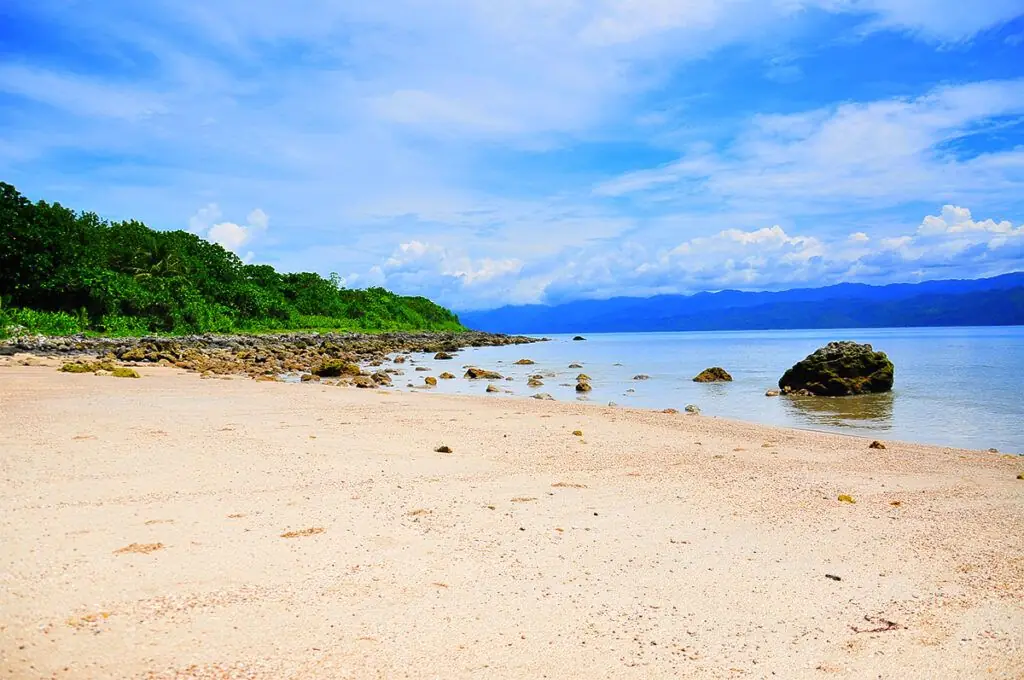
Dibut Bay, just south of Baler, and the far northern coast of Dilasag beyond Casiguran have forested shorelines and beaches with almost no visitor facilities. Many stretches can only be reached by hired boat.

✦
More Breaks Nearby

The coasts in either direction from Baler hold more waves, reached by road or by boat. Local surf schools and guides know which breaks are working.

✦
Best time to visit

October to April — when the Pacific swell is most consistent and the mountain roads are clear. Typhoon season (June to September) brings large surf but significant weather risk on the approach roads through the Sierra Madre.

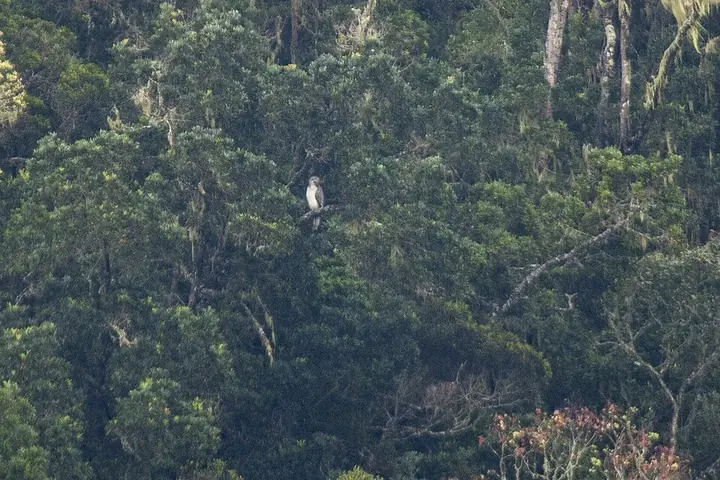
Aurora Memorial National Park, about 5,676 hectares of Sierra Madre forest along the Bongabon–Baler road, was set aside in 1937 by President Quezon and dedicated to Aurora Quezon in May 1949. It is mostly lowland dipterocarp forest below about 1,000 meters and is an Important Bird Area for Philippine eagles, Philippine hawk-eagles, Philippine ducks, whiskered pittas and Luzon water-redstarts. To the north, the province borders the Northern Sierra Madre Natural Park of Isabela.

A Philippine eagle in the wild (photographed in Mindanao)
Photo: Francesco Veronesi from Italy · CC BY-SA 2.0 · Wikimedia Commons
Philippine Eagle
Pithecophaga jefferyi
Critically Endangered
The national bird, found only in the Philippines. The Sierra Madre forests of Aurora Memorial National Park are one of its homes in Central Luzon.
Field note: Never disturb a nest. Killing a Philippine eagle carries a prison term under the Wildlife Act.
Head of a Philippine duck
Photo: Ken Billington · CC BY-SA 3.0 · Wikimedia Commons
Philippine Duck
Anas luzonica
Least Concern
A brown duck with a cinnamon head found only in the Philippines, listed among the birds for which the park is an Important Bird Area.
Field note: Do not hunt ducks or disturb wetlands and river pools where they rest.
Meet all 65 Philippine animals in Hayop ng Pilipinas →
← All stories
Lugar · Dingalan

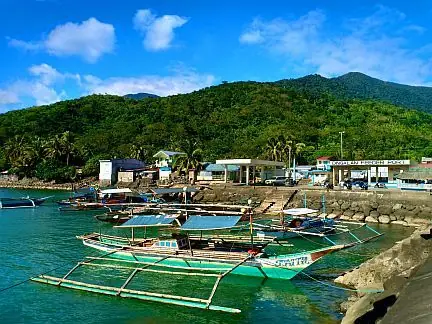
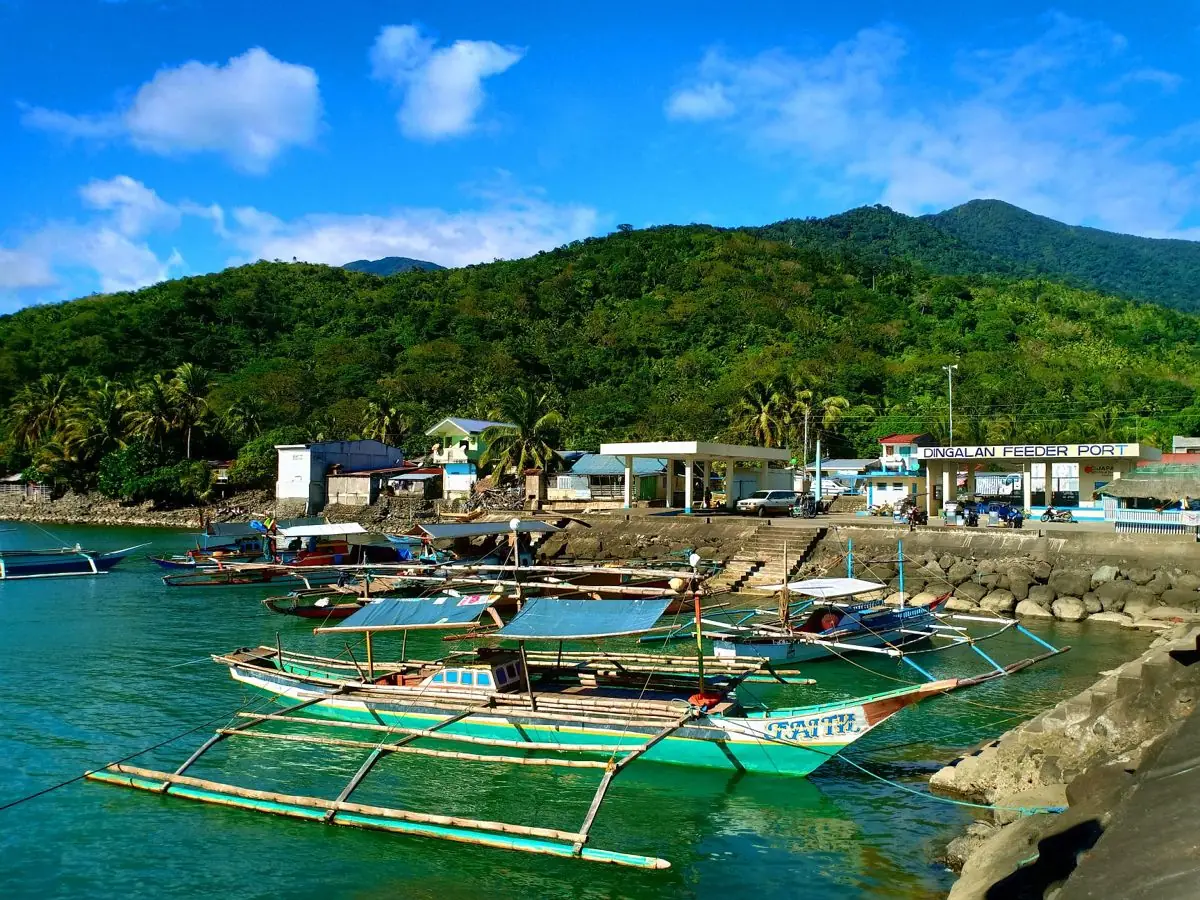
Dingalan, the Batanes of the East

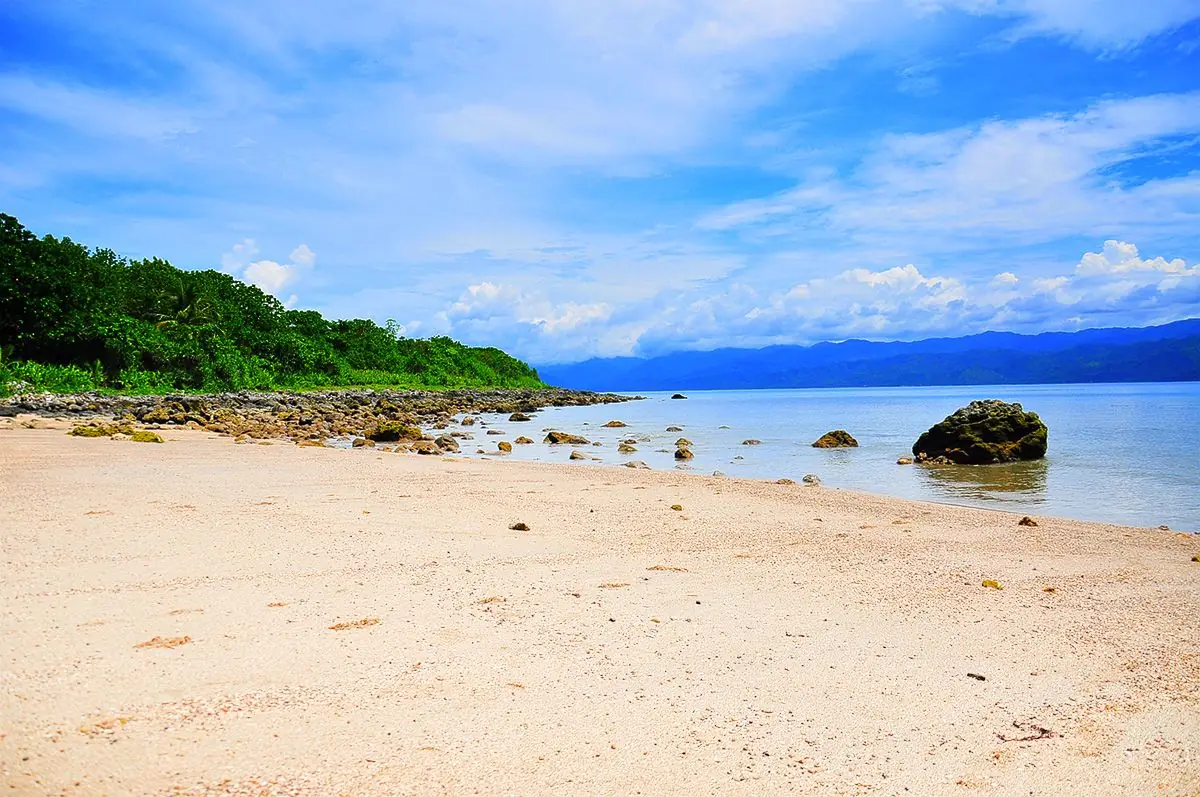
On the eastern coast of Luzon, facing the Pacific, lies the town of Dingalan, Aurora, a coastal paradise of beaches, hills, and cliffs.

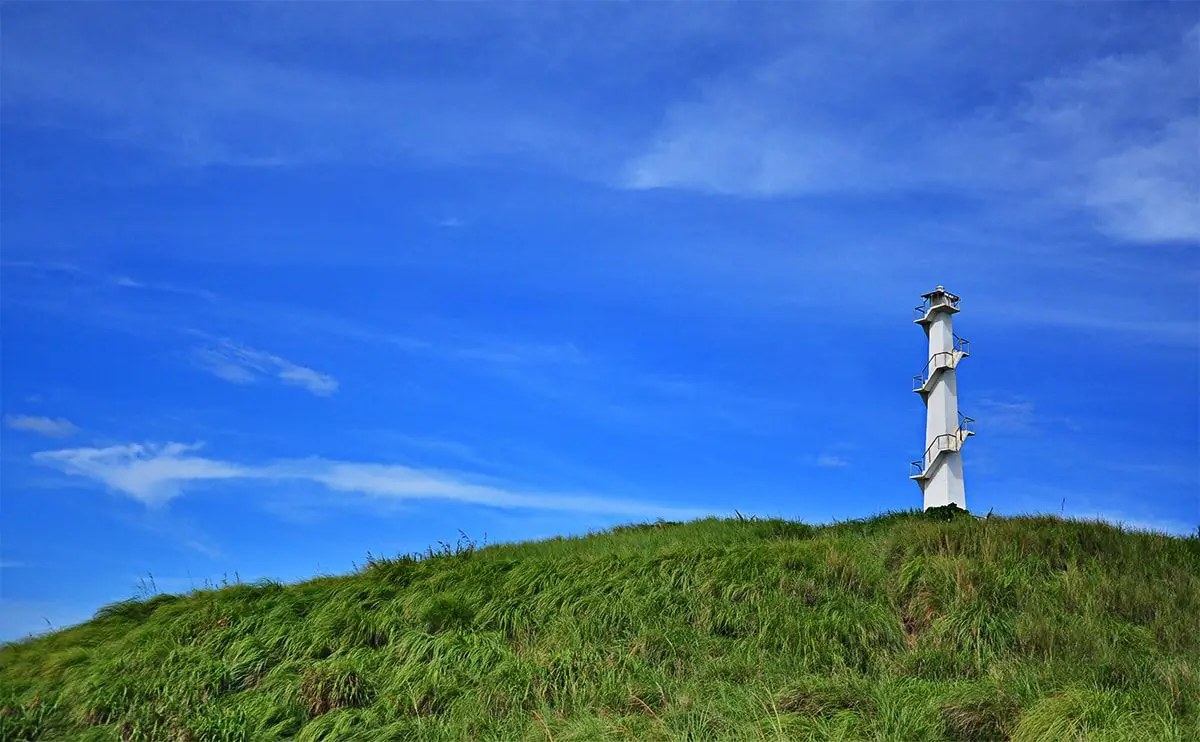
People call it the Batanes of the East, for its rolling green hills and dramatic sea cliffs. From Lighthouse Hill you can stand at the edge and look out over the open ocean, the wind in your face.

There is more to find: Butas na Bato, the rock hole beach shaped by unusual stone formations, and the Lamao Caves, with their stalactites and stalagmites for those who like to explore below ground. It is a fine place to slow down, unwind, and share the view with someone.

Mga Larawan

Sources · updated 4 October 2026
Photo credits (3)

Photos from Wikimedia Commons, used under the licences shown; some were resized. All photo credits