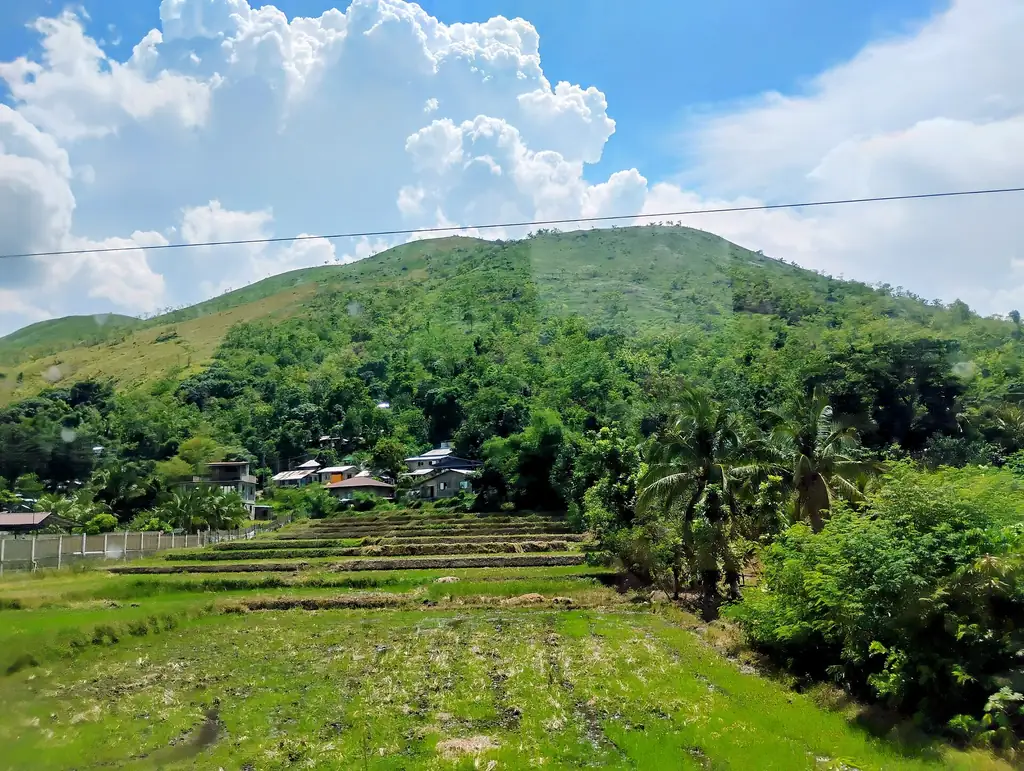
Green hills seen from Indiana, Bambang, Nueva Vizcaya
Photo: Ralff Nestor Nacor · CC BY-SA 4.0 · Wikimedia Commons
Map

Nueva Vizcaya

Cagayan Valley
Luzon
Capital Bayombong
Population (2024) 530,106
Area 3,976 km²
Municipalities 15
Cities 0
Island Group Luzon
Languages Ilocano, Tagalog, Isinai, Gaddang

Population: 2024 census (PSA). Area: land area.

Kapitbahay — Neighboring Provinces

Nueva Vizcaya is a landlocked highland province in Cagayan Valley, forming the corridor between the lowlands of Central Luzon and the Cagayan River basin to the north. The province sits along the upper Magat River valley, between the Sierra Madre to the east, the Caraballo Mountains to the south and the Cordillera to the west. It is a province defined by its rivers, its roads, and the mountain communities that have occupied its highland edges for centuries.

BayombongCapital
3,976 km²Area
15Municipalities
LuzonIsland Group
Cagayan Valley (II)Region

The Mountain Corridor

The Maharlika Highway passes through Bayombong, making Nueva Vizcaya a transit province between Manila and the Cagayan Valley. Its highland position gives it cooler weather than the Central Luzon plains. The province is home to about 18 indigenous peoples, among them the Ifugao, Gaddang, Isinai, Dumagat, Kalanguya and Bugkalot, whose land use and customs differ from those of the lowland Ilocano settlers.

★
Vegetables for the North

The Nueva Vizcaya Agricultural Terminal in Bambang supplies vegetables and fruit to neighboring provinces and Metro Manila.

The 2024 census counted 530,106 people in Nueva Vizcaya. It has 15 municipalities: Bayombong is the capital and an education center, Bambang the agricultural hub, Solano the financial district, and Kayapa the summer capital and "vegetable bowl". The province is a major producer of citrus, mainly pomelo, ponkan and oranges.
The Magat River valley was inhabited by the Gaddang, Isinai, Bugkalot and other peoples long before Spanish contact. Dominican missionaries arrived in 1607, and the province was organized in 1839 out of what had been the Cagayan region. Ilocano migrants, allowed to settle by royal approval, later brought the Ilocano language, which became the province's lingua franca.

1607

Dominicans Arrive

Organized religion in Nueva Vizcaya dates to 1607, when the Dominican Order arrived. The first settlement of a religious order was set up in the southern half of the province in 1609.

1839

A Politico-Military Province

On the advice of Luis Lardizabal, the alcalde mayor of Cagayan, the Governor-General created the politico-military province of Nueva Vizcaya in 1839. It then covered a far larger area than today.

1856

Isabela Carved Out

In May 1856 Nueva Vizcaya gave up a large part of its northeastern territory, including its first capital, Camarag (now Echague), to form the province of Isabela.

1908

Ifugao Sub-province

In 1908 the province's northwestern territory was annexed to the newly organized sub-province of Ifugao.

1945

Battle of Balete Pass

Balete Pass, on the road between San Jose, Nueva Ecija and Santa Fe, was a defensive position of General Yamashita's forces. The Allies won the battle on 31 May 1945, and the pass was renamed Dalton Pass after Brigadier General James Dalton II, who was killed there.

Nueva Vizcaya's culture is layered. The valley floor is predominantly Ilocano-speaking, the result of decades of in-migration. The highland barangays hold Ifugao, Kalanguya, Isinai, Gaddang and Bugkalot communities who maintain distinct weaving traditions, ritual calendars, and land tenure systems that predate the Philippine state. These two worlds meet in the markets of Bayombong and Bambang without entirely merging.

Indigenous Communities

The Ifugao people of Nueva Vizcaya's eastern highlands practice a form of wet rice agriculture on terraced slopes—though on a smaller scale than the famous Banaue terraces. Their textile traditions, using handlooms and natural dyes, produce cloth with patterns that encode clan and community identity. The Gaddang of Solano and Bayombong, the Isinai of Dupax del Sur and Bambang and the Bugkalot of Alfonso Castañeda and Dupax del Norte each have their own customs and oral traditions.

★
Ammungan Festival

Every May the province holds the Ammungan Festival, a celebration of its founding anniversary that culminates on 24 May, Foundation Day. Ammungan is a Gaddang word meaning "gathering", for the unity of the province's ethnolinguistic groups.

Coffee growing has become a significant agricultural and cultural feature of Nueva Vizcaya. The highlands around Quezon and Alfonso Castañeda produce robusta and arabica varieties. Coffee farms have attracted small-scale tourism in recent years, with farm visits and cupping sessions organized for visitors from the lowlands.

See the great festivals in Pista ng Pilipinas →

The food of Nueva Vizcaya reflects its position between Ilocano lowland cooking and highland indigenous traditions. Ilocano staples—pinakbet, dinengdeng, bagnet—dominate the restaurants and carinderias of Bayombong. Mountain communities contribute preserved meats and wild vegetables gathered from forest gardens.

Dinengdeng

A light Ilocano vegetable stew made with bagoong isda (fermented fish) as a base. Common vegetables include ampalaya, squash, string beans, eggplant, and whatever is in season. It is soupy rather than thick, and the fermented fish gives it umami depth without heaviness.

Tupig

A grilled rice cake made from ground glutinous rice mixed with coconut milk, sugar, and grated coconut, wrapped in banana leaf and cooked over charcoal. A common snack along the Maharlika Highway through Nueva Vizcaya. Vendors sell it from roadside stalls, particularly in Bambang.

Bagnet (Ilocano Double-Fried Pork)

Ilocos / Cagayan Valley
20 minutesPrep
2 hoursCook
4–6Serves
Ingredients
  • 1 kg, slabpork belly with skin
  • 1 head, crushedgarlic
  • 4 leavesbay leaves
  • 1 tsp, wholeblack pepper
  • 2 tbspsalt
  • enough to coverwater
  • as neededoil for deep frying
Method
  1. Place pork belly in a pot with garlic, bay leaves, pepper, and salt. Cover with water.
  2. Boil until pork is tender, about 45 minutes to 1 hour. Remove and pat dry completely.
  3. Allow pork to cool and dry, uncovered, for at least 1 hour. A wire rack helps.
  4. Heat oil to 150°C. Fry pork slowly for 20–25 minutes until cooked through but not yet crisp. Remove and drain.
  5. Raise oil to 190°C. Fry pork again for 8–10 minutes until skin blisters and crunches.
  6. Drain, slice, and serve immediately with pinakbet or dinengdeng.
Cook's note

The double-fry is essential. The first fry cooks the meat; the second fry at high heat creates the blistered, crackling skin. Skipping the drying step produces uneven results.

Ilocano is the dominant language of Nueva Vizcaya's lowland municipalities, spoken by the majority of the valley floor population. In highland barangays, indigenous languages such as Ifugao, Kalanguya, Isinai, Gaddang and Bugkalot are the languages of daily life, with Ilocano or Filipino used for trade and government interaction. Tagalog is spoken by migrants from Central Luzon and is understood by most educated residents.

IlocanoPrimary
Ifugao, Kalanguya, Isinai, Gaddang, BugkalotIndigenous
Tagalog, Filipino, EnglishAlso spoken
★
Ifugao Language

The Komisyon ng Wikang Filipino lists eight indigenous languages in Nueva Vizcaya: Bugkalut, Ibaloy, Ifugaw, Iguwak, Irungdungan, Isinay, Kalanguya and Kankanaey. A few residents still speak Ibanag, the old lingua franca of colonial Cagayan.

The multilingualism of Nueva Vizcaya's markets and roadsides is matter-of-fact. A transaction at the Bayombong market might shift between Ilocano, Ifugao, and Filipino within a few sentences.

7–8 hours by bus via Maharlika HighwayFrom Manila
Bayombong (via Dalton Pass from Nueva Ecija)Main gateway
November to April (cool and dry)Best months
Dalton Pass (about 910 m) can close after heavy rainNote

Places to Visit

Kayapa

Kayapa, in the western highlands, is called the summer capital of Nueva Vizcaya and its "vegetable bowl". Cool weather and vegetable farms on the hillsides make it a quiet side trip from Bambang or Bayombong.

Dalton Pass

The zigzag pass, also called Balete Pass, crosses about 910 meters where the Caraballo Sur and Sierra Madre ranges meet, joining Nueva Ecija and Santa Fe, Nueva Vizcaya. A monument marks the site of World War II battles where Filipino and American forces fought Japanese defenders in 1945.

Ambaguio Highland Communities

The municipality of Ambaguio in the western highlands is home to indigenous upland communities. Small-scale rice terraces, traditional weaving, and coffee farms can be visited with community guides. The road is rough and requires a 4WD vehicle in wet conditions.

✦
Highway Rest Stop

Bambang, south of Bayombong, is the province's agricultural hub and a traditional rest stop on the Manila-Cagayan Valley bus route. Its market sells Ilocano specialties including tupig, longganisa, and highland coffee. Buses stop here for 20–30 minutes.

Nueva Vizcaya's highest ground is Mount Pulag, at 2,928 meters the highest peak of Luzon, whose summit marks the meeting point of Benguet, Ifugao and Nueva Vizcaya; the Kayapa side lies in the province. The mountain's pine and mossy forests hold 33 recorded bird species, several threatened mammals and many species found nowhere else. Lower down, the Magat River rises in the province and flows north to the Magat Dam on the Isabela–Ifugao border, built between 1975 and 1982 for irrigation and power.

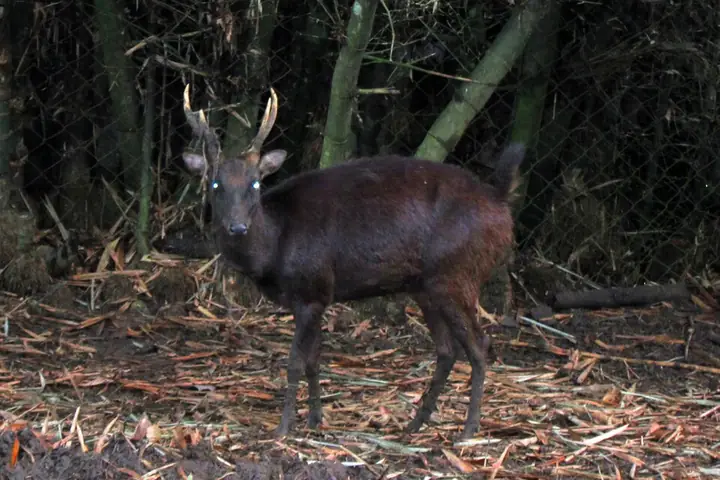
A male Philippine deer (photographed near Davao)
Photo: Gregg Yan · CC BY-SA 3.0 · Wikimedia Commons
Philippine Deer
Rusa marianna
Vulnerable
The Philippine brown deer, a forest deer found only in the Philippines. It is among the threatened mammals of Mount Pulag.
Field note: Hunting it is illegal. Report snares and venison sales to the DENR.
Giant Bushy-tailed Cloud Rat
Crateromys schadenbergi
Endangered
Called bowet locally, this large, furry tree rat lives only in the pine and mossy forests of the Central Cordillera, between about 2,000 and 2,740 meters. It is among the threatened mammals recorded on Mount Pulag.
Field note: Hunting and forest loss are its main threats. Never buy cloud rats as pets or meat.
Meet all 65 Philippine animals in Hayop ng Pilipinas →

The Pass at Dalton

The Dalton Pass was named for James L. Dalton, an American officer, but it was Filipino and American soldiers together who cleared it of Japanese defenders in early 1945. The pass sits at the top of the Sierra Madre, separating Nueva Ecija from Nueva Vizcaya. In the war, whoever controlled the pass controlled the road between Manila and the Cagayan Valley, where Japanese forces were making their final stand.

The fighting at Dalton Pass lasted weeks. The terrain—narrow road, steep cliffs, thick vegetation—favored the defenders. The Allies had air support and artillery, but ground troops still had to take the position yard by yard. The monument at the pass records the action in the spare language of military commemoration: dates, units, casualties. It does not convey what the place looked like when it was over.

Today the pass is a regular stop for buses traveling between Manila and Tuguegarao. Vendors sell steamed corn and boiled peanuts to passengers who get out to stretch. On clear days you can see the Cagayan Valley extending north, flat and wide, and behind you the Central Luzon plain. The monument stands at the side of the road, and most passengers walking past it do not read the inscription. The view from the pass is unremarkable if you do not know what happened there, and extraordinary if you do.

Sources · updated 4 October 2026
Photo credits (2)

Photos from Wikimedia Commons, used under the licences shown; some were resized. All photo credits