Tarlac sits at the center of Central Luzon — a landlocked province of flat agricultural plains, sugar haciendas, and the foothills of the Zambales Mountains to the west. Its capital, Tarlac City, is the junction point of three provinces and a crossroads that travelers have passed through for centuries on the way from Manila to the Ilocos or the Cagayan Valley.
Tarlac CityCapital
3,054 km²Area
17 + 1 cityMunicipalities
LuzonIsland Group
Tarlac is the home province of Corazon Aquino, who became president after the 1986 People Power Revolution. Her family's Hacienda Luisita — a vast sugarcane estate in the province's agricultural zone — has been at the center of Philippine land reform debates for decades.
★
The Meeting of Languages
Tarlac is one of the few provinces where several major language groups, Kapampangan, Ilocano, Pangasinan and Tagalog, are all spoken as mother tongues, following the main zones of settlement in the province. The linguistic boundary of Tarlac reflects centuries of migration patterns moving south from Ilocos and north from Pampanga.
The 2024 census counted 1,568,162 people in Tarlac, in 17 towns and the capital, Tarlac City. Kapampangan is the main language in the south of the province and Ilocano in the north; the two meet in the capital. Pangasinan and Tagalog are also spoken. The province's name comes from tarlak, an Aeta word for a talahib grass.
The Frontier of Central Luzon
Tarlac's history is the history of its plains being settled from three directions — from Pampanga to the south as Kapampangan farming communities moved north along the river systems, from Ilocos to the north as Ilocano migrants pushed south, and from Pangasinan to the northwest. The province was formally organized in 1874, relatively late in the Spanish colonial period.
1874
Tarlac Province Organized
Tarlac was the last province in Central Luzon to be organized under Spanish rule, in 1874 (some sources give 1873). Its southern part had belonged to Pampanga and its northern part to Pangasinan.
1896
Among the First Eight Provinces
When the Philippine Revolution broke out in 1896, Tarlac was among the first eight provinces to rise against Spain, alongside its neighbor Pampanga.
1899
Capital of the First Republic
In March 1899 General Emilio Aguinaldo moved the seat of the First Philippine Republic from Malolos to Tarlac. It stayed only about a month before moving on to Nueva Ecija. On 23 October 1899 Gregorio Aglipay gathered Filipino clergy at Paniqui, where they drafted the constitution of the future Philippine Independent Church.
1941–1945
Bataan Death March — The Tarlac Leg
The Bataan Death March of April 1942 passed through Tarlac on the route north from Bataan to Camp O'Donnell in Capas municipality. Camp O'Donnell — the prison camp where American and Filipino POWs were held after the fall of Bataan — is in Tarlac. Tens of thousands of prisoners died at Camp O'Donnell from disease, starvation, and violence. The Capas National Shrine marks the site.
1986
EDSA People Power — The Aquino Connection
Corazon Aquino — born Corazon Cojuangco in Paniqui municipality, Tarlac — returned to the Philippines in 1983 following the assassination of her husband Benigno Aquino Jr. at Manila International Airport. She led the 1986 People Power Revolution that ousted Ferdinand Marcos after the disputed February 1986 snap election, ending his twenty-year rule.
CA
Corazon Aquino
11th President of the Philippines1933 — 2009
Corazon Cojuangco Aquino was born in Paniqui, Tarlac. She became the Philippines' first female president following the 1986 People Power Revolution. Her presidency produced the 1987 Constitution.
Tarlac's culture is the product of its mixed-language geography. The southern municipalities have a Kapampangan character — the same cuisine, the same festive tradition, the same Catholic baroque sensibility as Pampanga. The northern and hill-country municipalities are Ilocano in culture — thrifty, hardworking, with a distinct food tradition built on fermented shrimp paste and long-cooked vegetables.
Luisita Hacienda and Land Reform
The Cojuangco family's Hacienda Luisita — approximately 6,000 hectares of sugarcane farmland in Tarlac — has been the center of one of the most contested land reform cases in Philippine history. The hacienda workers' demand for land distribution, and the Cojuangco family's resistance to full distribution, became a defining political contradiction of the Aquino years. The Supreme Court ordered full land distribution in 2012.
Aglipayan Church
Tarlac is closely associated with the Aglipayan movement — the Philippine Independent Church founded by Isabelo de los Reyes and Bishop Gregorio Aglipay in 1902 as a breakaway from the Roman Catholic Church. The movement found strong support in the Ilocano communities of Tarlac, where distrust of the Spanish friars ran deepest. Many of the province's northern municipalities have Aglipayan churches alongside or instead of Catholic ones.
★
Capas National Shrine
The Capas National Shrine in Capas municipality — site of Camp O'Donnell prison camp — is one of the most significant World War II memorials in the Philippines. The camp held American and Filipino prisoners after the Bataan Death March. An estimated 26,000 Filipinos and more than 1,500 Americans died at Camp O'Donnell from disease, starvation, and mistreatment.
Tarlac's cuisine sits at the intersection of Kapampangan and Ilocano cooking traditions — two of the Philippines' most distinct regional food cultures. The south of the province cooks in the rich, precise Kapampangan way: tocino, longganisa, and the full repertoire of pork preparations. The north cooks Ilocano: pinakbet with bagoong, dinengdeng, and the frugal vegetable-forward cooking of the Cordillera frontier.
Tarlac Longganisa
The longganisa of Tarlac — locally made pork sausage — carries both Kapampangan and Ilocano influences depending on which municipality it comes from. The southern versions are sweet-cured in the Kapampangan manner; the northern versions are garlicky and lean, closer to Ilocano longganisa. The Tarlac City market sells both styles side by side.
Dinengdeng (Ilocano Vegetable Stew)
A broth-based vegetable preparation from the Ilocano tradition — whatever vegetables are available, simmered in a light broth seasoned with bagoong isda (fermented fish sauce) rather than salt. Bitter melon, squash, string beans, eggplant, and malunggay are common components. The bagoong isda gives the broth its characteristic umami depth.
✦
Tarlac City Food Scene
Tarlac City's commercial center has a range of restaurants serving both Kapampangan and Ilocano food. The public market in the morning is the best introduction to the province's food diversity — both traditions are represented in the prepared food stalls. The longganisa is worth buying and cooking at the accommodation if facilities allow.
Tarlac is trilingual at the provincial level: Kapampangan is the mother tongue of the southern municipalities, Ilocano of the northern and western ones, and Tagalog/Filipino of the central zone. The capital Tarlac City is the meeting point of all three, and residents often code-switch between languages depending on context and interlocutor.
KapampanganSouth
IlocanoNorth
Pangasinan, TagalogAlso spoken
Filipino, EnglishSecond languages
Kapampangan in the South
The Kapampangan-speaking municipalities of southern Tarlac are culturally continuous with Pampanga — same language, same cuisine, same fiesta tradition. The language boundary between Kapampangan and Ilocano runs roughly through the middle of the province and is one of the most abrupt linguistic transitions in Luzon.
★
Tagalog Expansion
Tarlac City and the central municipalities of the province have seen Tagalog / Filipino become the primary everyday language over the past generation — a pattern driven by Manila media, education, and internal migration. Older residents in the city still speak Kapampangan or Ilocano as their mother tongue, but young people in the urban center increasingly identify Filipino as their primary language.
Tarlac is on the main road and rail corridor from Manila to the Ilocos and Cagayan Valley — two hours north of Manila by car or bus. The province is a natural stopping point for travelers heading further north, though it rewards a deliberate visit on its own terms, particularly for its World War II heritage and its political history.
2 hrs (NLEX/SCTEX)From Manila
PNR (long-distance)Via rail
Capas National ShrineWWII site
History and transitBest for
Capas National Shrine
The memorial site on the grounds of Camp O'Donnell — the prison camp where tens of thousands of Filipino and American POWs died after the Bataan Death March of 1942. The shrine includes a museum, ossuary, and memorial towers. The site is one of the most significant World War II memorials in the Philippines and a place of pilgrimage for veterans' families.
Aquino Center, Tarlac City
The memorial to Benigno and Corazon Aquino in Tarlac City — a museum documenting their lives, the martial law years, and the People Power Revolution of 1986. The center is in the property associated with the Aquino family and provides a detailed history of the period that shaped contemporary Philippine democracy.
Luisita Golf and Country Club
The golf course on the former Hacienda Luisita grounds — now operated as a commercial facility. The course and the surrounding estate give a physical sense of the scale of the sugar hacienda system that defined Tarlac's agricultural economy. The land reform story of the hacienda is visible in the settlements on the distributed portions of the estate.
✦
Tarlac as a Day Trip from Manila
Capas and the Aquino Center can be covered in a single day from Manila — two hours each way on the expressway, with a morning at the shrine and an afternoon at the memorial. The provincial museum in Tarlac City provides additional context. Tarlac City itself has good lunch options on the main commercial street near the market.
Tarlac's wildest land lies in the west, in the Zambales Mountains. Republic Act No. 12237, signed on 29 August 2025, made about 12,676 hectares in Mayantoc and San Jose the Mt. Sawtooth Protected Landscape. Mt. Sawtooth is the Tarlac part of Mount Tapulao, and surveys there confirmed several species found nowhere else, along with globally threatened animals.
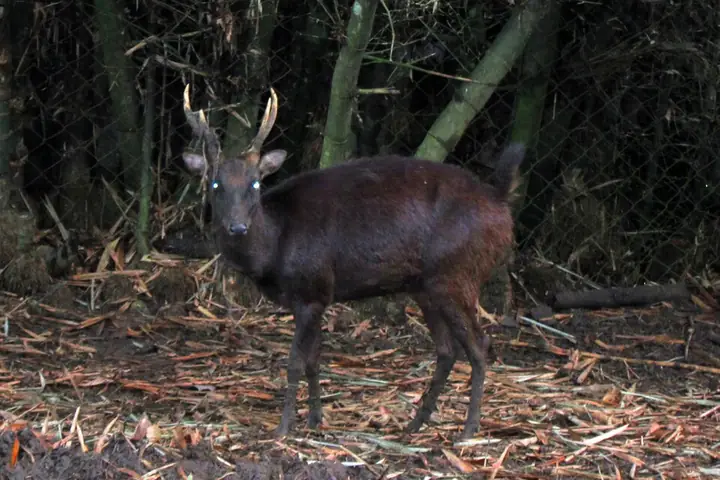
The Philippine brown deer, a forest deer found only in the Philippines. It is among the threatened species recorded in the Mt. Sawtooth forests.
Field note: Hunting it is illegal. Report snares and venison sales to the DENR.
Luzon Bleeding-heart
Gallicolumba luzonica
Near Threatened
A ground dove with a blood-red patch on its pale breast, found only on Luzon and nearby islands. It is one of the species named in the Mt. Sawtooth protection law's supporting assessment.
Field note: Do not buy wild-caught birds. Keep to trails in the protected landscape.
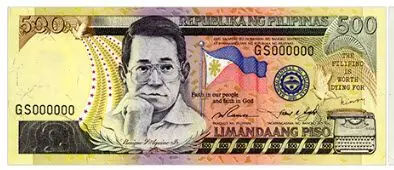
Benigno Ninoy Aquino Jr. was born on 27 November 1932 in Concepcion, Tarlac. He rose fast in politics, elected mayor of Concepcion at twenty-two and a senator at thirty-four, known for his sharp mind and his call for reform.
His opposition to Ferdinand Marcos led to his arrest soon after martial law was declared in 1972. He spent years in prison, went on a hunger strike, and was later allowed to leave for medical treatment in the United States.
In exile he became a symbol of resistance. In 1983 he chose to come home, believing his return could bring peaceful change. On 21 August 1983 he was assassinated as he stepped off the plane at Manila International Airport, now named in his honor.
His death moved the nation. It led to the People Power Revolution of 1986, the fall of Marcos, and the return of democracy.
Name from tarlak; organized 1874 from Pampanga and Pangasinan parts; first eight provinces 1896; seat of First Republic March 1899; Aglipay at Paniqui 23 Oct 1899; 17 towns + 1 city; languages (Kapampangan south, Ilocano north, Pangasinan, Tagalog) — Wikipedia: Tarlac (rev. 1377155191)